
15 in 2025
My Year in Culture, in 15 parts.

1. Elemental Council by Noah Van Nguyen (Audiobook)
(I read a lot of warhammer shit! But only two made it into this list, one at the beginning and one at the end.)
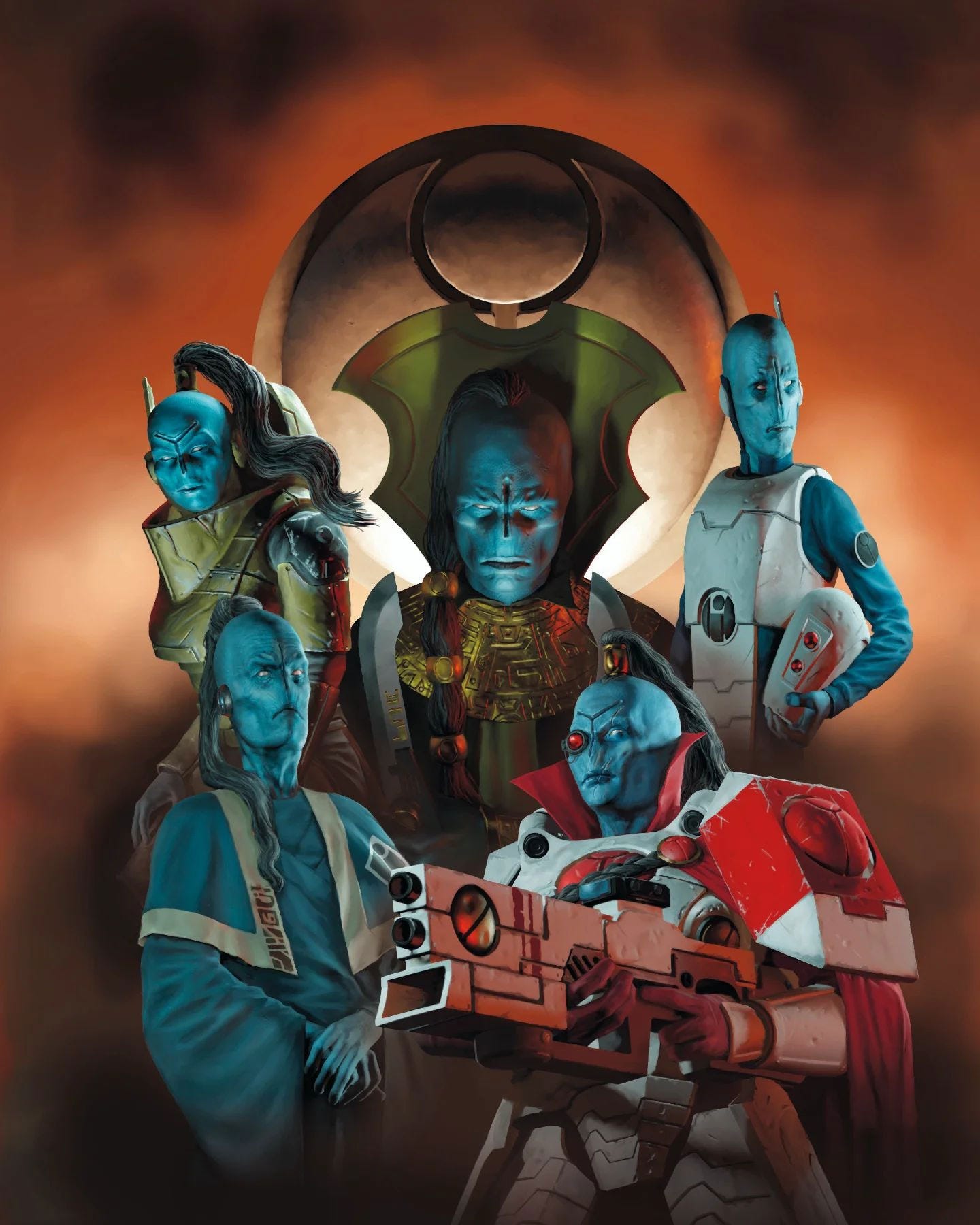
A somewhat complex book about colonialism in a world where existential supernatural evil exists, narrated by the typically excellent Emma Gregory.
The core of the story is the moral challenge of Humanity for the Tau. There are too many humans. Even the Tau don’t really understand just how many there are, and humans actually like the Tau’va message of (relative) hope, sanity and reason. But there are so many humans, many many many more humans than Tau, even more than Tau-plus-auxilia. So what happens when the majority of believers in the Tau Empire.. are human?
All expansionist “Universal” ideals face this challenge; is this grand expansion a project of true Universal values, (which is its moral excuse for existing), or simply an ethnic cult, (which is its practical manner of surviving and spreading). If you accept humanity into the Tau’va they may take it from you and ruin it. If you treat humanity as they would treat you, as animals and sub-things to be exterminated, then you make the Tau’va a lie, which kills it anyway. It’s a fascinating problem to deal with.
2. Orb - On the Movements of the Earth, by Uoto
‘Orb’ tells the story of Heliocentrism as a conspiracy, a transmissible idea as the ‘main character’ of a series.
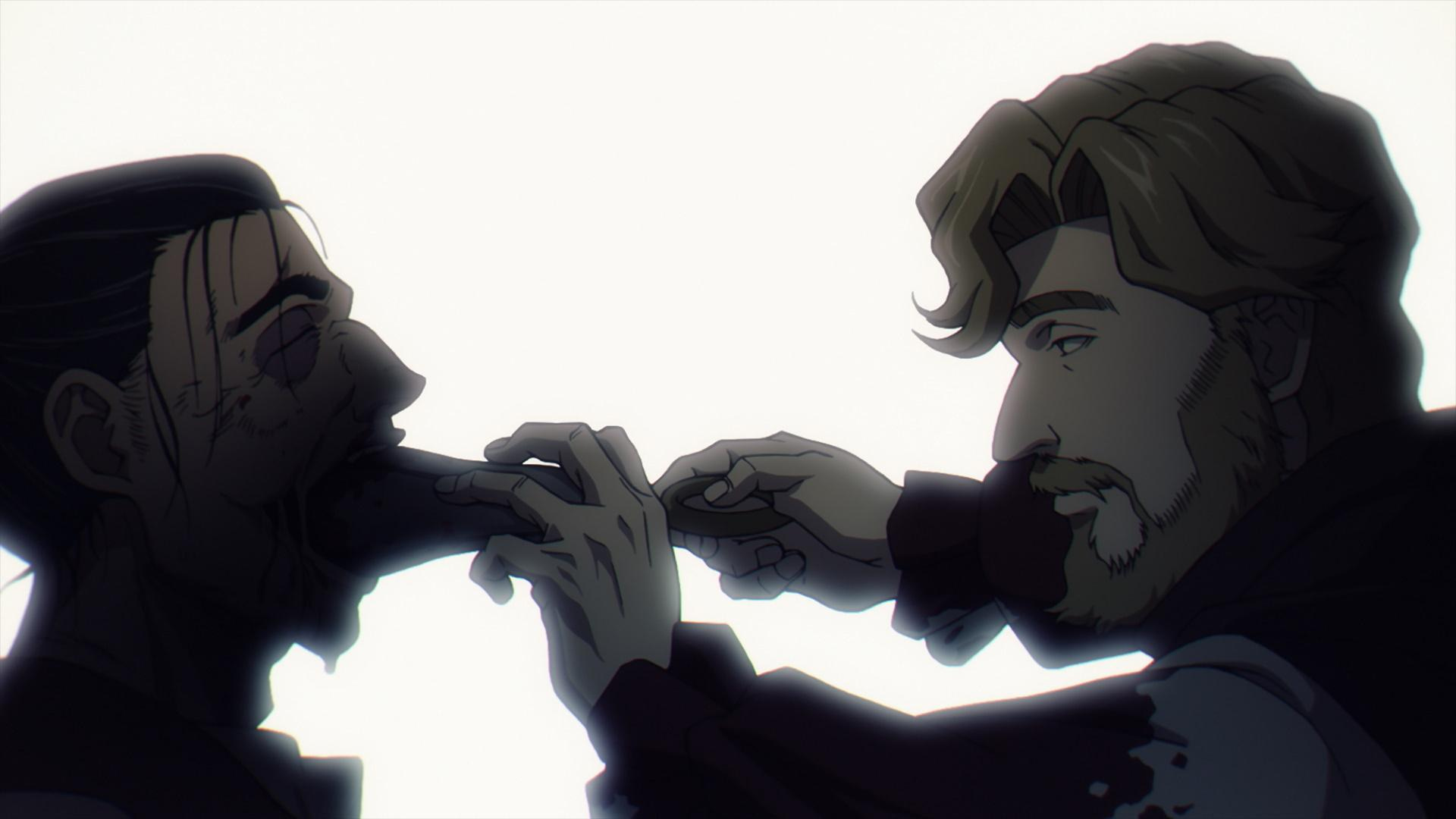
Every time a believer or proponent in Heliocentrism is captured or killed, some little fragment persists. And they all get caught or killed. In fact Heliocentrism, the whole, complete theory, is researched, written out in full, and nearly published, multiple times during the story, often by people who are only distantly aware of each other.
The idea is the ‘hero’, and we are going to see the idea, the hero, prevail, over a great reach of time, through all the terrible struggles of all these forgotten people... Surely?
Not quite. We the audience know that Heliocentrism does prevail in the end, but we don’t get to see that in this story. In fact, towards the end, the tale curves back upon itself, laying upon its own coils, disrupting and disturbing what we thought we saw before, making us question what we believed about its characters.
The he story of ‘Orb’ changes shape. From a distance, the coils and curls of its movements become part of the point. The question of; what exactly is this narrative is about, is part of what it is about. The complex moral anguish of its characters is embodied also in the structure of the tale.
‘Orb’ is a calm, slightly tragic, picture of the human soul. It’s almost an essence-painting, (like a Japanese painter reducing the whole of a mountain to a single line, or a Disney animator watching deer hooves move for 50 hours before producing a single distilled image,) of the spirit of an age.
3. Malustrious Brood by Scrap World
All minds dwell within necessary cage of thought, one concept piled upon another, growing in slurries and small leaps, but only ever from one central point. Yet, in every case, the boundaries of expansion, of what can be comprehended, and of what can be imagined as comprehended, must be challenged; such is the flame of life and mind.
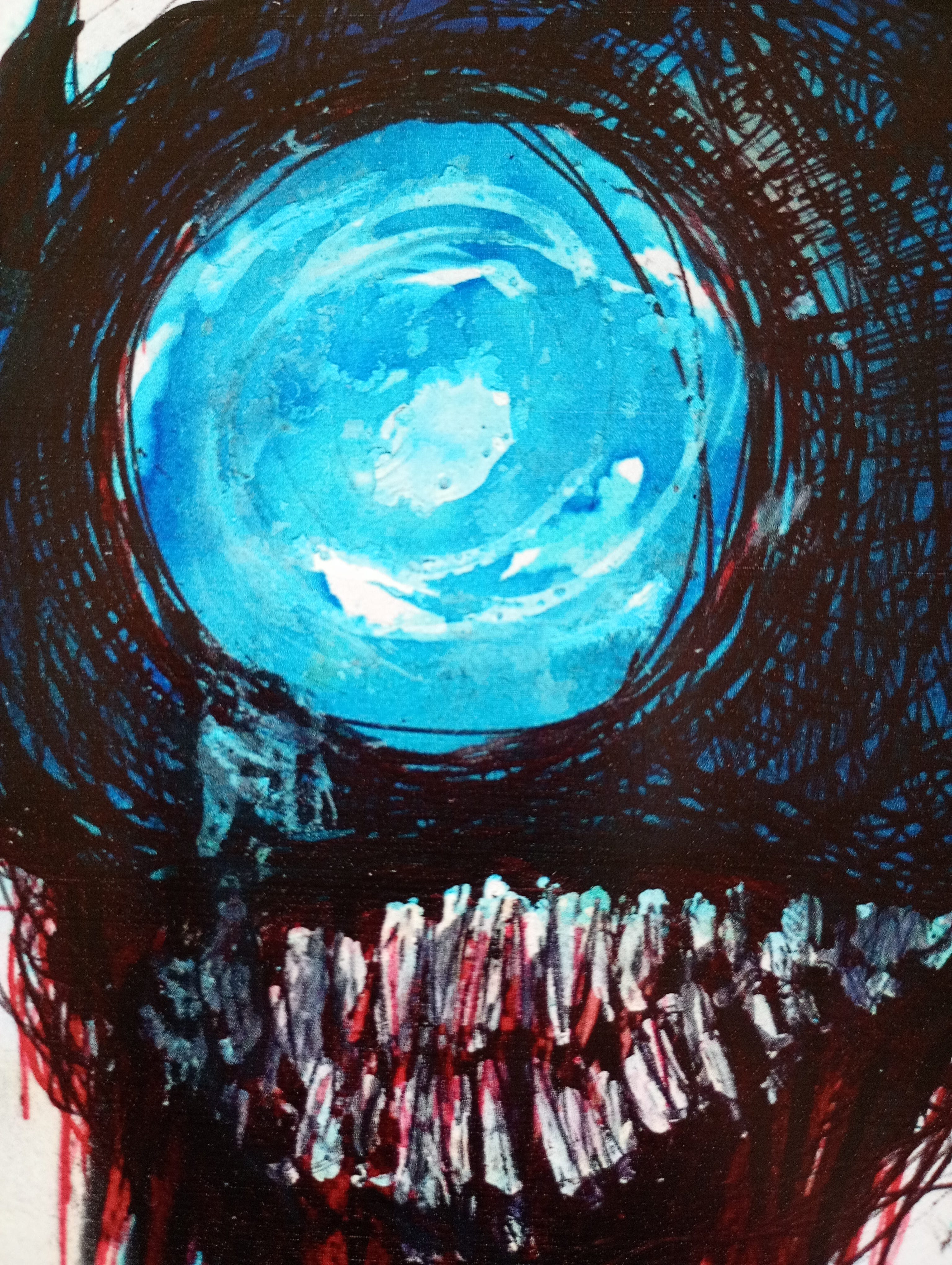
Thence; the Other, the known but un-known, a beast woven from what is and what may be.
Thus, behold; a book of Others. A book of visions.
A tragedy of Scrap World art is that you can’t really get it unless you see it PHYSICALLY.
4. Witch Hat Atelier by Kamome Shirahama
‘Witch Hat Atelier’ continues to be both an apparently soft Manga drawn with sublime skill, equal to the great age of 19th Century illustration, and also the deepest and most clear examination of the moral complexities of the coming age of Transhumanism.
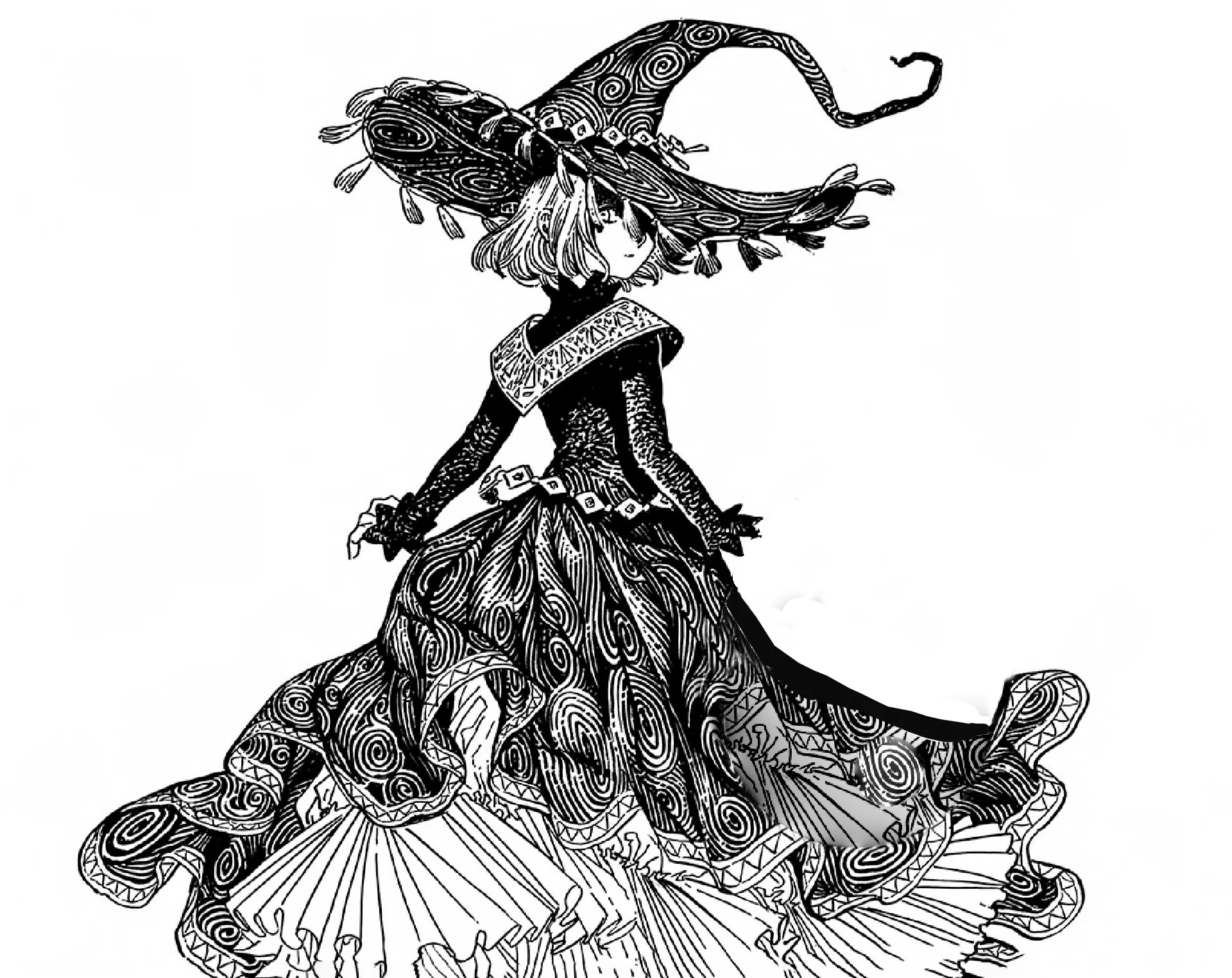
‘Atelier’ is a story about the power to change the world, to change the human form and the human mind, and about the hierarchies, structures, deceptions and moral compromises required to control that power. Very few writers in modern popular cultures look at the fundamental issues with this level of clearness, coldness and empathy.
Its also a sublime work of art.
5. Memoirs of Hadrian by Marguerite Yourcenar
“The mirror of a shadowless man”, as a westoid I am culturally required to think about the Roman Empire X times a day, and how better to do so than through the prose of a brilliant early 20th Century lesbian obsessed with the Emperor Hadrian….

Out of all the fiction I experienced this year, the character of Hadrian left probably the greatest intellectual impression on me. He haunts me still!
The book also was partly inspired by this not-really-true but Extremely Interesting quote from Flaubert;
“The melancholy of the antique world seems to me more profound than that of the moderns, all of whom more or less imply that beyond the dark void lies immortality. But for the ancients that “black hole” was infinity itself; their dreams loom and vanish against a background of immutable ebony. No crying out, no convulsions — nothing but the fixity of a pensive gaze. With the gods gone, and Christ not yet come, there was a unique moment, from Cicero to Marcus Aurelius, when man stood alone.”
A few times I week I still find myself thinking ‘Immutable ebony...’
6. Otherlands by Thomas Halliday
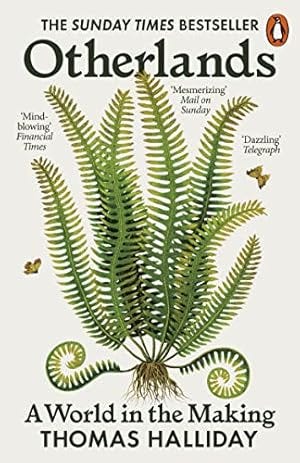
When not thinking about the rise and fall of empires, why not think about illimitable reaches of time? Halliday’s rewind of life on earth takes our reality apart, line by line, to expose the strange engines of its creation;
“As we fly back in time, the forests fall silent, as the birds lose their voices, their songs replaced by insects. Trees lose their woody skeletons, sustaining themselves like turbid balloons, water in some places becomes crystal clear, absent the perma-fuzz of microorganisms we take for clarity, everything turns into spiders and then spiders lose their grace and poison, becoming brutal proto-arachnids which must hammer and tear their prey apart, before running them through mouths which are little more than limbs. Watching spiders go retarded and just start beating the shit out of things is perhaps the clearest droplet on the leaf. Eventually roots can no longer bind to soil which does not yet exist, all is stone and water, utterly stark, and beneath the waves, even bilateralism is up for debate; why not make things lumpy? Hey it might work out, who knows? While even the chords which will one day turn into spines and brace ribs, are just little pencil-sketch suggestions of cells
To gaze into such a deep abyss of time has a little in common with the Book of Job, with its awe, majesty, savagery, titanic depths and utter indifference to anything human. And awe akin unto the divine, and a curious sense, both of meaning, and of being deeply lost and very small, is at the books heart.”
7. The Andor Renaissance
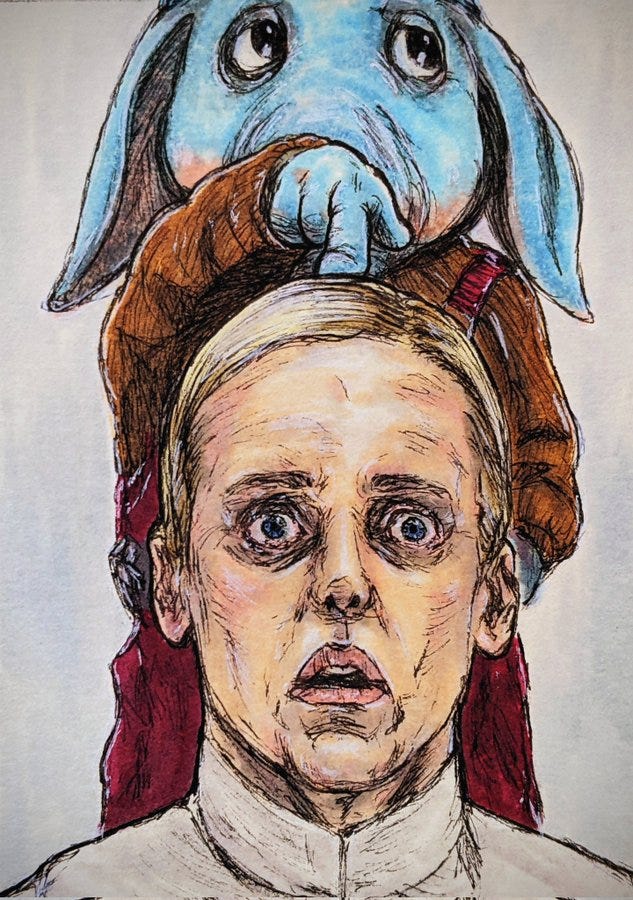
‘Andor’ is far from a perfect series but it is fascinating in a variety of ways; as the only seriously good thing Disney has managed to do with its Star Wars purchase, as the rare and strange corporate ‘engoodening’ of a relatively mid film; Rogue One, via revivifying is characters through prequel development, as a synthesis of political principals from very 70’s Liberal, and very ‘lit-not-genre’ writer Tony Gilroy, in a world defined by 70’s Liberalism (Space Jews team up with Vietcong Teddy Bears to kill Hitler). Its also an example of the strange form of storytelling via fictions created nearly 50 years apart, yet watched in sequence, informing each other; going from pseudo-real political thriller ‘Andor’, to Grim-Wars ‘Rogue One’ to grimy Fairytale ‘A New Hope’ is a rare example of functional corporate art. Nothing that is not a corporation could have produced it.
8. Old Animations
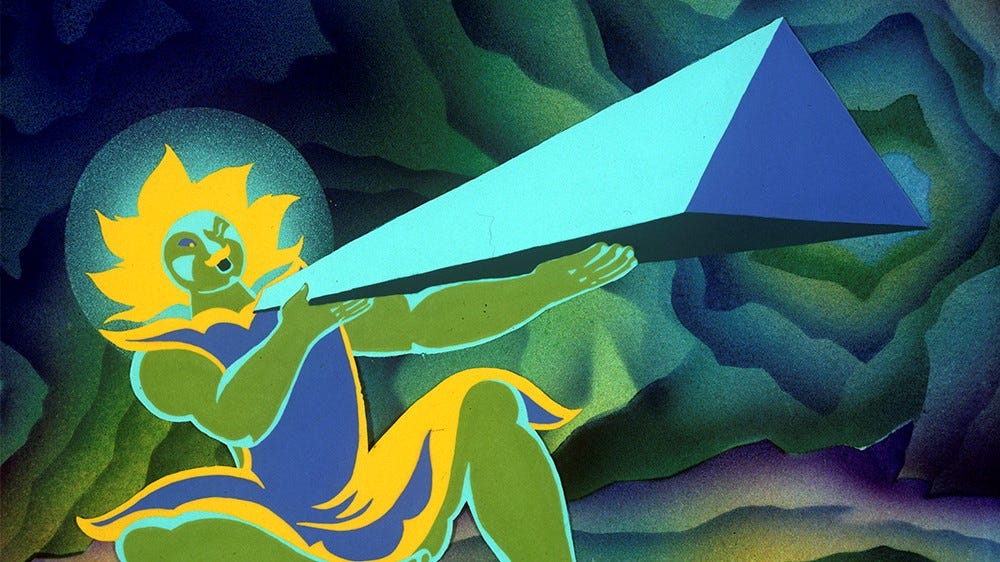
This year two very-old animations got a five-star rating from me; ‘Son the the White Mare’ by Marcell Jankovics;
the primal animation stye and very excellent direction via simply transforming one thing into another rather than changing scene, and the interpenetrating nature of the characters and environment - all throb and move, responding to the other, the characters literally changing the forests, the mountains, the water, the air, and the reverse being true, feels deeply appropriate for a mythic tale of primal godppower. This feels like it describes the perceptions of a child, where life and powers interpenetrate and everything is slightly alive, and of an early animist culture, and of a state of nature where the boundaries between things are not fully set and the power or spirit of one thing can interlace with and effect another. Character, strength and the power of personality, effect the physical and metaphysical ‘rules’ of reality. The hero, ‘Treeshaker’ just works by slightly different rules than anyone else, and this is due to his incredible strength, but his strength, his personality and his heroic intent feel more like expressions of primal godpower than just psychological or physical interrelationships.
and ‘The Adventures of Prince Achmed’ by Lottie Reiniger.
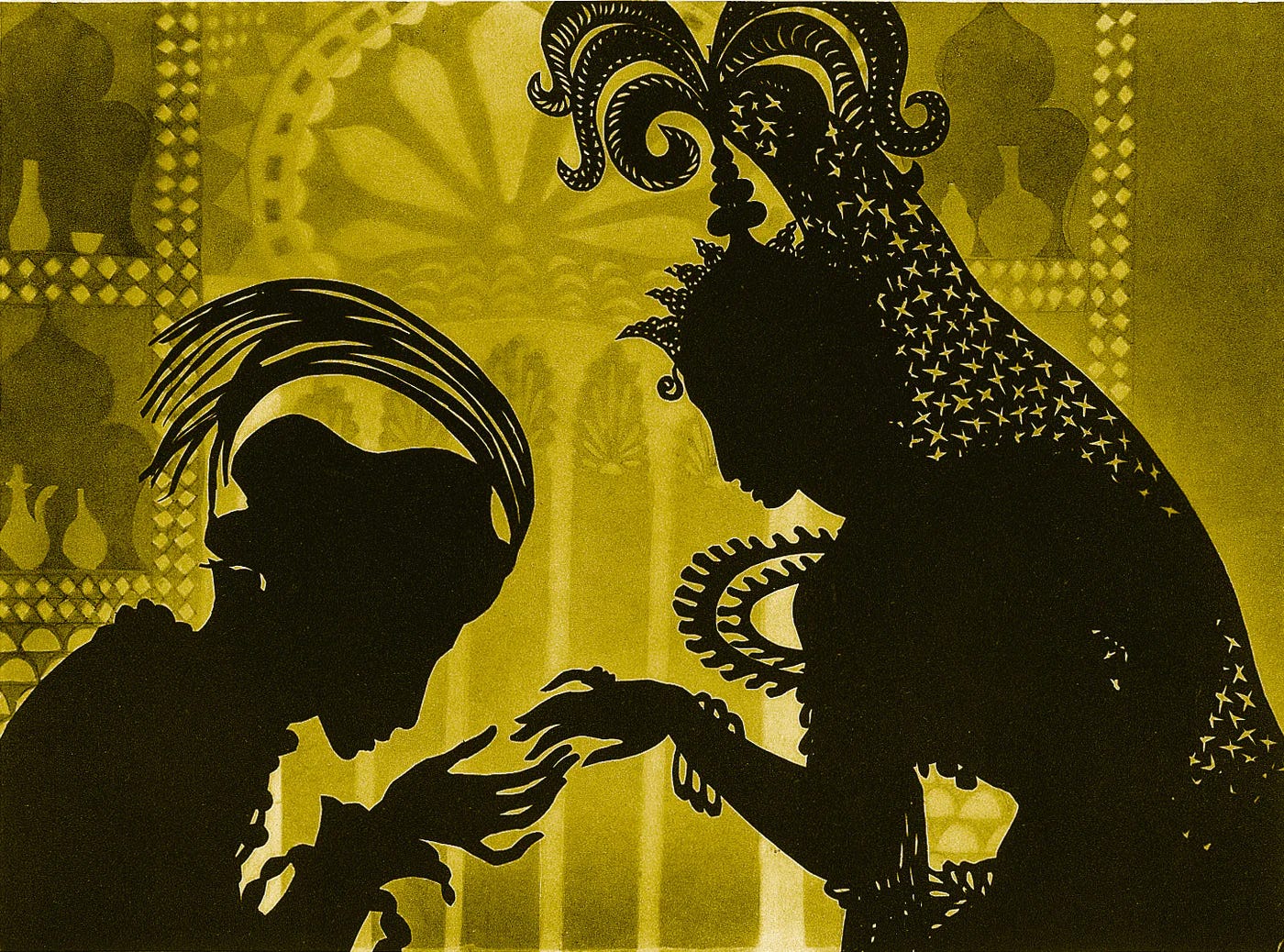
while almost everything that happens in the film is beautiful in some way (the fun parts are inventive and grotesque), some parts are deeply classically beautiful - the scenes where Prince Achmed hides in the forest by a shimmering lake and watches the spirit princess he is crushing on bathe in the waters; a masterwork of foliage, and to cap it all, the reflections of the beautiful heroes shimmer on the surface of the lake - layers and little shaped piles of cut out slivers of black card.
Because the film is the first of its kind and clearly 100 years old it combines the achievements of naivety and those of a masterwork. Only when something is the first, and breaks new ground, requiring skills never before imagined, can these two languages of beauty interact so fully.
Much of Prince Achmed has the graceful, layered, classical true and high beauty we might expect from the best of 19th century illustrators (- due to the stark limitations of its form, these scenes and moments stand out still, utterly distinctive), but as the first of its kind and a work of joyful and playful invention, at this moment, the pleasures of the ridiculous, the seemingly-improvised, the original, the graceful concept laid out with able but naïve hands - the floating ‘reflections’ on the ‘water’, the glow of Aladdins lamp, opposing armies of good and evil spirits which fill the ‘sky’ and rear ground while shadow figures move across the foreground, the film even starts with the strange summoning animation of the African Sorcerers spell!
The virtues of classical art combined with those of a student film, or of the avante garde.
These are both incredible visions in unique styles. ‘White Mare’ gives us deep Slavic Mythology in the expressionist style of 1980s soviet animation while Achmed’ tells a fairytale through shadow-play. Both create distinct, vivid, unique and whole aesthetic worlds.
9. The Plastic Injected Renaissance
The spawn of John Blanche clamber from his leathery hide, claws twitching, ready to infest the world with a fresh generation of oddities. The kitbashing, sculpting and painting movement born partly through the 28 movement has started producing not just rulesbooks and games, but actual pure-art books;
I reviewed 28 Collected;
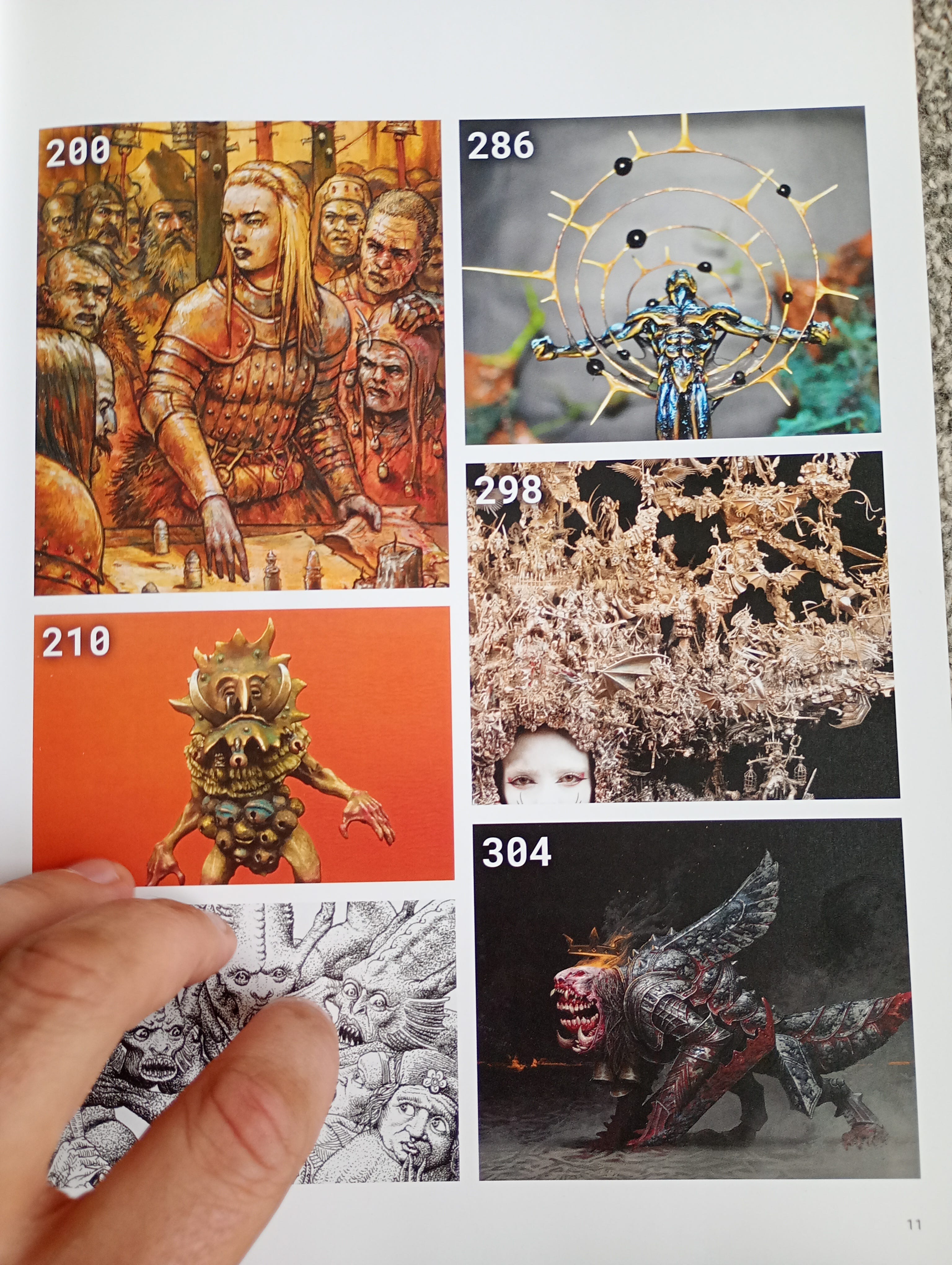
“A rich gothic-bible art-book of textured grimy dark and sometimes grotesque, sometimes poetic and beautiful scenes and figures. Colours like Rembrandt, fields of motion and activity like Bruegel, grim scenes of dark futures - what’s this you say? A northern renaissance view of the middle ages, in SPACE? For this is no ‘Merrie England’ , (fragments of Chaucer may pop up), neither is it the more southern European and maybe pro-Catholic coded ‘High Middle Ages’, a time not actually that bad as a bunch of academics and Catholics will tell you. Instead this is the Middle Ages as seen though the eyes of a Protestant peasant living in some upper reach of Europe where the gloom is barely dispelled by a white sun before the Norns begin to knit it in the air again, and where there is no gloom the light is pale, speaking of tone and texture more than spark and pattern.
All is ruin and its looking lovely. I hope you like metallics and muted tones, if you don’t you are in the wrong place, (though some Italians have snuck in with hidden pallets loaded with bright pigments).”
and Nick Borelli’s Mold Mold Mold
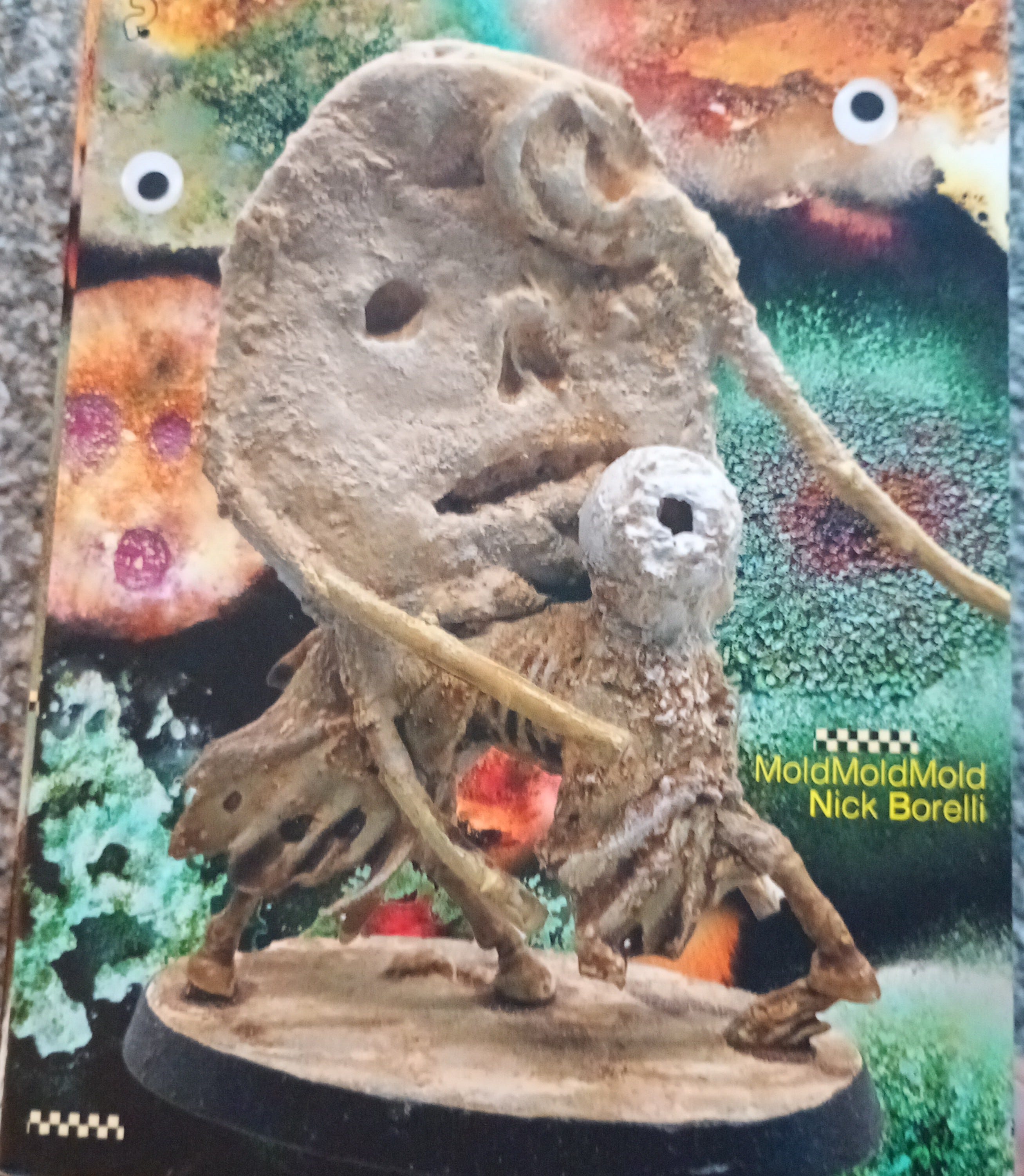
“Forms arranged for deliberate toyetic horrible ridiculousness, and then burnished, almost gilded, with complex textures - layer upon layer of various powders, materials glues mixes, applied before and during painting, or else with sheens - careful relentless layers of gloss and matte paint. While an imaginary craftsman might endlessly lacquer layers to produce the original ‘cool’ - a shining sheen unlike most natural surfaces, letting wood or shell capture light like a gem, forming a shard of deliberate artifice in a more-natural world, Borelli dedicates the same careful relentless and repeated layering to giving these assembled homunculi flesh and texture; to give a grotesque painted eye the precise liquid sheen of simulated life, to subdue a painted tattoo into the plastic flesh, making it seem half-faded, or to fret, bubble encrust and roughen the surfaces of things till them simulate dried or aging flesh, many different forms of growth and decay.
Its in the flushes and transmutations of biological colouring that Borelli seems to take the most care and where his figures ‘live’ most realistically - you might have the head of a goose and a body made out of baking soda, pipecleaners and glue, but the joints of your limbs, and the corners of your mouth, the tips of your little toes, will be flushed and fading with the pseudoreality of a breathing body.”
.....
I also read Variations in Plastic from totally_not_panicking and ‘Minifreaks’ from totally_not_panicking and miscast minis. They were both good!
10. Spacewreck; Ghostships and Derelicts of Space by Stewart Cowle
Its around the middle of the year and we can pause here for a moment to regard forgotten ruins of a future dream.
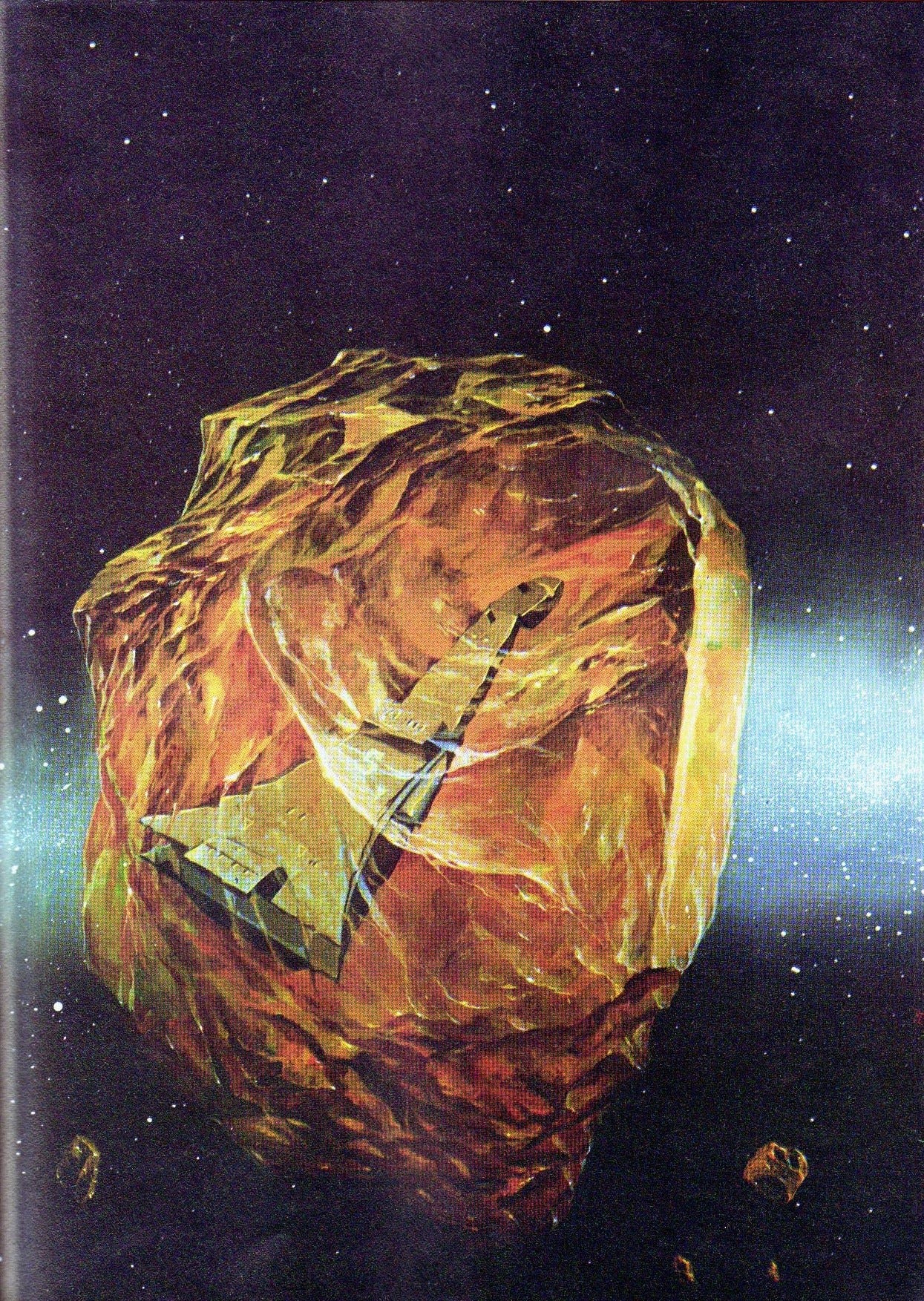
“Here, like a ruin, is a symbol left by God, a little watermark in reality, or a fragment of html left in the main text of a web-page, making it very explicit that what we see and live within, the tumult of our sensory world, is like a little sheen of breath on metal, evaporating round the edges, part of something strange and large. Ruins are the keys of time in this way, and wrecks also, are doorways, symbols of a time-sense larger than we can currently perceive, the mind leaps here intuitively, into scales and measures which formerly hit, or resisted contemplation.”
11. Chainsaw Man - Reze Arc Movie
A rare experience; something modern isn’t mid. The Chainsaw Man movie ends up being (in my opinion), better than the series it sprang from (better than the anime at least).
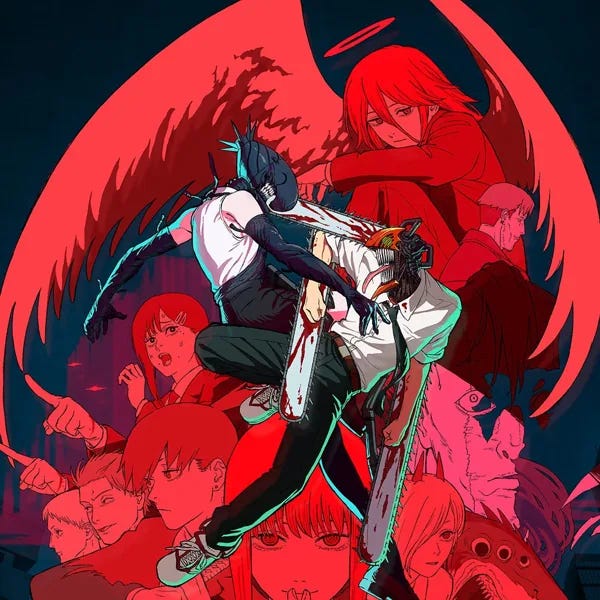
“you can punch people right into another genre of art, or into a different style”
An artistic blizzard of well-considered images, and, even better, it makes coherent sense as a single story.
12. To Be Hero X
The West is Utterly Cooked; Episode Whatever

Power from fame, and more than fame; belief. Superheroes powered by the widespread public belief in their abilities, and who’s powers, and lives, are shaped by that communal perception. This ‘Trust’ fuels a hero’s power which feedbacks into more Trust. Heroes who rise and fall just as celebrities do, growing from viral incidents, ideas that fill, to some extent, pre-existing roles in the human heart. (Watch alongside ‘Mad Men’). I can’t quite believe that no-one has ever done this before? Once stated, it seems obvious. It suits the age.
Not an entirely monstrous or cynical ‘Boys’ style reality; the moral multipolarity of the story suits this conceit; the people behind the ‘heroes’ vary in nature as much as real celebrities do. Some people slowly wither into monsters behind the heroes mask, some are crippled by the bizarre meta-reality side effects of their powers, some had shady reasons for becoming what they are, some were pure. More commonly, motives are mixed; each arc follows the fortunes of one hero, or would-be hero and all these stories are deeply interlaced and cross-cut in cross-temporal interlacement, so known characters, we know show up in the stories of others, often playing very different roles. A hero to some becomes a villain to others, depending on aims and goals.
The mind behind the character becomes pin-point, half lost amongst the layers of complex, shifting relationships that make them up; the living person and whatever inspired them to become a hero, the ‘hero’ the world sees them as, sometimes quite different to the inner soul, and their relationship with the structures of media power which lie behind each hero; large scale conglomerates ‘manage’ , (or try to), the rise, and fall of heroes, but even these fat orgs are not utterly ‘in control’; heroes can still arise randomly from the blitz of social media and collective belief, and fall for unknown reasons. The orgs themselves are split, each with a different relationship to fame, belief and the power that this brings. We can think of each of these mega-corporations as attempts to manage the ferocious unreality released by ‘Trust’, with different attitudes to heroes and what they should be, different long-term aims, and ruled by different personalities with their own sub-dramas of Machiavellian intrigue and betrayal. There is a lot going on!
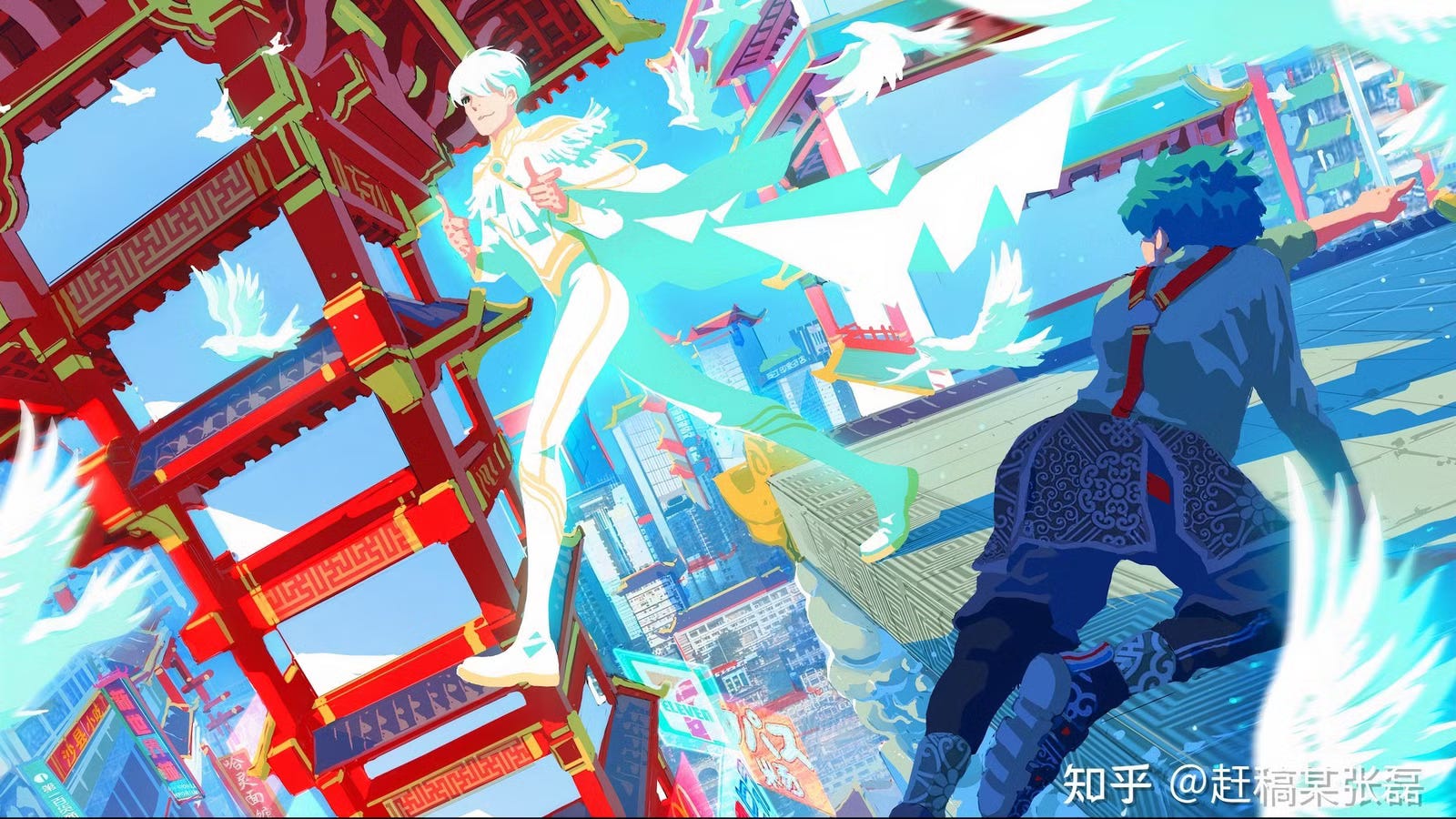
The animation is a complex synthesis of forms. Its hard to believe it worked. Three different production companies and three different animation studios. The first arc entirely in 3D digital, with a synthesis of form very like ‘Arcane’, much of the rest; a drawn world, then in the final arc, back into a complex shifting synthesis of drawn and 3d modelling as the hero of that arc has reality-shifting powers. This feels like it pulls techniques and inspiration from a wild range of animations. Many of the action scenes fell a little like Demon-Slayer-Layers, mixing drawn characters and fluid semi-digital environments and effects. I completely lost track of the number and kind of methods being used. The final section, featuring the titular ‘Hero X’, seems to draw most from the Spider-Verse animated movies; this hero transmutes himself, and others, at will between and into flat planes of animated existence, and deeper expressionist realities, before warping them back into the digital 3d ‘real world’.
This was a really good superhero series, the Chinese are really going to tank us. We are actually utterly cooked. I for one, support Xi Jinping thought and welcome the gigantic fortress embassy. Praise be to the Emperor in Jade.
13. Brotherless Night by V. V. Ganeshananthan
This book messed me up. Never again!
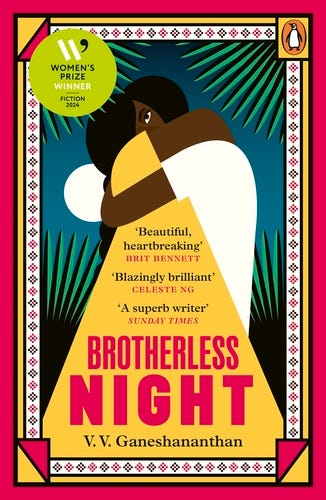
As a work of literary and empathic art, the construction of the Family is one of the high points - its intimate but measured relationships, small signals of warmth or mild disapproval, at all times the book is impregnated with a yearning for family, frustration with its limitations and horror at its loss. Its because the family, its careful environment, its micro-rituals, daily rhythms, stated and unstated arguments, are so beautifully made that the staining and the poisoning of the family with tendrils of darkness becomes a form of horror much more absolute than the outer darkness of the consuming civil war.
Its bad when there are men on the street who might kill or rape you, bad when your teachers ‘disappear’, bad when you no longer know to whom you can talk freely, but much much worse when your older brother may be the one who pulls the trigger on your younger brother.
There are so many things not to talk about. the warm hearth fire of Tamil family life transforms slowly into a hall of mirrors and performances, everyone is keeping something from everyone else, even within the family circle, everyone feels betrayed, or has been betrayed, or is betraying. Dark things happen and there is nothing you can do. You very literally cannot go home again (the front door has been mined), your brothers are murderers or dead, your father is off somewhere earning money, mum is falling into a pressure-cooker performance of her role, Grandmas soul was destroyed in the last Pogrom, along with your actual older brother
Retributive violence and invisible fear slowly infiltrate every aspect of society, slowly hollowing it out.
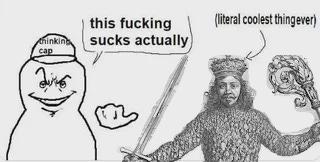
tdlr; indifferent, overwhelming and distant order is pretty fucking great actually - you literally have NO FUCKING IDEA how bad things can get.
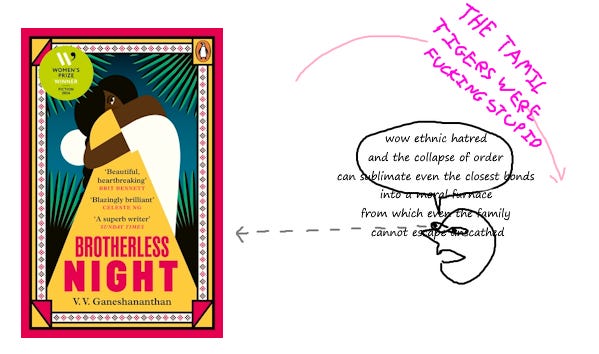
The Tigers start of as nominal heroes, or at least excusable monsters, but there are whisps of incoherent darkness right from the start, and as the book goes on, though the Sinhalese government, and the Indian Peacekeepers, are both portrayed darkly. Over time, the story really becomes one about the Tigers and their vicious, incoherent, theatrical and deluded violence. This is the story of a losing side.
14. 3 free 90s Anime
There are quite a few full movies from a golden age of Japanese Animation available for free (and legally, I think), online.
NEO-TOKYO
Very much a case of ‘let the animators vibe’.
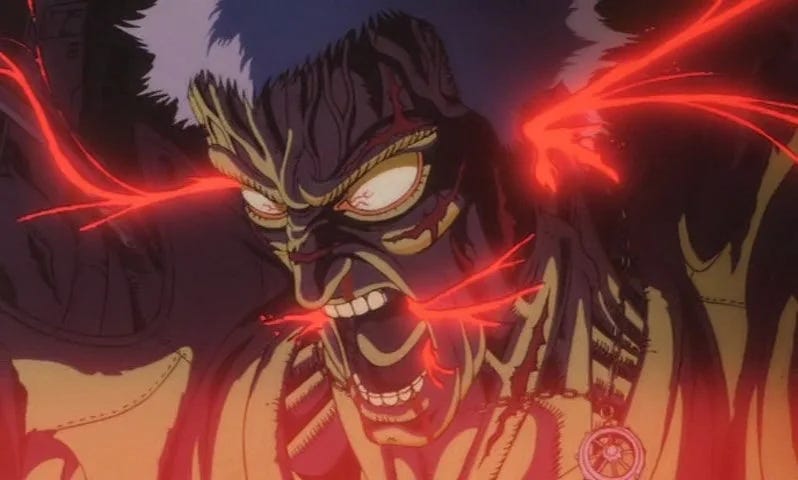
An artists playground made up of three not-really-interconnected stories; in Labyrinth Labyrinthos, a young girl explores a strange theatre with her cat, and falls into a portal, in Running Man, a racer in a cyberpunk dystopia is consumed by his own psychic powers and madness for speed and in Construction Cancellation Order, an dickish salaryman is sent to a doomed robot-run industrial project to shut it down, only to find out the robots are no longer commensurate to command.
The images, when they were good, were so good that I forgot to screenshot them. The bones of each story are fragile but it really isn’t about that, instead this is about letting animators animate, drop frames, tell stories through images alone, and taken as a horde of images and ideas this is very gorgeous.
MEMORIES
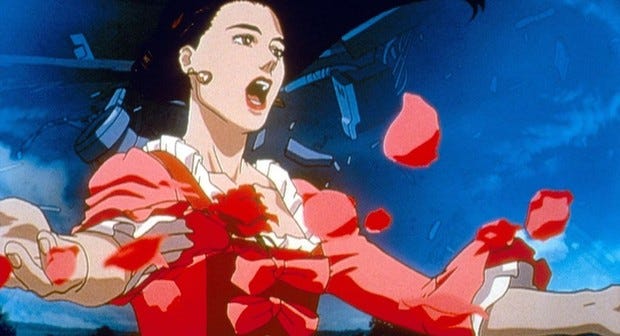
If you are watching this its because you want to see absolutely gorgeous art and animation and probably because you want to see cool as shit haunted house in space story ‘Magnetic Rose’, and some of you may want to see the “war, could it be bad somehow?” story ‘Cannon Fodder’, but NO-ONE ever talks about the middle story about a guy who develops an APOCALYPTIC SMELL - admittedly, this feels like a John Scalzi story, somehow he haunts me, even thought time.
ANGELS EGG
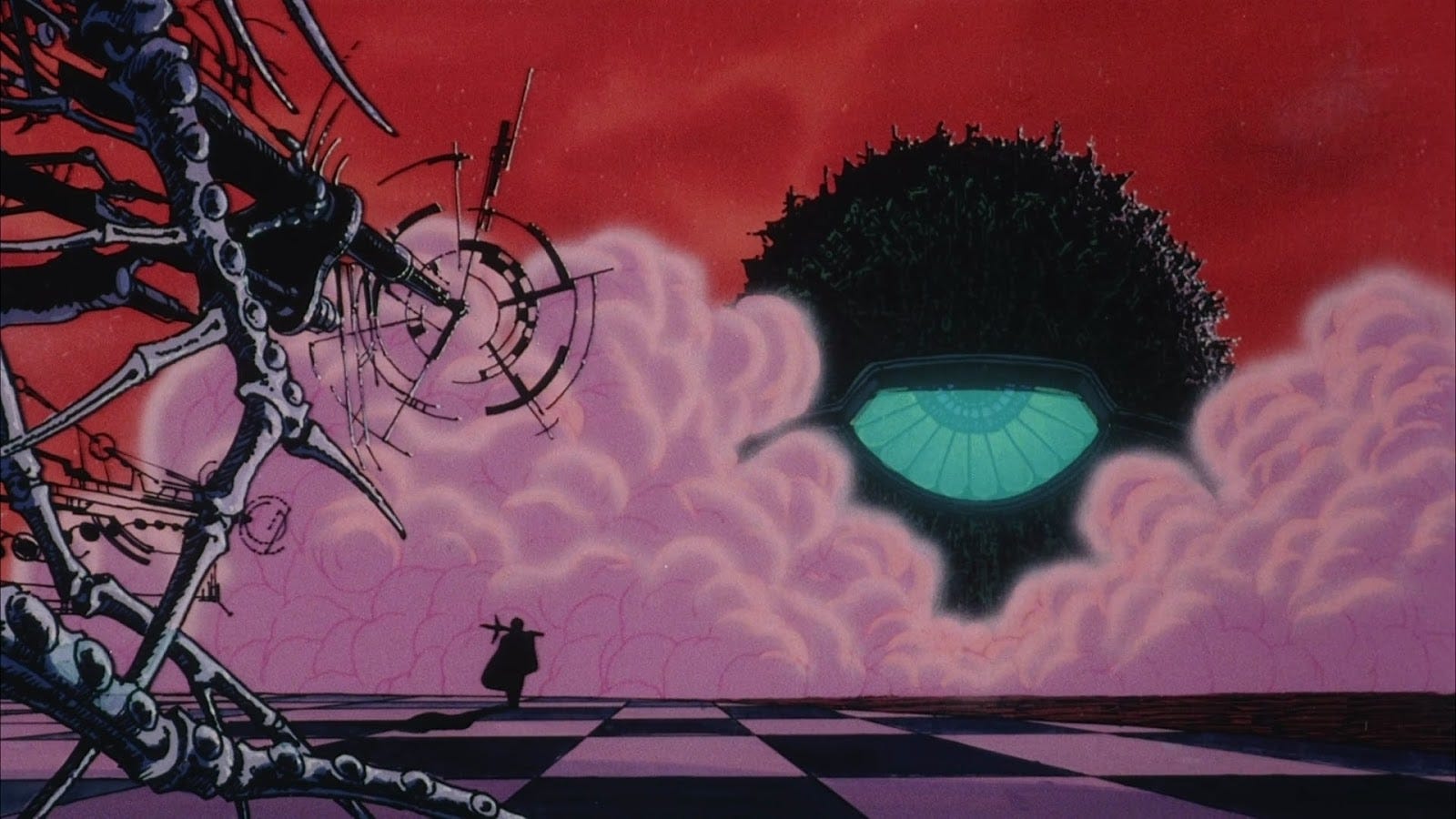
The film is like a shadow in a mirror, very much of the substance of dream. A nebulous apocalypse, an impossible reality defined by beauty and desolation. Very absolutely extremely gothic and gorgeous. One of the most purely beautiful films I have ever seen. Like a symphony of entropy, a pure beautiful fugue. If you like looking at mirrors reflecting baroque desolation through shimmering water past glistering rain then here you go, things absolutely cannot get better than right here.
15. Starseers Ruin by Adrian Tchaikovsky
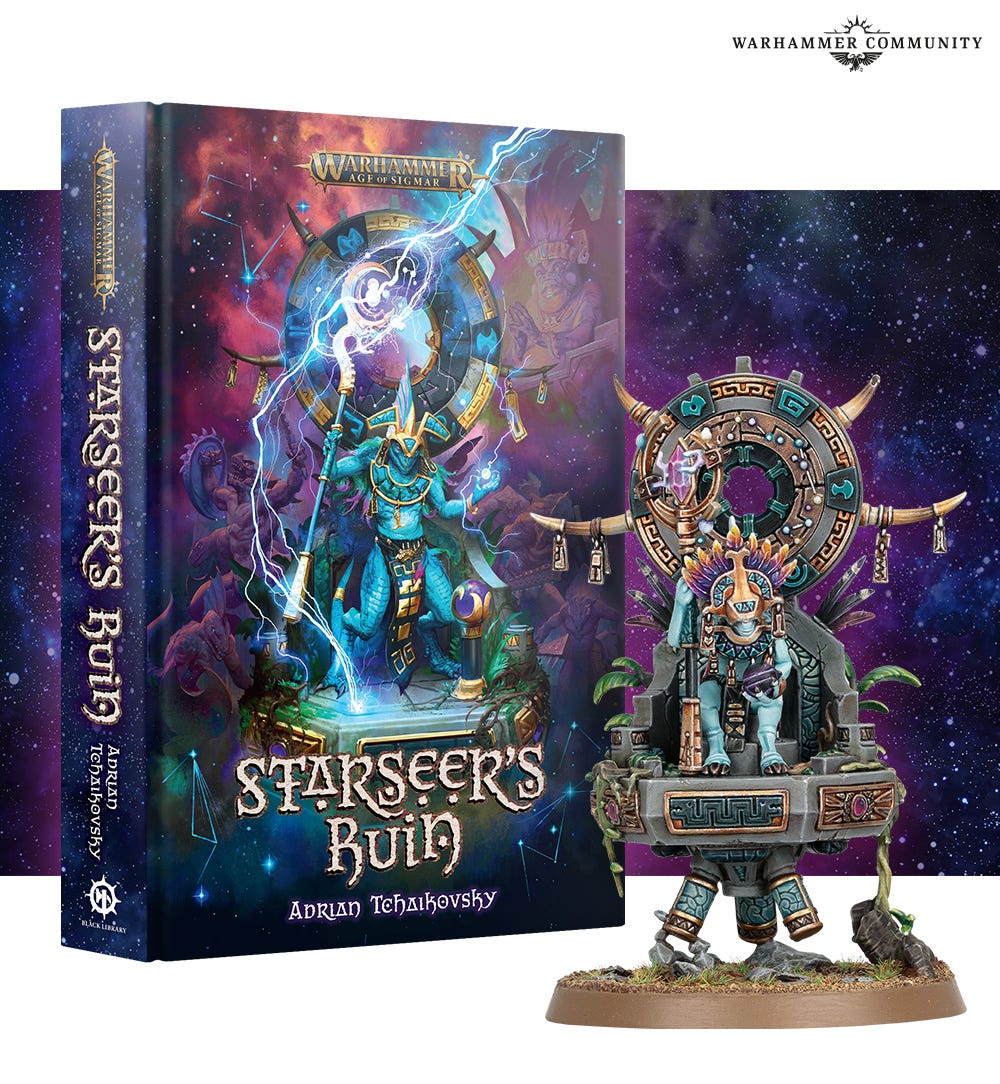
A story from the Age of Sigmar notable for being built across three very strange worldviews; a Seraphon Lizard Priest made specifically to continue a multi-aeon Grand Plan which (should) lead to the defeat of Chaos, a memory-blasted Stormcast who’s remaining tatters of identity are only locked in place by his most traumatic memory, and a pair of normal humans, brother and sister, one mage, one worldling.
There is an enemy; the reliably maniacal and psychopathic Skaven, but, the true antagonist is the gulf in understanding and paradigm between the three main group/individuals. Each is dedicated against chaos, each has an utterly different and mutually incoherent understanding of the meaning of their own lives and of the lives of others.
Perhaps the most interesting is that of the Seraphon; the Starseer in question is intelligent, curious and self-aware, and was created a one part, or agent, of a Plan; the ‘Nine Orchid Path’, which is itself one tiny fragment of a much larger plan. This life lived ‘in service to the plan’ is almost Platonic in its nature. All meaning, truth and purpose descends exclusively from above, from the grand creators of the Plan, and all any Seraphon needs to think about is how adept they are an instrument in the hands of the Plan. To be a living, breathing creature yet also a willing instrument of absolute purpose, is a queer thing. They are somewhat Angelic, or Robotic, in that sense, with a relative absence of anguish.
The fact that the plan can conceive of its own destruction and recombination (as part of it at least), makes it feel more like an entity, somewhere between an idea and an Abrahamic God. That it may require apparent ‘failure’, corruption, death and sacrifice as part of it, also feels deeply Abrahamic. In some ways ‘Starseers Ruin’ is the Book of Job writ large.
By comparison, a short human life seems both savage and philosophical. Humans are fighting not only to survive but to discover and instil meaning in their short lives. Material, greedy, short-sighted and craven, they have ranges of thoughts regarding meaning itself that a Seraphon would never conceive.
There is too much going up and down into the ruins. That’s my main criticism.
…………………..
That’s it for 2025! See you all on the other side!
Don’t forget, the False Machine GRAND SALE has FIVE DAYS LEFT!!

HALF PRICE EVERYTHING WITH CODE; HOHOHO
Wonderful list of incredible things, thanks for putting in all the effort!
I am currently watching To Be Hero X so I had to skip that section in case you gave spoilers, but it's so good! I also enjoyed To Be Hero and To Be Heroine, but they seem only loosely connected to To Be Hero X. That studio seems interesting, I'd like to check out more of their works. I also appreciate the way it's very deeply rooted in Chinese culture. The default language on crunchyroll is Japanese but I'm watching it in Chinese, feels more appropriate. It's not the first superhero or hero-adjacent story to explore the idea of celebrity, but all the same very well done and bringing a unique perspective.
Some other interesting reccs on here as well that I'll try to follow up on! I don't read too much WH/40K stuff but I do like Adrian Tchaikovsky quite a bit.