
Angevin Maxxing
“My finest angle. It’s on all the coins.”

How Far Can I Get?
O’Toole impelled me to the work. I made the mistake of watching his performance as Henry II in ‘The Lion in Winter’, a hugely-chewy knockabout which includes the whole, damned Angevin family, from Katherin Hepburn as Eleanor of Aquitaine to Nigel (King Arthur) Terry as poor, sad John the cartoon lion.
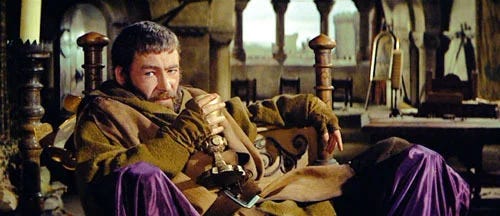
After becoming something of an Henry-Enjoyer, what can one do but watch ‘Beckett’, in which Peter O’Toole also plays Henry II, a younger version, this time dealing with the extremely frustrating Richard Burton as the Turbulent Priest? I can think of nothing like it; the same man, playing the same historical figure at different points in that figures life, but in two unconnected productions, with quite unconnected themes. ‘Lion’ is a rip-roaring piece of dashing Broooadway(!) entertainment, full of spit and shoe-shine, while ‘Beckett’ is a nominally-brooding play about Catholicism and collaboration with tyrannical power by an anguished post-war Frenchman.
Once you have watched a reasonable chunk of British history via the raw charisma ride of Peter O’Toole, the temptation begins to set in; how far could I get?
I fudged things a little and included one Young-Adult history (A Proud Taste for Scarlett and Miniver), and one actual, (though popular), history (‘The Greatest Knight’ by Thomas Asbridge), then I can take us all the way from The Anarchy to the reign of Henry III.
What follows is a review of the Angevins, via the media of;
Cadfael; The Virgin in the Snow (TV Drama). Derek Jacobi’s detective monk deals with The Anarchy. Set in 1139, Henry II (Peter O’Toole) is about 6 years old during the events of this episode (though he does not appear).
Beckett, 1964. Young Peter O’Toole (Henry II), deals with an alarmingly metastasizing Moral Principal on the part of his best friend turned Archbishop, Samuel Beckett (Richard Burton). Set broadly from 1154 to 1170, this deals with the early years of Henry’s reign.
A Proud Taste for Scarlett and Miniver, (1973), a YA History book by E.L. Koningsburg tells the story of the life of Eleanor of Aquitaine. As she hangs out in heaven, waiting for Henry to be released from purgatory, Eleanor hears tales of her life from Abbott Suger, the Empress Maude and William Marshall, capping these off with her own.
The Lion in Winter, 1968, (Film). An older Henry II (still Peter O’Toole), brings together as many of his family as he can for Christmas, intrigue and snappy dialogue written by a New York Jew. Timothy Dalton plays the cunning Dolphin, who will return to bargle dumb John in Shakespeare and reality.
Various Robin Hoods. I didn’t fully re-watch any of these but the ‘Robin Hood’ mythos takes place during the Reign of bad Prince John. The Ridley Scott version has excellent scenes with Richard the Lionheart, John, Eleanor and William Marshall. The Disney cartoon has some bearing on the memetic power of John.
The Life and Death of King John by William Shakespeare. Written probably mid 1590’s. A genuinely not good Shakespeare play with a lot of fascinating elements. Full of mad Tudor stuff and a fun look at the Doom of John and his re-canonisation in fiction as the archetypal ‘Weak, Evil King’ in anglo and post-anglo mythology.
The Greatest Knight, The remarkable life of William Marshall, the power behind five English Thrones, by Thomas Asbridge. Asbridge re-tells the story of Marshall from his own biography; ‘L’Histoire de Guillaume le Marechal, comte de Striguil et de Pembroke’, and provides commentary on Marshalls life and times, filling in or highlighting elements where perhaps the Biography does not quite cover everything.
Cadfael; The Virgin in the Ice
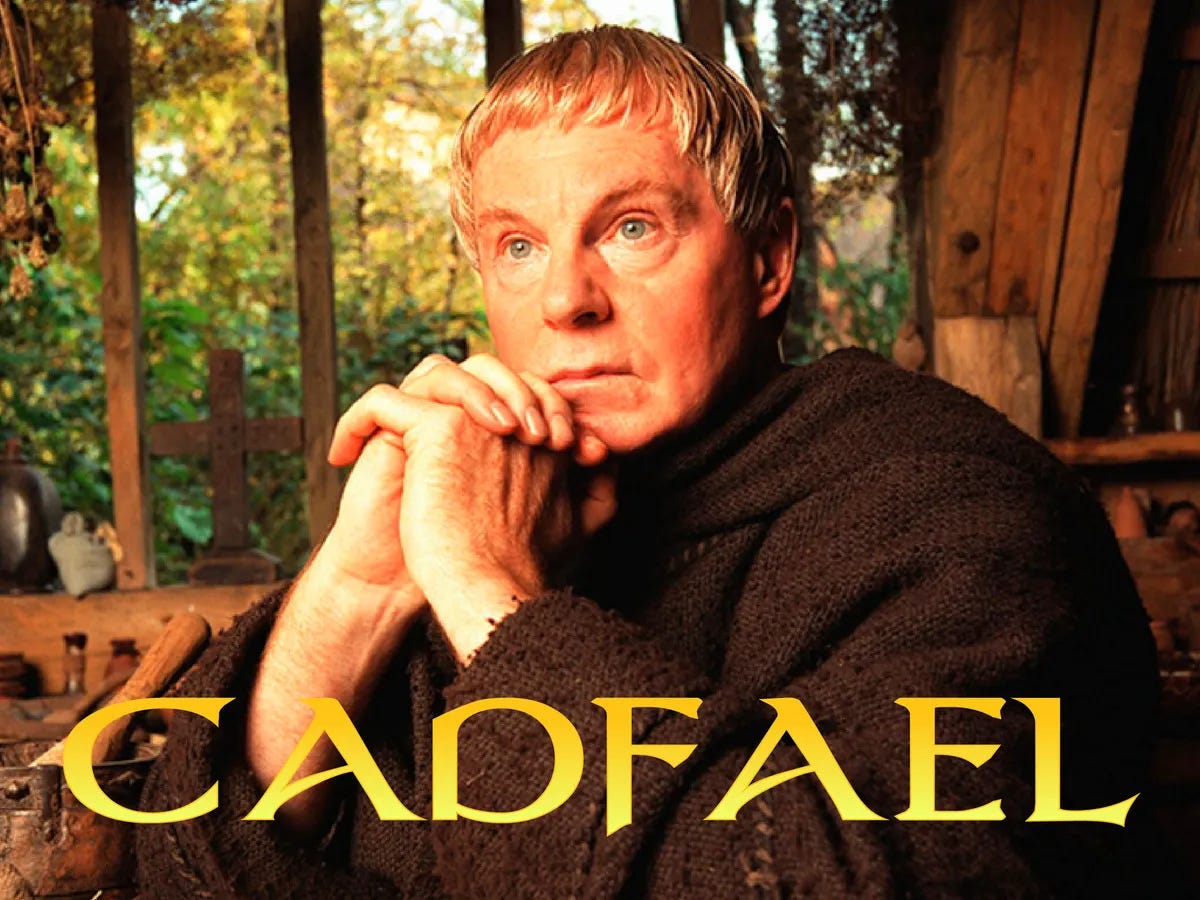
I have memories of Cadfael growing up and would happily have watched the whole series all over again, but, time is a factor. Many reviews claim ‘The Virgin in the Ice’ is amongst the best so I watched it via mysterious Youtube means.
For anyone unfamiliar with the period; less than sixty years after William the Conqueror takes the English throne for his Anglo-Norman aristocracy, almost the entire youth of the Norman nobility get on one really nice white ship in Calais harbour and, utterly drunk, encourage the captain to go really fast in the mist. The ship crashes and capsizes, everyone dies except a butcher from Rouen. This wipes out the immediate heirs to the throne. Fifteen years later King Henry I dies from eating ‘a surfeit of lampreys’. With no clear heir, England is divided between the opportunistic and semi-competent ‘King’ Stephen and the Empress Maud (mother of Peter O’Toole).
(I remain convinced that actual, pure chaos plays a substantial role in human history, one invisible to analysis due to a kind of cognitive shadow; in order to understand we must organise, trace systematise, link in sequence, and that the very act of doing so hides the interior nature of chaos from the mind which seeks it. To seek for chaos in the record of history is like trying to find mice in your library by re-arranging your books about mice. Still, the White Ship and, to a lesser extent, the lampreys, do seem like Chaos wildly waving her flag for all to see. Everything we are about to experience, the dooms and dramas, all comes from those lampreys and that rock outside Calais.)
It is an English Civil (Dynastic) War! Neither side can win so they cut up the country and chaos reigns. Into this comes Derek Jacobi’s Cadfael; the mystery-solving monk, a pure soul sliding through the chaos on a trail of classical reasoning and Christian mercy.
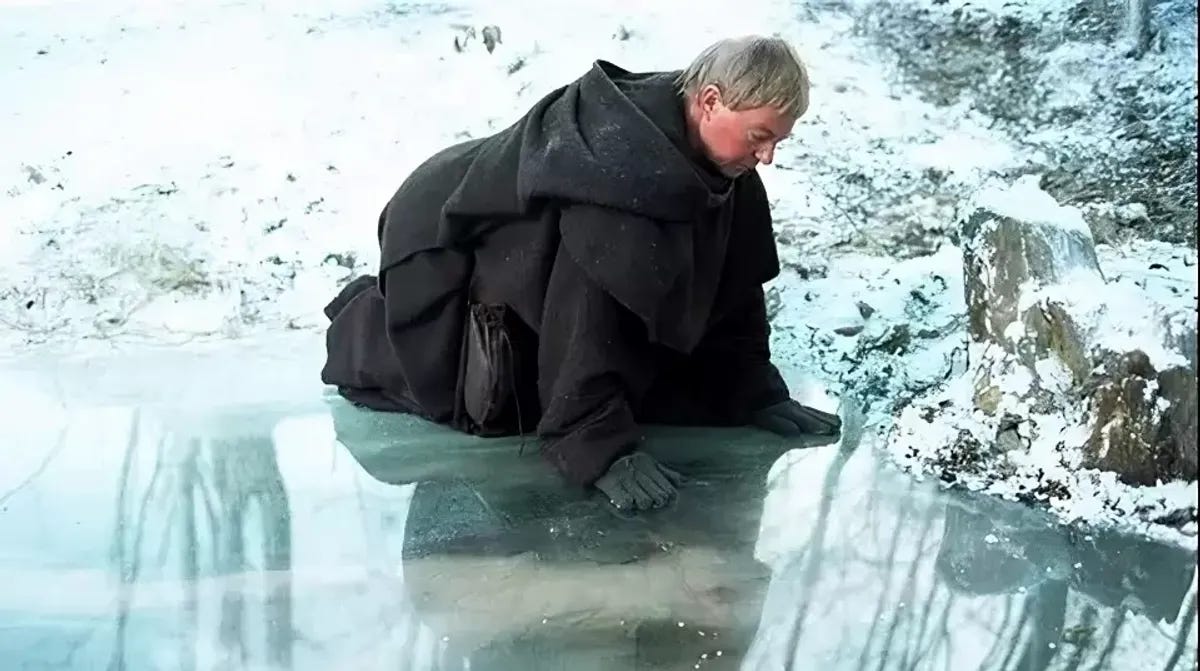
Young Patrick huddled by the television; here is Derek Jacobi, maybe the kindest, nicest most reasonable monk ever. Each episode something terrible has happened and the there is an OBVIOUS FUCKING SUSPECT, but wait says Derek Jacobi, what would Jesus do? And maybe Plato? And have you heard about how bloodstains work? This certain fungus only grows on splotchy trees and there were no splotchy trees where the OBVIOUS KILLER was found rating madly about killing. Maybe this mad ranter with bloodstained hands didn’t do it.
Cadfael, says Terrence Hardiman (Prior Radulfus, though oddly for a young Patrick, he also played The Demon Headmaster in the BBC kids show of the same name), Cadfael you are out of whatever line monks are meant to be in of, however, even though I seem a bit evil, I trust you, I can give you until [arbitrary medieval time limit] but after that the OBVIOUS RANTING BLOODSTAINED SUSPECT will be horribly bargled and/or handed over to King Stephen, Cadfael you are on your own with this one! (again).
Thus with ‘The Virgin in the Ice’; a spooky winter full of Hungarian Snow and special effects. Throw in the body of a girl, a loopy monk who keeps saying things like ‘O God forgive me I DID SOMETHING’, a mysterious foreign knight, strange possibly evil Templars roaming the land and a lot of mixed motivations. Can Cadfael use facts and logic (and being nice and reasonable) to solve the case? Yes. Also some of his First Crusade backstory is filled in.
For me this was a very rich and sentimental piece of 90s television. As regards our history of the Angevins, this is when many of them are born; Eleanor and Henry were born just before the Anarchy, William Marshall was born during the civil war and enters history being placed into a catapult by King Stephen, ready to be hurled at castle walls, occupied by his (Williams) father. The Empress Maude is defined largely by the Anarchy, and though she cannot win it, she survives, and ‘her son shall be king’; Henry II, now played by Peter O’Toole so you know he must be a pretty cool guy. Maude will show up in the background of our later fictions. (Henry was known through much of his life as ‘Henry FitzEmpress’). The Anarchy is the darkness we are escaping when our story starts.
Beckett; 1964
A film about colonialism, religion, racial divides, collaboration and principal. Under its 50’s style slightly oat-fed granola heritage movie sheen, this has some meat on its bones.
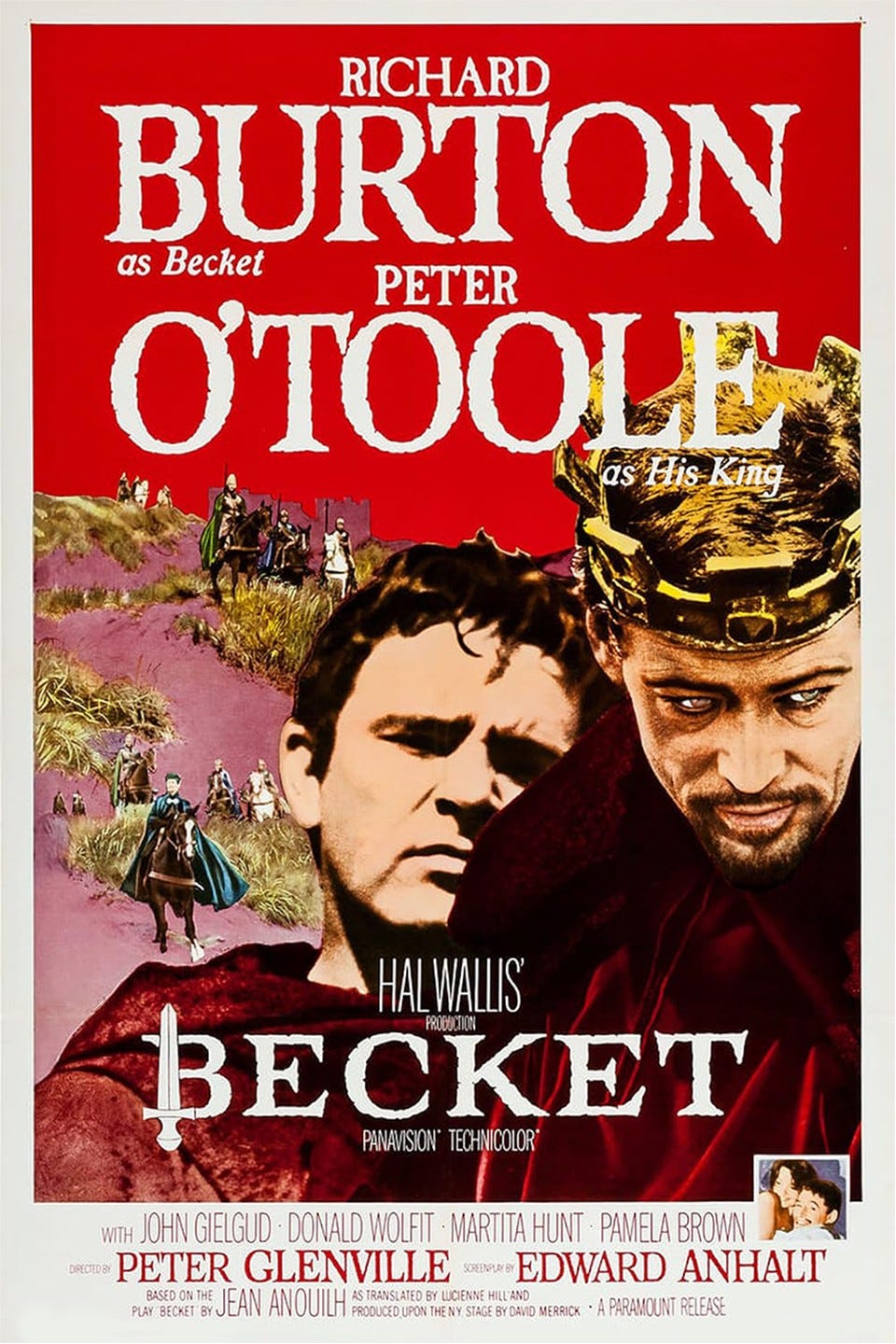
Perhaps we shouldn’t be surprised, written by anguished and intelligent Frenchman Jean Anouilh, first performed in 1959 and clearly drawing deeply on Anouilh’s memories of living under Vichy, ‘Beckett’ exists before the ‘high revolutionary’ moment of the late 60’s but in its miniver disguise it has a lot of that proto-revolutionary energy.
Anouilh’s vision of 1160’s England is of a brutal and explicit race line; Norman vs Saxon, and the film goes very hard, very quickly, in highlighting the immediacy and intensity of sexual exploitation and domination this involves.
The film is meant to be about Richard Burtons ‘Beckett’, a charming, subtle, brilliant courtier and best friend to Peter O’Tooles Henry I who, once made Archbishop of Canterbury, rapidly grows a conscience (and a degree of racial consciousness), and starts actually doing the job that Henry put him there explicitly not to do.
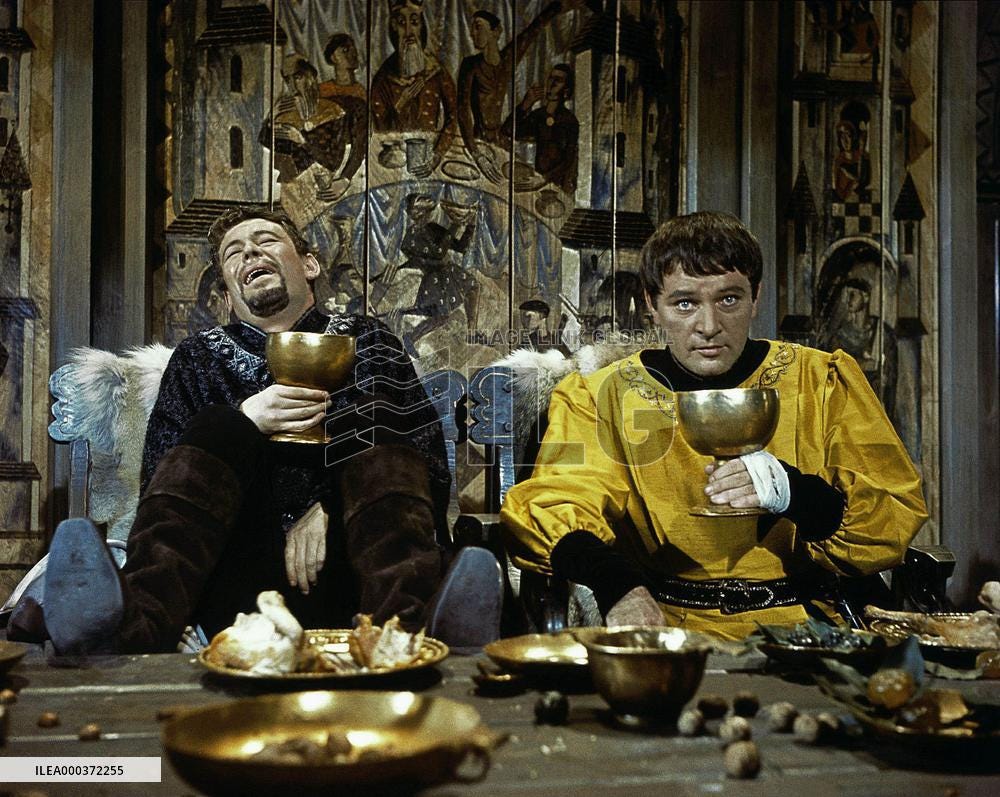
Peter O’Toole is so fucking cool and Henry is so well written in this film that it maybe becomes more of a two-hander than it was meant to be, but who can complain? Its Richard Burton and Peter O’Toole hanging out together, feuding and being lads.
This is a pro-Catholic movie, which is an interesting comparison with Shakespeare’s ‘King John’ in which the Catholic Church is only slightly worse than child murder, and it’s a relatively dark, sleazy, nasty, weak, lonely and decadent look at O’Tooles Henry II. Burton is good, holds the screen, even somewhat slightly persuades us he is at least not totally out of place as a young roisterer, but O’Toole is incredible in this role in particular - as a really genuinely terrible man he draws us along and even makes us sympathise with this lonely, ruthless, funny, anguished King.
The movie has great PROCESSIONS. I do love a procession, Medieval, Roman, Renaissance, I love them all, and we get at least two, well one, and an excommunication which is pretty great. It also has a young Sir John Gielgud as Louis VII, who I think gets cucked out of his wife Eleanor by Peter O’Toole before this movie even starts. I am glad to see in this film he does not get wet at all, (after seeing him, for some reason, perpetually bathing in ‘Prospero’s Books’ and ‘Caligula’) does Gielgud even age? I suppose as Whiskey ages.
This is a film from the 50s’ really, if the direction had been even a little more 20th century radical, or even early 20th century SUMPTIOUS and TECHNCOLOUR, then I think this would end up a very highly-rated film.
A Proud Taste for Scarlet and Miniver
By E.L. Konigsburg
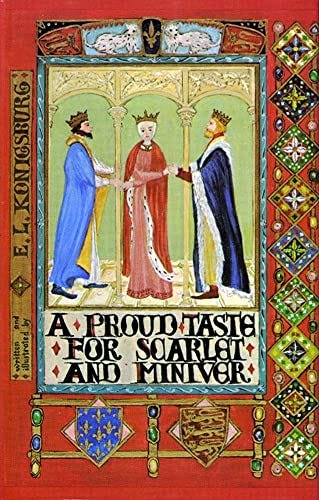
Eleanor of Aquitaine! Later she will become Pamela Brown in Beckett Katherine Hepburn in Lion in Winter an briefly Eileen Atkins in Ridley Scott’s Robin Hood, but here in this young adult history, she is only herself.
Eleanor’s history reads like the Mary Sue of some Medieval fan-fic. She can’t keep getting away with it! Beautiful, wilful, highly intelligent. Heir to a huge chunk of Southern France. She marries Louis VII of France, goes with him on Crusade, possibly cucks him with her uncle. Makes at least one terrible military decision, (she lead the Crusade march from the front, with her gang of female ‘Amazons’). Totally fails to get along with her husband. Runs into a young Henry I (Peter O’Toole). Then, somehow, and I don’t know enough about medieval culture to understand how she finagles it, but judging by the absolutely terrible time all other women seem to have, she must have been cunning as a rat, she divorces Louis VII, runs off with Peter O’Toole, marries him, has I think five male heirs, betrays Henry multiple times, gets imprisoned, released, sadly survives all her children apart from the family idiot, and dies in the middle of the destruction of the Empire she helped to create.
This Empire;
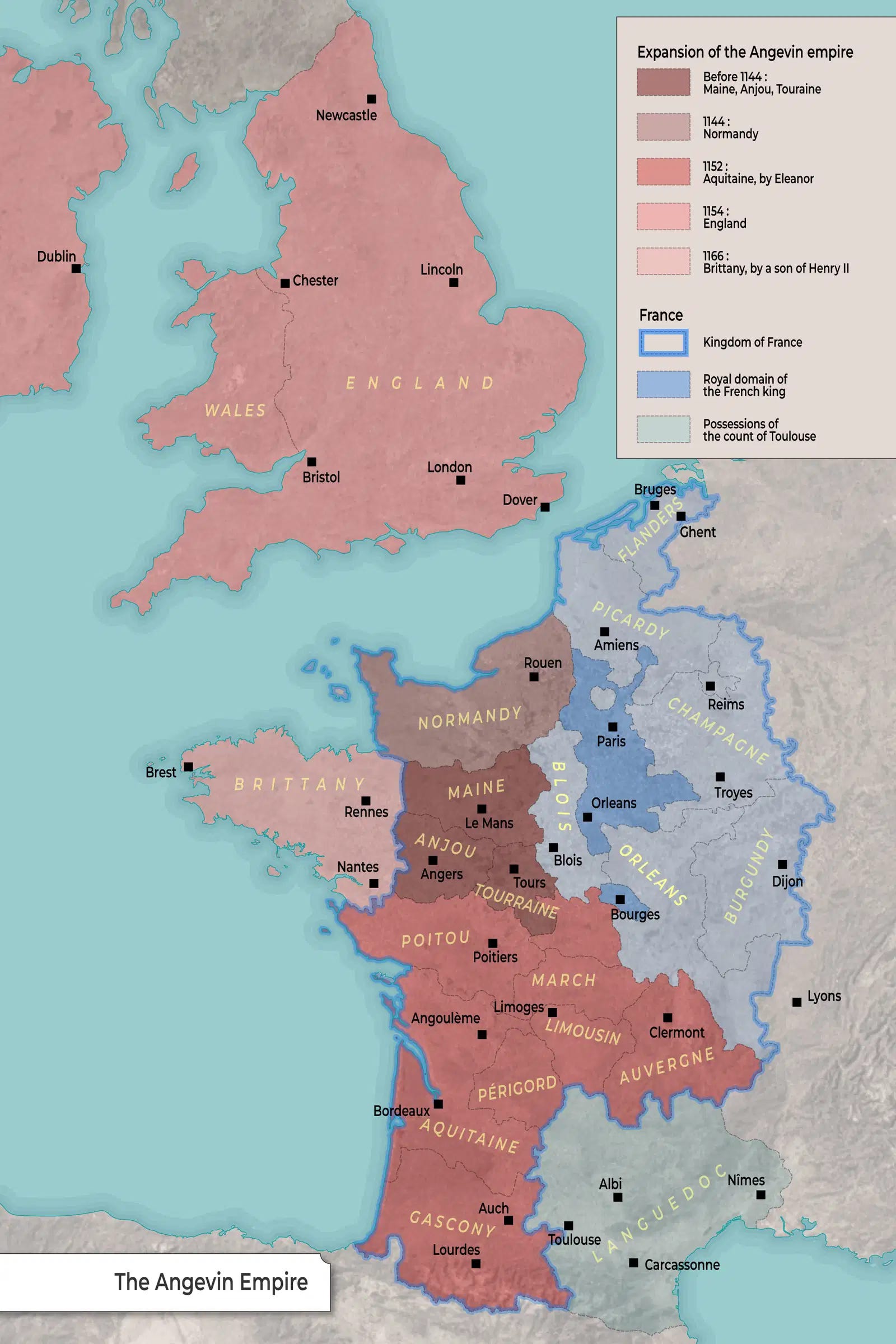
This huge, ridiculous sweep of bargled-together lands and inheritances. Henry brings England, and the Normans retain their lands in Normandy. He also subdues Wales and parts of Ireland. Eleanor brings the Aquitaine. This mega-kingdom bigger than either England or France, is what people are fighting for, are dreaming of. The spell of this Empire hangs like a dream over the minds of generations of Anglo-Norman nobility up perhaps even into the reigns of the Tudors; ‘what if?’, ‘maybe..’, ‘it could have, it should have been mine, been ours..’
A dream to some, a nightmare to others. Angevin-maxxing reduces the Kings of France into an almost symbolic minority role within their own country. It is a threat, a mockery of the crown of France for as long as it exists. And, as a super-powerful trans-nation, it is not exactly popular with other smaller European nations. And it is separated by the Channel, the Channel that Henry I crosses each time, his fist raised to God, as if he saluted an equal Lord – and remember the White Ship, you can never be sure of La Manche.
Having built this mega-structure, two of the smartest coolest people alive have massive fights over maintaining it, and in the end their stupidest and most villainous son is the only one not to die of dysentery or war. The Angevin lands are lost. But what if…
Scarlett and Miniver is a much more warm and personal book than all of this Empire-Building. Everyone is hanging out in heaven after the events are done. They have had time to reflect and calm down. They also lean down over clouds to watch the projections of outdoor cinemas to catch the news. I hope observing World Wars One and Two wasn’t too stressful.
It is interesting to hear from Abott Suger, a rare look at a medieval churchman obsessed with aesthetics and gems who is not evil and scheming. Instead he invents the Gothic Cathedral as a gallery for European Gloom. I recall Umberto Eco dealt with a similar gem-enthusiast monk in ‘The Name of the Rose’, but that man came over as nasty and mendacious. Our post-reformation minds literally cannot comprehend adorning the Glory of God with a tonne of precious gems.
We also have stories from the Empress Maude/Matilda, and William Marshall; “during my service to the royal family, I had to switch sides to stay on the same side – the side of truth and justice.” CHAD.
An extremely sweet book. Good for Eleanormaxxing, which it’s hard not to do after watching ‘Beckett’ and ‘The Lion in Winter’ in succession. This is historical fanfic really, for when you get so used to a popular long-running character that you just don’t want to see them leave, so you go and write a YA history fantasy book about more of Eleanor’s adventures. I am not complaining, I also wanted more of Eleanors’ adventures, and for her to reconcile with Henry. Who wouldn’t? I wonder what Henry II got up to in not-heaven? Luckily he doesn’t seem too bothered by it.
The personalities of this book fit exactly those of the characters in ‘The Lion in Winter’, to the extent that if feels as if they were written alongside each other.
The illustrations are lovely and I am very happy that E.L. Konigsburg did them herself. I wonder if there are colour versions anywhere?
The Lion in Winter, 1968
(I already reviewed this once.)
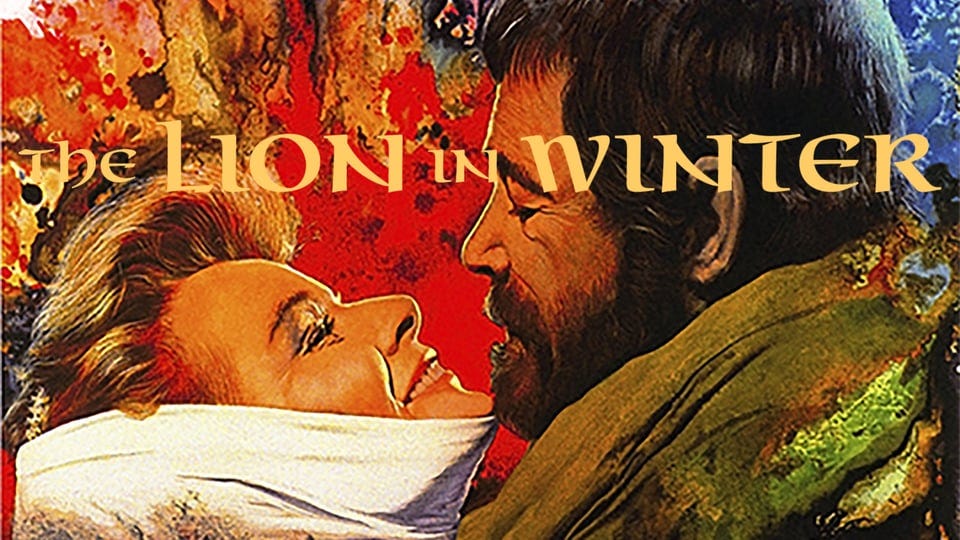
It is the winter of 1183. Peter O’Toole, by power of his charisma, the depth of his cunning and the will of (presumably) God is Lord of the Angevin Empire. His wife Eleanor is currently in prison for betraying him. I think by this point multiple of his Sons have betrayed him multiple times. The only one he likes is John.
Peter O’Toole (Henry II), calls together his whole family and the Dolphin of France to hang out together over Christmas. Everyone bring your plots, schemes and resentments! Knives will be provided.
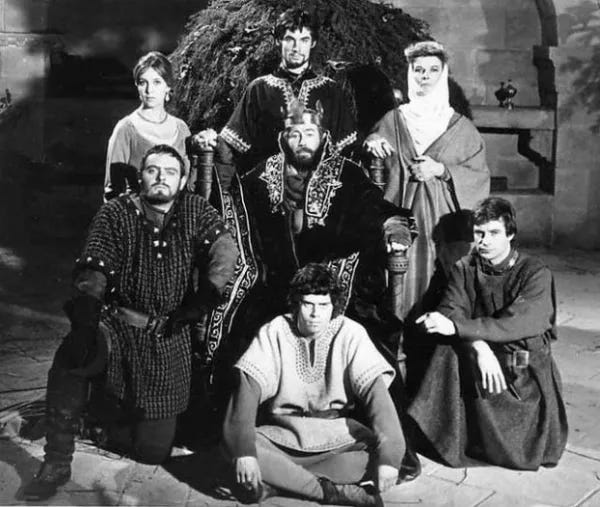
A labyrinthine brutal knotwork maze of intense and corrupted family interrelations where every personal conversation is a political conversation and where every political conversation is a conversation about love, desire, vindication or retribution. The savage angles of the human heart compressed by power.
The dialogue is dense. Ridiculous, sometimes overworked, word-play where double, triple, and quadruple meanings breed and fight amongst each other. It is a counterplay of words so neat you can barely force a thought between them and such a monumental masonry of PERFORMANCES (everyone performs in caps), that to look on them, one is standing always in the shade, making it hard to see the whole thing. Its tremendous fun and a bit overwhelming.
In spirit this has much more in common with ‘Scarlett and Miniver’ and ‘The Virgin in the Ice’, than with something like ‘Beckett’ or ‘King John’; ‘Lion’ is only set in History, it’s really about the people and concerned primarily with them. I don’t think this story has some grand historic point to make, it nearly doesn’t have politics.
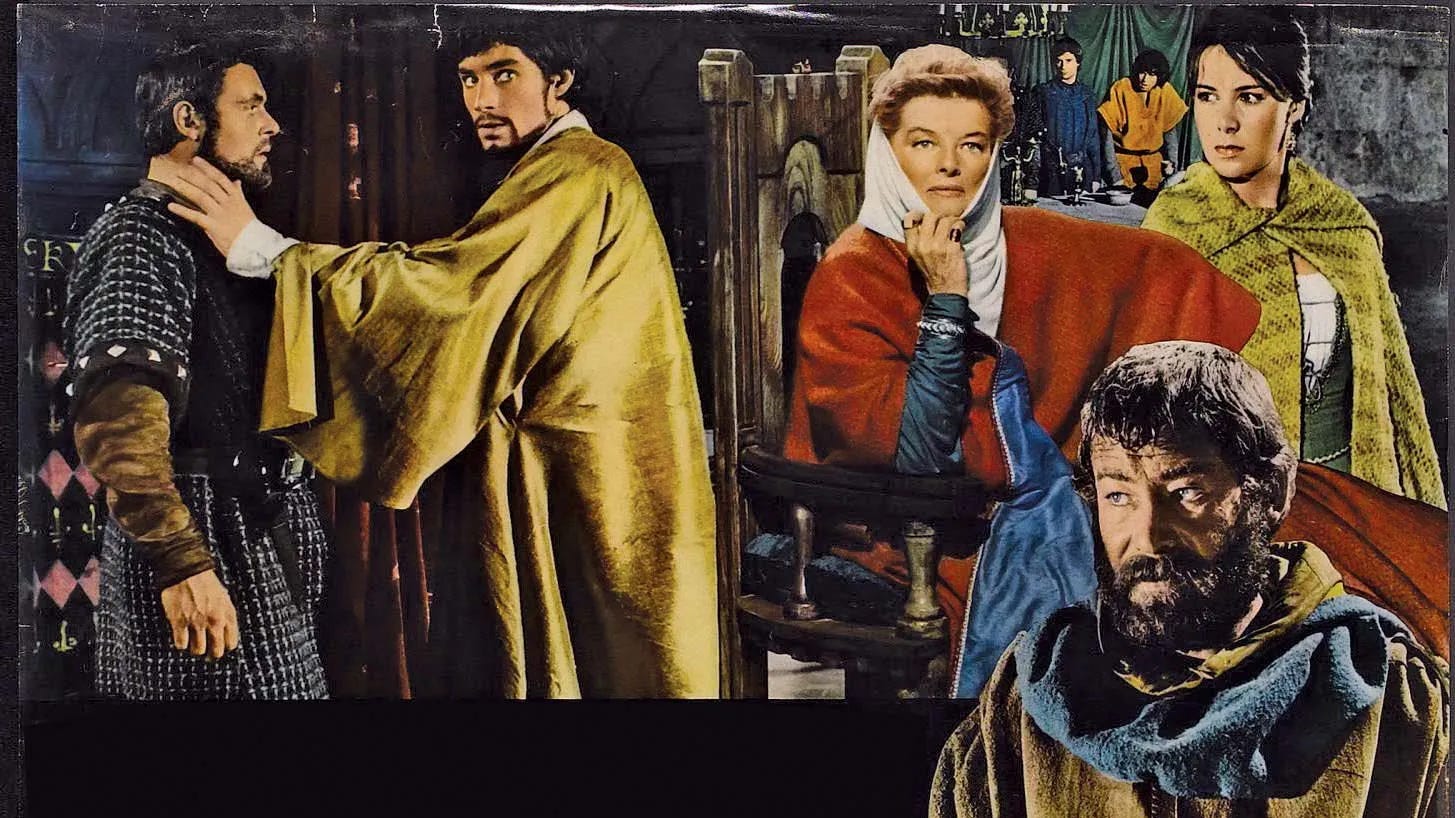
Pauline Kael didn’t like it. It is very play-like, self-consciously clever and quite a bit cheesy. (One slightly out-of-world comedic line in the middle doesn’t work well, and ferrets the foundations of the empathic speech which proceeds it.) It’s a story that seems afraid the audience will stop listening if it slows down; too many clever words, the twists and involutions are too manifold, too much in and outing, twisting and turning, (a multiple-people-behind-tapestries scene hovers around farce), not a good ‘text’. It doesn’t even have a single clear subtext so how can it be any good?
Well, yes. It’s literally a comedy, and a Jewish family comedy at that. Now of course everything makes sense.
“The Lion In Winter is only apparently historical . . . it is a comedy but not the kind we’re used to seeing . . . it wants to be a vision of the world with tears but without tragedy, with passion, pain and funny things all caught in bright clear comic light.”
Fair enough James Goldman.
Varied Robin Hoods
Its already too much. I won’t make you watch Ridley Scotts murky Robin Hood, but be aware there are handful of scenes in there with Richard the Lionheart, and some great bits with Oscar Isaac’s John against Eileen Atkins’ Eleanor; “Spare me your faming metaphors mother, you know I don’t understand them.” William Hurt plays a lore-accurate William Marshall, leading a cavalry charge as he would whenever given a chance to do so.
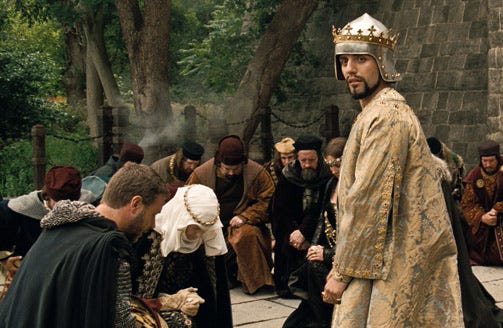
All in all a bad film, but the Angevins are the best parts of it. Somewhere there is a 20-minute cut of Robin Hood, without much Robin Hood.
This is also one of very few films to include the Magna Carta, something that was very important, then wasn’t, then was for a bit, then wasn’t for a long time, then it turned out it was again and had been all along. Marshall is more closely connected with the Big Chart than many histories show.
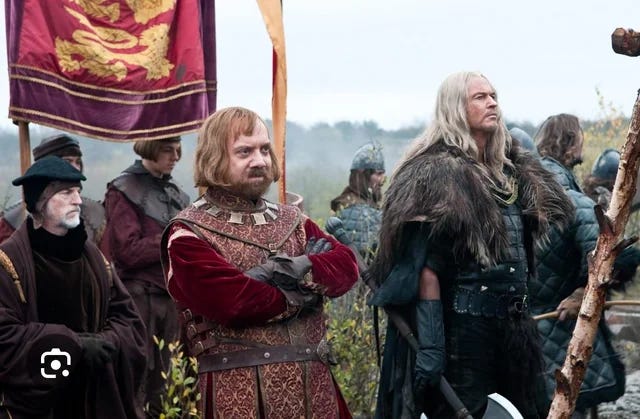
In ‘Ironclad’ Paul Giamatti plays an extremely fun John, memorably setting pigs on fire. Always up for a scheme that lad.
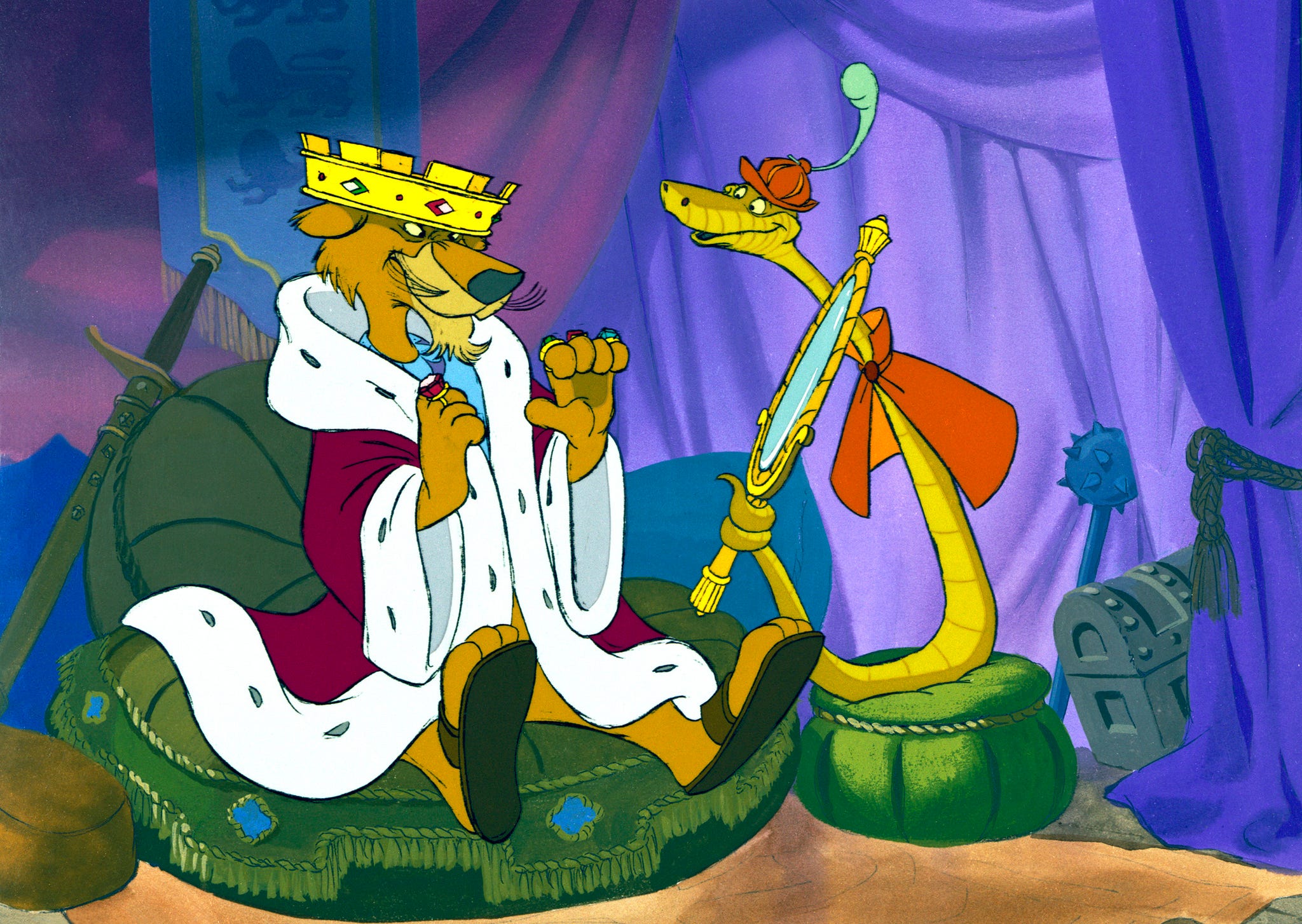
In Disneys animated ‘Robin Hood’ Peter Ustinov plays a wonderful scrangy rangy Lion Prince John, his fat gold rings nearly falling off his hand.
I honestly can’t get too deep into the ‘Robin Hood’s’ as they are their own huge thing, but suffice to say, after various dynastic musical chairs, Henry II does eventually die, and the Kingship falls to Richard the LIONHEART, who then goes on crusade, is captured by the King of Austria on the way back, ransomed, revolted against by John, forgives him, runs around supressing revolts in France and is shot by a crossbowman. This leads us to;
The Life and Death of King John
By William Shakespeare
Read in text and viewed on Youtube here
‘King John’ is a dim and murky play about a dim man and murky time. It is a play about failure. The way it opens you would think we had just lost a war. It reminded me of stories set in post-WWII Europe, as if everything is happening in the lee of some great energy-sapping meaning-devouring disaster - but the disaster hasn’t happened yet.
In ‘The Life and Death of King John’, King John faces the challenge of an aggressive, ruthless and competent French King, (and the Dolphin), wielding a handily-named Nephew; ‘Prince Arthur’, with an alternate claim to the English throne. Facing down these problems, John largely fucks them up; schemes, lies, murders, dies.
The murk, weakness and disorder would make this period a fine subject for a better, subtler Shakespeare - everything around John is strange and fragile, weird, umbral and Nixonian – a weak, bad man you cannot help be false to, and false around, and this is nearly, or almost, a good play, with many of the dooms and subtleties mirroring things Shakespeare would later do better and in other ways. There are signs later in the play that John actually could be quite a good character if you let him cook; meek, mother obsessed, shifty, self-deceiving, play-acting even - John in King John is a little like a crappy proto-test version of Hamlet.
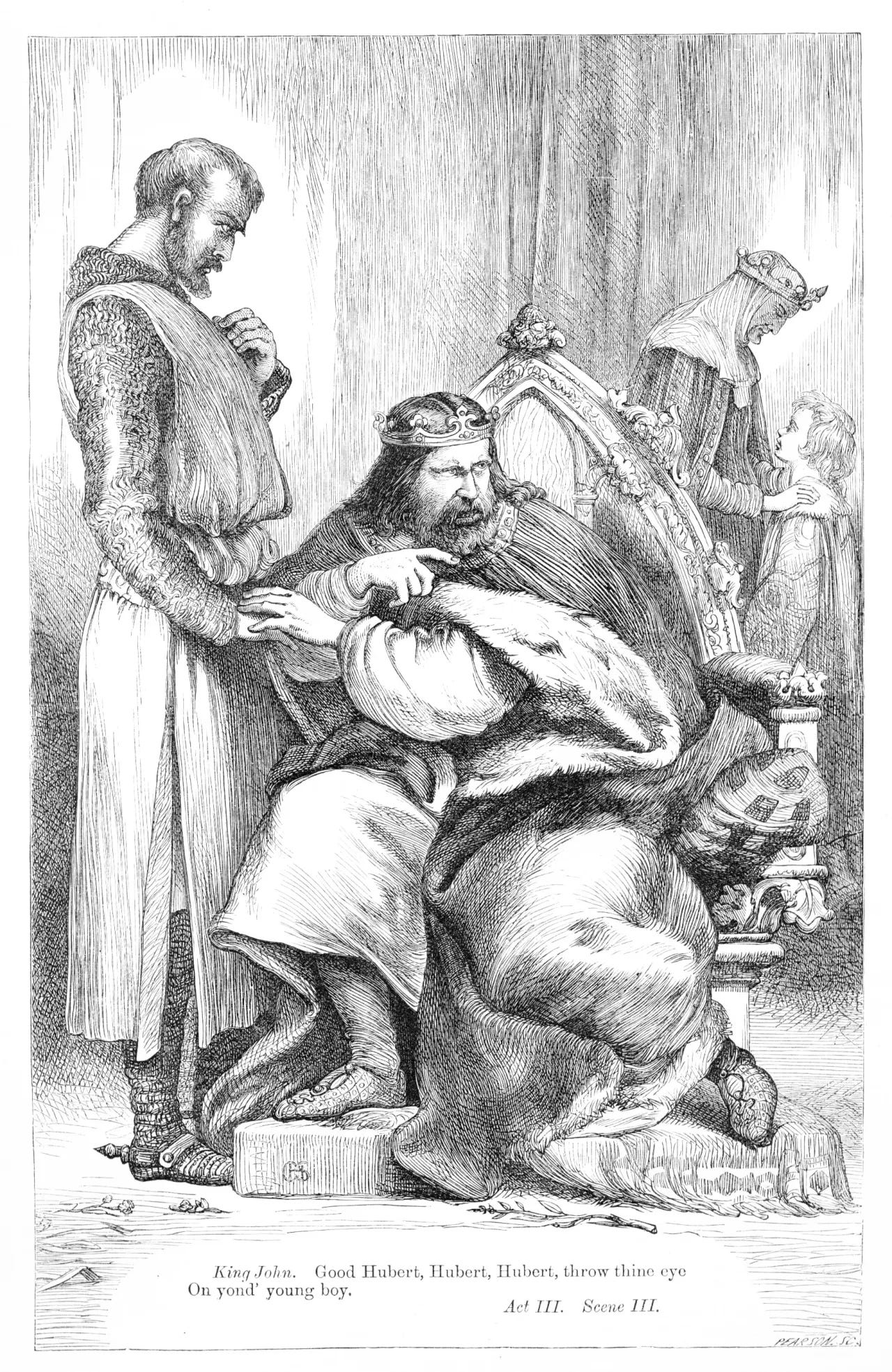
The really good ‘John’ scenes are; after the siege of Angers, he, using purely tacit and deniable language, effectively orders the murder of his nephew Arthur, ‘Oh if you could hear me without ears, see me without eyes’, then later once he believes the thing has been accomplished, blames the very man he ‘ordered’ to do it, for provoking him into it, in a sequence dramatically fascinating for its shamelessness and moral audacity ‘Hadst thou but shook thy head, or made a pause,”, and then towards the end when John is cutting deals with the Church, trying to nail down his barons, and finally, dying in the middle of bad news ‘I am a scribbled form, drawn with a pen, Upon a parchment, and against this fire, Do I shrink up.’, he has some excellent lines and behaviours.
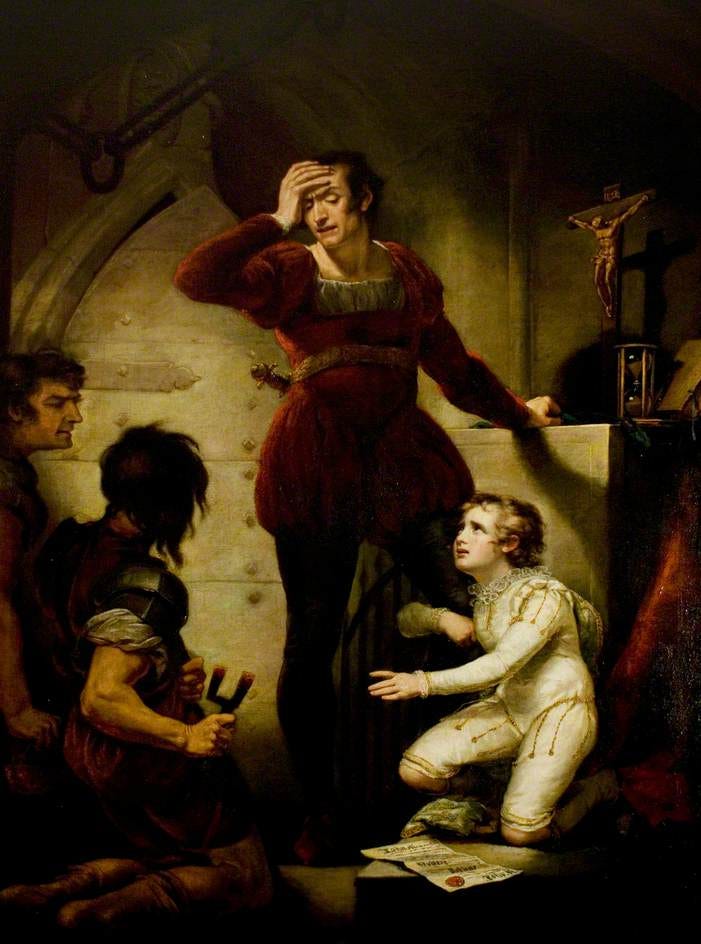
There are other stand-out moments; Constance being told that she is in love with grief, actualises the grief by saying that grief ‘wears her dead sons clothes, puts on his happy looks’. Still, there is a lot of bad. ‘John’ is such a mid play you would think it was a test-bed - he makes Hamlet vacillating the centre of a play, which is in a form of Johns weakness, and he makes a ‘Bad King’ play in ‘Richard III’ where the answer is just to have the Bad King on stage all the time, constantly outwitting people, and talking to the audience about how cool he is.
But ‘King John it comes in the middle, after Shakespeare has already written several good plays. He knows how to do it, he just didn’t do it here.
Woke Play
Not in the sense that its politics are the same as the modern idea of ‘Woke’, in fact the play is nationalist, sentimental, bigoted and false, but many times watching and reading King John, I did get a similar feeling to mid-awokening corporate product, I think this breaks down to three ways it echoes those works; awkward aggressive politics, weirdly over and undercooked plot and structure, and pasting over all of this with and Edgy Badass.
The Awkward Aggressive Politics;
Can the catholic church be even worse than child murder? Despite existing in a very John-esque ‘post fall of Berlin’ psychological state where it feels like everyone has just left a smoke filled room to enter another smoke filled room, and the play being built around and dealing reasonably well with, these murky people doing murky things, it keeps trying to be patriotic in a very aggressively Tudor/Victorian way despite the fact that nothing happening on the stage would in any way impel anyone to thoughts of patriotism. Everyone is scheming, compromised, bigoted, false. Battles begin in manipulation and end in negotiation. Armies are mercenary, war aims are limited, and generally fail. John takes a brave stand against the Catholic Church for no politically adapt reason anyone on stage can name, then just as quickly submits. All of this leads on to;
Over/Undercooked Plot
It feels like a huge, and I mean gigantic, number of plot threads come from and lead to, nowhere - like a Disney production, a lot of stuff ‘just happens’
· the Siege of Angers, ended by a marriage deal - why?
· Prince Arthur imprisoned, then condemned, (to be blinded? killed?) then released, then thought dead, then actually dead in spontaneously jumping off some battlements? What?
· “Your mother and the other main female character died recently offstage my King. Sorry no-one thought to mention this.”
· “Lads, you are horribly betrayed by the Dolphin. Neither he nor the playwright thought to mention or even infer this before, and it seems totally out of place for the character we have encountered so far but I am dying like a melting candle so you have to believe me.
OK we will believe you.”
· “Our battle was disastrously lost offstage my King O wait you are dead.”
· “No it turns out the war is over and we have arguably won due to other offstage events.”
A play is naturally and inevitably a condensation of events and even the best will have loops and issues but Jesus Christ this feels like Disney Star Wars for how crazed and arbitrary a lot of it is. I wonder if you can come up with some kind of alternate ‘Noisms Law’; “the presence of known real-life historical events in the minds of the Audience does not excuse bad or inexplicable plotting.”
But don’t worry, we can solve all this by…
Pasting Over It With An Edgy Badass
What if there was one cool guy who commented on everything (not unlike a sotto-voice Michael J Fox character from the 80s). Literally just put one very COOL guy in there?
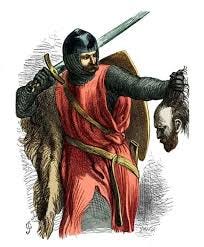
The figure of ‘The Bastard’ is fascinating as he is clearly the best character and also, in the same way an over-functional aid might cause a wound never to close, his presence is clearly preventing the play from getting any better
‘The Bastard’ is Faulconbridge, introduced in nearly the second scene as an older son being disinherited in favour of the younger son - the reason being that ‘The Bastard’ (which is how he is referred to in the script), is the illegitimate son of Richard the Lionheart - this is something agreed to almost immediately by John and Mummy Eleanor; ‘he is the very image of a Plantagenet’ - in return for being recognised as an official, unofficial, scion of the House, Faulconbridge gives up his claim to the family estate, becoming ‘Cuz’ to the King. From this point on, and likely intentionally, it is as if the resurrected spirit of Richard the Lionheart is haunting the action, standing in the eves, commentating, and getting threatening with the foes.
This character, who works well, and is fun, feels exactly like the kind of a figure a 1980’s TV executive would insist be added to a failing show; ‘a cool guy, a loudmouth, but a tough guy, with a heart of gold, and edgy, and he’s got jokes, a funny guy, and really tall and good looking, and hey let’s make him to son of [previous cool well-liked character], like a lost son, but he’s just like [previous well-like character], but he’s edgy, a bad boy who does things his own way, and he’s not like rich or anything, but he’s still rich enough to have good clothes, and he fights and kills the archenemy of [previous well-liked character], and is good at fighting, and doesn’t care about rules and orders (but does the right thing because of the heart of gold)’.
The Life and Death of King John doesn’t actually have that much King John in it because whenever the play flags, and it does constantly, William wheels on The Bastard Faulcobridge to say and/or do something cool and funny. This also means the play is not going to get any better, because every time the drama runs into its fundamental limitation (John), the solution (Bastard) takes over
The Life And Death Of Meme John
John as real-man has been, or at least people have tried to, historically revise his reputation away from being comedically awful loser to ‘less competent but difficult circumstances’
He still sucks though. Its deeply ironic that his loss of the Angevin empire in France helped, by dividing Lords from their lands, to create, to some extent, both ‘France’ and ‘England’. A lot of top guys lost their continental holdings and all they had left was the blessed Yookay - thus their interests converged a little more with those of the average Thane on the Thames. Though the Anglo-Norman Aristocracy would spend god knows how long fantasising about its lost European Empire to an extent you wouldn’t fucking believe .
I don’t know enough about the history to really comment on John as Man
John as Meme though...
By memetic effect, I feel like ‘King John’ has become much more powerful in death than he ever was in life. Being formed into the image of the ‘useless, craven, but cunning’ king by Sir Walter Scott, and that being carted almost directly into ‘The Adventures of Robin Hood’ - the guy is literally a cowardly Lion in Disneys ‘Robin Hood.
It’s probably the one-two of John crossing over between history, and (somewhat more) history aligned plays, on one hand, and being the perpetual and distant villain for the entire Robin Hood legendarium on the other, that lends him this repeated, memetic drive. ‘Scar’ from the Lion King is nearly ‘John’ again, Commodus from ‘Gladiator’, Joffrey from Game of Thrones may be the latest.
Sir Walter Scott;
“Attended by this gallant equipage, himself well mounted, and splendidly dressed in crimson and in gold, bearing upon his hand a falcon, and having his head covered by a rich fur bonnet, adorned with a circle of precious stones, from which his long curled hair escaped and overspread his shoulders, Prince John, upon a grey and high-mettled palfrey, caracoled within the lists at the head of his jovial party, laughing loud with his train, and eyeing with all the boldness of royal criticism the beauties who adorned the lofty galleries.
...
Those who remarked in the physiognomy of the Prince a dissolute audacity, mingled with extreme haughtiness and indifference to the feelings of others could not yet deny to his countenance that sort of comeliness which belongs to an open set of features, well formed by nature, modelled by art to the usual rules of courtesy, yet so far frank and honest, that they seemed as if they disclaimed to conceal the natural workings of the soul. Such an expression is often mistaken for manly frankness, when in truth it arises from the reckless indifference of a libertine disposition, conscious of superiority of birth, of wealth, or of some other adventitious advantage, totally unconnected with personal merit. To those who did not think so deeply, and they were the greater number by a hundred to one, the splendour of Prince John’s “rheno”, (i.e. fur tippet,) the richness of his cloak, lined with the most costly sables, his maroquin boots and golden spurs, together with the grace with which he managed his palfrey, were sufficient to merit clamorous applause.)”
Lithe (not square)
Fancy (not subdued)
Femme (obv)
Craven but not quite a Coward
Manipulative and indirect
High Power Distance (un-anglo)
Insidious and Familiar (un-anglo)
Disrespects Women (unnatural relationships)
Bad Play
There is a particular pleasure in watching and reading something you know is a ‘bad’ Shakespeare play. If you know its good, and it gets difficult or strange, then it is your fault for not understanding, but if you know it’s bad going in, if something doesn’t work, then why worry? William got it wrong.
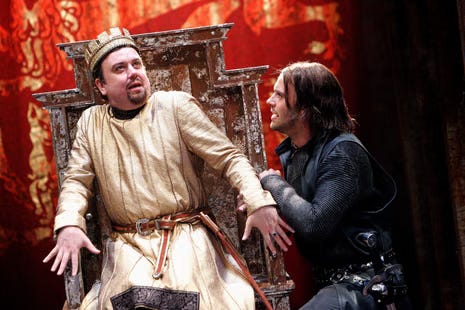
Knowing the play is low-status makes it easier to accept and interact with.
William Marshall Is In This!
William Marshall is kind of in this one! As ‘Pembroke’ a minor hanger on and secondary character of no great consequence, bearing almost no relationship to the impression of ‘William Marshall’ we get from his own history. I wonder how many other incredible stories are hidden under minor titles in the background of a Shakespeare play
…
If you have made it this far; well done. We have had our Monk, Bishop, Queen, King, Outlaw and Villain, now at last, and at the last, a full-on chonking hero;
The Greatest Knight
By Thomas Asbridge
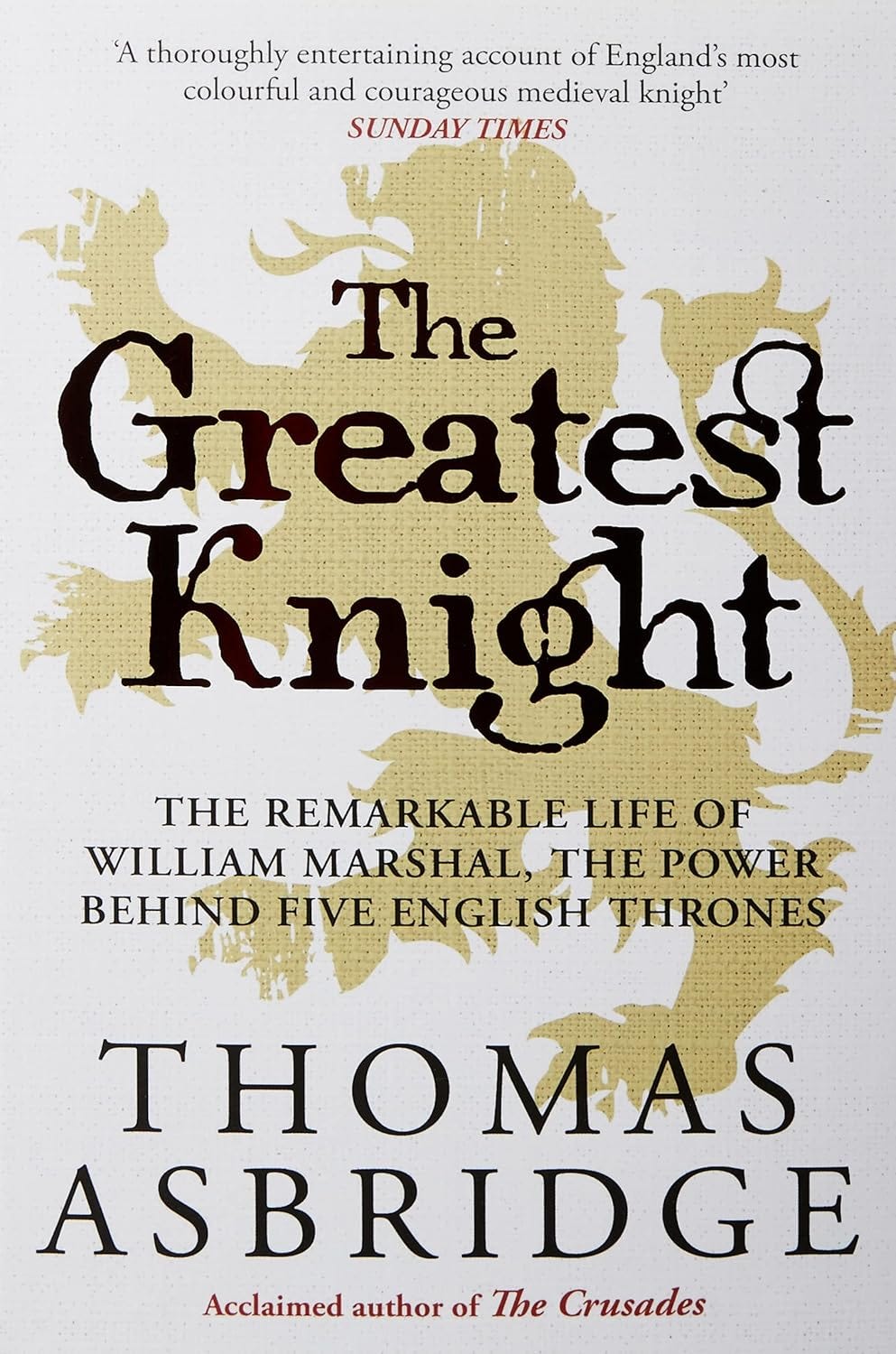
A history and historiography of “The History of William Marshal”, a 12th/13th century Knight who rose from being the cast-off son of a petty noble house to a magnate of England and a major part of the Angevin Dynasty. A man who served five Kings and survived four of them; Henry - the Young King, Henry II - the Old King, Richard the Lionheart, King John, and King Henry III, not to mention a period of service with Eleanor of Aquitaine.
The only reason we know all this is because a Frenchman dug up one of the few remaining copies of L’Histoire de Guillaume le Marechal, comte de Striguil et de Pembroke’ and managed to eventually investigate and write about it; one of the earliest biographies in Europe of someone other than a King.
It’s a remarkable story, simply on its own terms. In ‘The Greatest Knight’, Thomas Asbridge tells us ‘L Histoire’, but also provides a history of his times, and investigates some points on which the Chronicle has fallen silent, or been a little elusive.
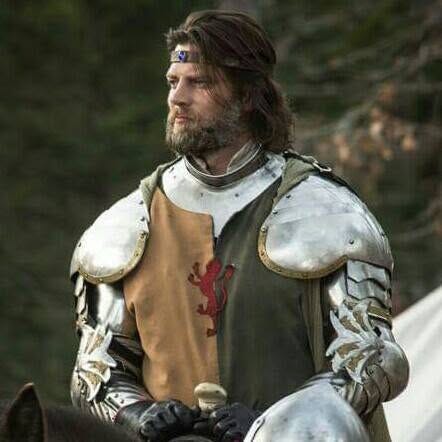
William Marshal was born into a petty Norman family, holding the ancestral (and not that long since the Conquest), role of ‘Marshal’ to the King of England. Not being the first in line and not set up for a role in the Church, William is broadly ‘useless’, and is shipped off to Knight School in Tancarville, loses his horse in his first battle, is quietly demoted, leaves, sells his cloak for a horse, and joins the Tournaments. Rapidly becomes a Tournament Star, joins the warband of his uncle, Earl Patrick of Sailsbury, is dispatched as part of that warband, by Henry II, to guard his wife Eleanor of Aquitaine, as she tries to regain control of her ancestral lands, is caught in an ambush which kills Sir Patrick, but William holds out against many foes, securing Eleanors escape, is wounded, captured, ransomed, recruited directly by Eleanor, is given to the ‘Young King’ Henry, son of Henry II and first in line to the throne, as a tutor in knighthood and bodyguard, fights alongside the Young King in many tournaments and in two failed dynastic wars against his father Henry II, watches his young master die and fulfils his dying wish of taking his cloak to Jerusalem, comes back to Europe and joins the court of the Old King, fights for the Old King against his son Richard the Lionheart, nearly kills Richard at a crossing but kills his horse instead, serves the Old King till he dies of natural causes, is recruited by Richard the Lionheart and serves him until he dies from a crossbow bolt, serves King John, the crap villainous younger brother of Richard the Lionheart through some very dark days, outlives John and, with England invaded and torn apart, swears himself to the new boy-king, Henry III, son of John, turns the tide for the loyalist royalists against the Anglo-French invasion with a wild and daring cavalry charge through Lincoln town centre, saves the day (current age; 70-something), restores the kingdom, dies a few years later, peacefully, in bed.
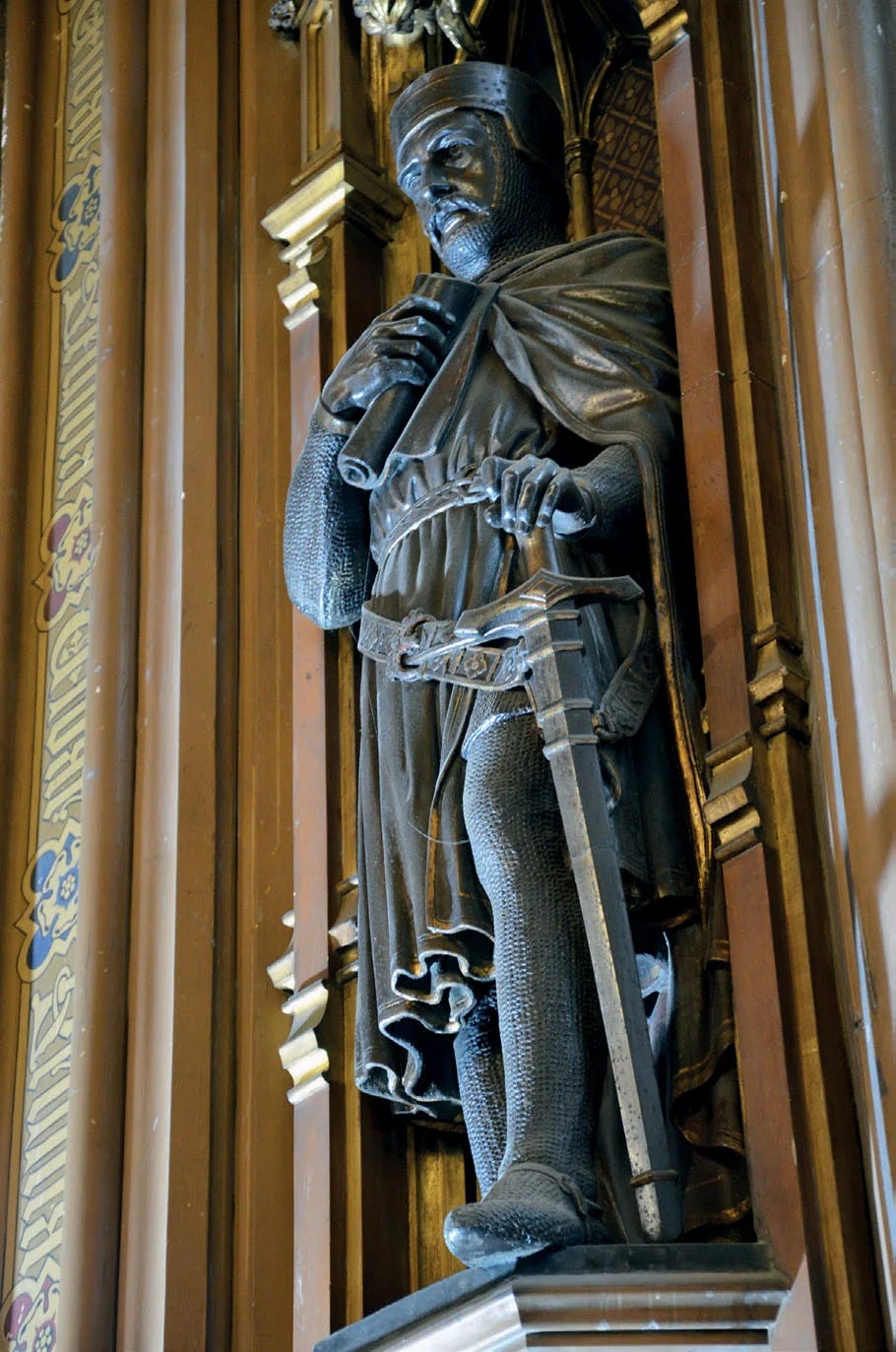
“Churchmen are too hard on us, shaving us too closely. If, simply because I’ve taken 500 knights and kept their arms, horses and all their equipment, the kingdom of heaven is closed in my face, then there is no way for me to enter in, for I am unable to return these things. I believe I can do no more as regards God but surrender myself up to him as a penitent for all the sins I have committed and all the wrongs I have done. They might well wish to push me, but they can push me no further; either their argument is false on this score or no man can find salvation.”
John and William - How Should We Judge
John fascinates me. He is almost as ridiculously evil and incompetent as the Disney Cartoon Lion version of himself. Can you imagine how crap you have to be to live down to the Disney Villain version of you?
But what interests me about John is both the immediate and vivid disgust of myself and everyone else who writes about him, no matter how hard they try to counter it, and the invisible comparison of him with other Angevins.
Because all of them are bad. They all betray. The young King fights his own father twice and Richard hounds him to his grave, they all scheme relentlessly, the Young King uses depression era baseball scams to inflate his own tournament records and become the Prince of Knights, making money on the way. Richard is a clever brute. Henry II outright steals his wife and then imprisons her when she becomes too much. If you simply weighed out Johns bad deeds weight for weight, and compared them to any other member of his immediate family, they would be heavy, but not so much heavier that you would think him quite another thing. Why do we hate him so?
Incompetence, cowardice, sadism, greed, being not just a liar but a bad liar, being bad at war. Intemperate and inexact non-useful cruelty. All the bad aspects of all of his male line, but unlike them, not tempered, organised, used to some purpose, but messed up together in a bag.
All the Angevins are bad but they have class, they have some personal courage, they get some things right, they are like arrows, pointed, barbed and cruel, but organised impelled movements of force. The Young King rebels against his father twice and fails, and we don’t even mind it, in fact we even see his side. Richard hounds his father to death and we call him a brute and a bastard but an effective one. Richard even forgives his stupid brother, and sets about repairing the Empire with the one tool he trusts; violence.
John probably murders a teenage (younger?) rival for the crown, and we despise him for it? The crime sticks to him in a way it never would to Peter O’Toole. There are shades here of Nixon crushed by Watergate but Regan walking off Iran-Contra, an apocalyptically worse scandal. John just fucks things up, he is craven, shifting, weak. It’s not just a matter of optics, he genuinely makes utterly terrible decisions on the regular, and he is inconstant, twitchy, he is not an Angevin King you only distrust in the normal way (they may betray you if needed), but you have to distrust him twice, once in the normal way, and again because he might just chimp out and betray you even if there is nothing in it for him. He massacres the in-group (Norman Nobles), and not, like Richard, the out-group (Muslims), he doesn’t get the rules. His cruelty creates more contempt than fear, and every failure of war or peace, only digs him in deeper with his crappy behaviours. There is more, more subtly, wrong with John, than is obvious from his fuckups. The fuckups are only shadows from the branch, there is something off-kilter with the man. He cannot even be a coward correctly.
Yet, It Helps to be Big
Also athletic, smart, but not too smart, extrovert, confident, social and crucially (Hugh Cook understood this) to have a really good immune system.
At least some of the greatness of William Marshal, that doesn’t come from his family situation, comes from his genetics; he is a big, strong man, well-fed during his growing years. He is bigger than most people he meets and he stays bigger, even into his 70’s.
He is intelligent enough to learn and adapt from his failures, but perhaps crucially, not intelligent enough to be caught up in the world of ideas, neither is he inherently clever or duplicitous enough for (much) intrigue. He can learn the basics but it doesn’t come naturally to him.
Being very big and strong helps him a lot. It makes him a competent Knight right from the start, it means when he somewhat fails out of Knight School, he can hit the tournaments and become a Big Tournament star, something he does twice in his life. It helps him survive battles, and perhaps more importantly; infections. In his battle in Aquitaine after the death of Earl Patrick, he is pierced through the thigh and effectively crippled. Then dragged all over Aquitaine on a donkey. He does not die, the leg does not get infected, it does heal, he can walk and ride and fight again. None of these are givens in the Medieval world. Likewise, he can take a beating in the Tournaments and keep on going; one story has him unable to receive his award because he is kneeling over a local blacksmiths forge, getting his helmet carefully chiselled off his head.
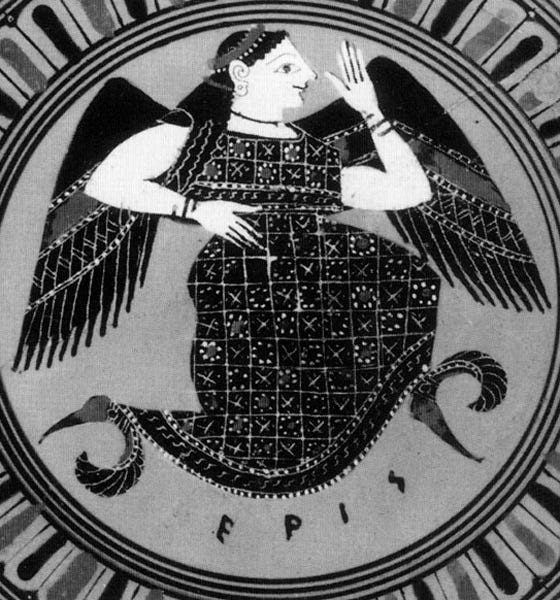
Neither do the blows to the head give him concussion, at least so far as we can see, he maintains his mental faculties up to the point of death, even today that is not a given. Neither does he drink too much, die of overeating (lampreys or otherwise), get a venereal disease, get cancer, or his heart give out. He is not killed in battle and does not die of dysentery contracted at a siege. None are especially likely on their own but when you take them all together this is how everybody in his social group dies, he watches *four* KINGS die of things like this, and he does not. Eris seems to have no hold on him.
Be big, be strong, have a very good immune system. In terms of character; be confident, extrovert, non-neurotic, stable, rational, but not intensely idealistic; William Marshall had maybe three or four good ideas in his life, he was very good at using, and living within, those three or four ideas.
There is a reason WIS is a separate stat. Foucault was intelligent, any number of tiresome, self-destructive, self-deluding verminous men are intelligent; they do not know themselves and never gain the knowledge.
William Marshall was very good at using the person that he was, physically, but also morally, mentally and (for a worldling), spiritually. He had a simple coherent value system that gives his life meaning, he sticked to it, but it’s how he sticked to it that matters. He dealt always in the world of the Real, and only to some extent in the world of the ideal. He never breaks faith with himself, but he never really feels that he has to, he is extremely non-neurotic and self-accepting about being a Knight and a servant of the Angevin Dynasty.
He is not really much of an ‘English’ Knight; the dynasty he served was cross-national, Franco/Anglo/Norman and based around the descent line rather than national identity, but in his attitude, the way he took things; simple but not stupid, direct, sticking to his core values but rarely in a wild or self-destructive way; is there an opposite to Borderline Personality Disorder? Centre-Mass Personality Coherence? In this way, he was very ‘English’, almost the Paradigm. In fact he may actually have been the Paradigm. There were not many men like him when he was.
Historical Contingency
Nor can we ignore the relationship of character to the particularities of the age. Heroism needs catastrophe to bloom, neither too little nor too great a doom will do, and a man whose character impels him naturally to constancy works well with a rotating wheel of kings. Probably William Marshall would have done well with one king or two, but who gets five? (plus Eleanor), and a martial servant getting a continual string of military escapades and reversals in which to fight? And Kings of the same line as well, because it is this continual service to the same line which helps to set the seal on his Legend. His constant presence means that he represents the Angevins almost more than any single king, perhaps even more than Peter O’Toole-King himself.
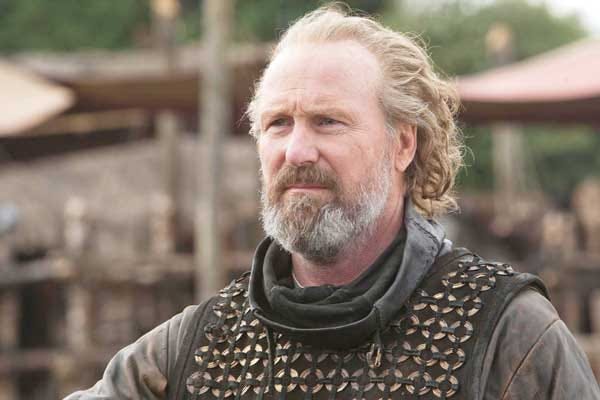
We see, in Asbrdige’s careful dissection of the historiography, in the long nasty years of King John, a bad king and a bad settlement, what a more ‘normal’ William Marshall might have been like; still strong, a man of power and consequence, a notable courtier, sporting star, knight and military hand, still a Big Guy, but not the guy. Someone much more like the walk-on in a Shakespeare play (’Pembroke’ in ‘King John’) During much of Johns rein the main threat to the Kingdom is John, and the only realistic solution that does not lead to destructive civil war, is John. This is not an age in which heroes can exist and in it Marshall is the least heroic that he ever is.
He comes back at the end though, with a dang old cavalry charge as well. But that is because a hero is needed, without that need, he is nascent, a standard-issue gold-gathering land-acquisitive hungry courtier; a man who wants more damn land, he even wants to hold on to his French land.
There is also the matter of family. Marshall is minor, extraneous gentry for sure, one of the kind who can easily slip away into the margins and gutters of history, but he is still of the ruling class. He might flunk out of Knight school, but he got in in the first place, he might be crippled by potential debts, in danger in every encounter of a life-ending, or more likely, career-ending injury, but his uncle is still Earl Patrick, and he still has the surname Marshall, he grew up in a castle, not outside one. He was in position to rise and fall, but still in position.
I state genetics and contingency, not to war against character and decision, but to complement them both. Men do decide, though by the time their acts have entered centre stage they are more fruit of the garden of their old decisions than fresh plants, but William Marshall planted many choices early on; whether by luck or sheer charisma, to survive his initial encounter with King Stephen, to gaining training and employment at Tancreville, to even the conditions in which he lost his horse (fighting too hard, rather than running away - even the conditions of his failure served to shape his future choices), to his Tournament success, where, for the first few exchanges, surely fortune must have played some role – it’s very easy to imagine the poor knight ending up in staggering debt and having a very different life.
We cannot all be born big, of noble blood and with a great immune system, but we can perhaps learn how to use ourselves, to understand the thing that we are and place it on the board of life in a reasonable position, to be more like William, and, God help us, less like John.
….
So begins, and perhaps ends, my watchalong/readalong of British History. There may never be another entry! But if there is, it will be the omnishambles of the reign of Henry III in… Episode Two; Rise of the Celts!
Now do (BBC radio sitcom) The Leopard in Autumn!
(It has nothing to do with the Angevins, nor Britain - it's set in the imaginary miniscule Italian state of Monte Guano - but was apparently inspired by The Lion in Winter)
Matrix by Lauren Groff is an excellent read and Eleanor is a great antagonistic force in it. I read it shortly after watching The Lion In Winter and was absolutely delighted by the MCU of it all