

Five Formalist Films
make it horny and put a robot in it!

Caravaggio (1986)
Directed by Derek Jarman
A weird gay film about a weird gay guy. After thinking about Caravaggio for far too long and being denied the budget for an Italian shoot, Derek Jarman has just enough money to film in a warehouse in slough (I don’t know where it actually was)…. and produces a pretty great film!
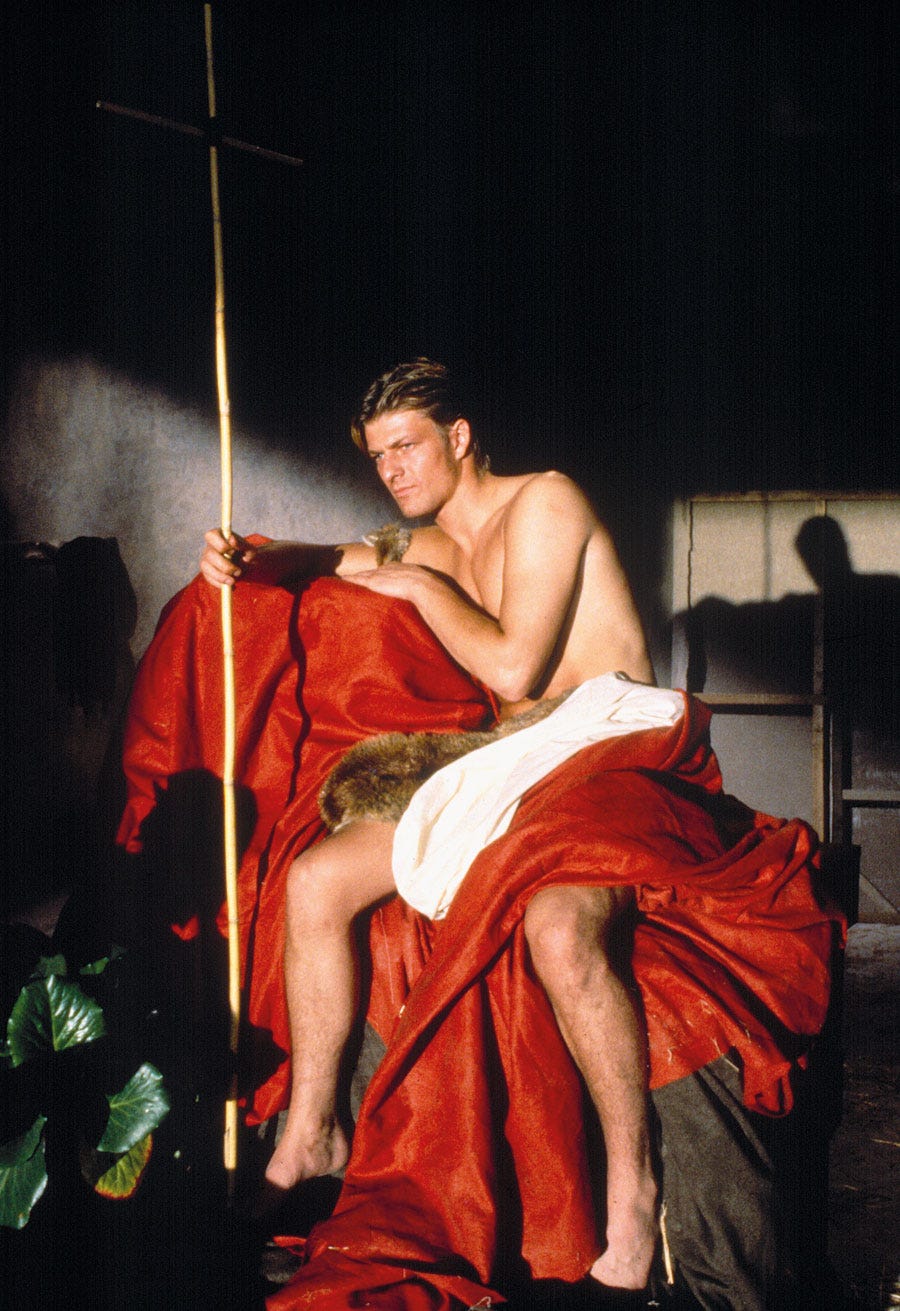
All Jarman has to aid him is his own keen eye and a very good cast. (This might be the best acted of these five films. For anyone British, ‘Caravaggio is a field of faces which will all become familiar on the rectangles throughout the 90s; Dexter Fletcher is young Caravaggio, Nigel (King Arthur) Terry is the older version, Sean Bean plays a hot young object of manifold desires and Tilda Swinton is amazing as the desire of the desired.
Considering what an extremely formalist/arty movie this is, with the flashbacks, impressionistic breakdown of time, worlds of inference and suggestion, it’s remarkable that the narrative is so clear and actually works as a story, which is pretty fucking rare in formalist film - there is a mystery, a murder mystery, a baddy and a resolution.
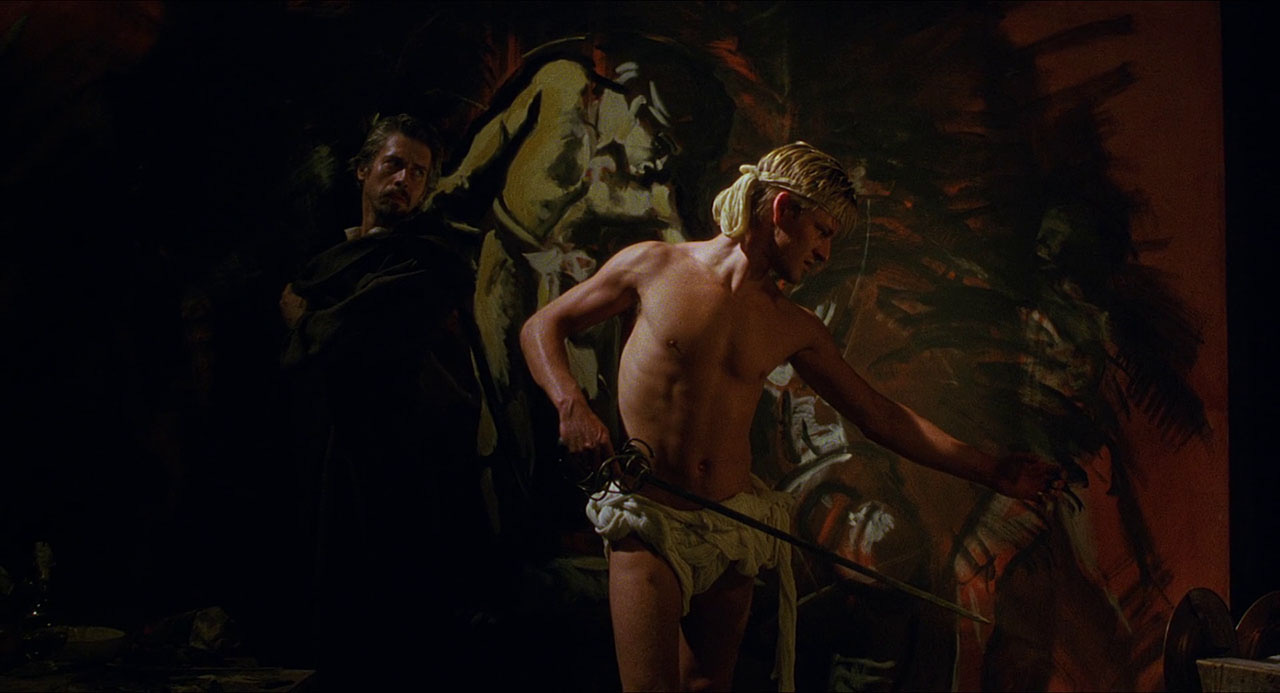
Probably Derek Jarman being a horny dude helped him with that as this is a desperately passionate and horny story about people with overwhelming, anguished wants. If the filmmakers have that, then everyone involved knows what a scene is going to be doing, and if you have a bunch of good scenes then you pretty much have a story.
In formalistic, sometimes abstracted, often non-linear, highly visual storytelling, things seem to work well when there are atavistic emotions on the scene. They help everyone feel. Of course all of these films have some such emotions but Jarman is perhaps the best of them all at synthesising these dominating hungers into the subtle language of performance, everyone is textured and feels deep and real. The scenes are made from paintings and from the fragments of time and moments of emotion that pass wordless in the course of a life, like ships without keels, leaving shallow wakes but strongly cargoed - these little pools of near-still time and occasional symbolism, but integrated so neatly with nature, character and narrative that you can feel the lines of tension and passion that run through everyone one of these shadowed scenes ‘about nothing’.
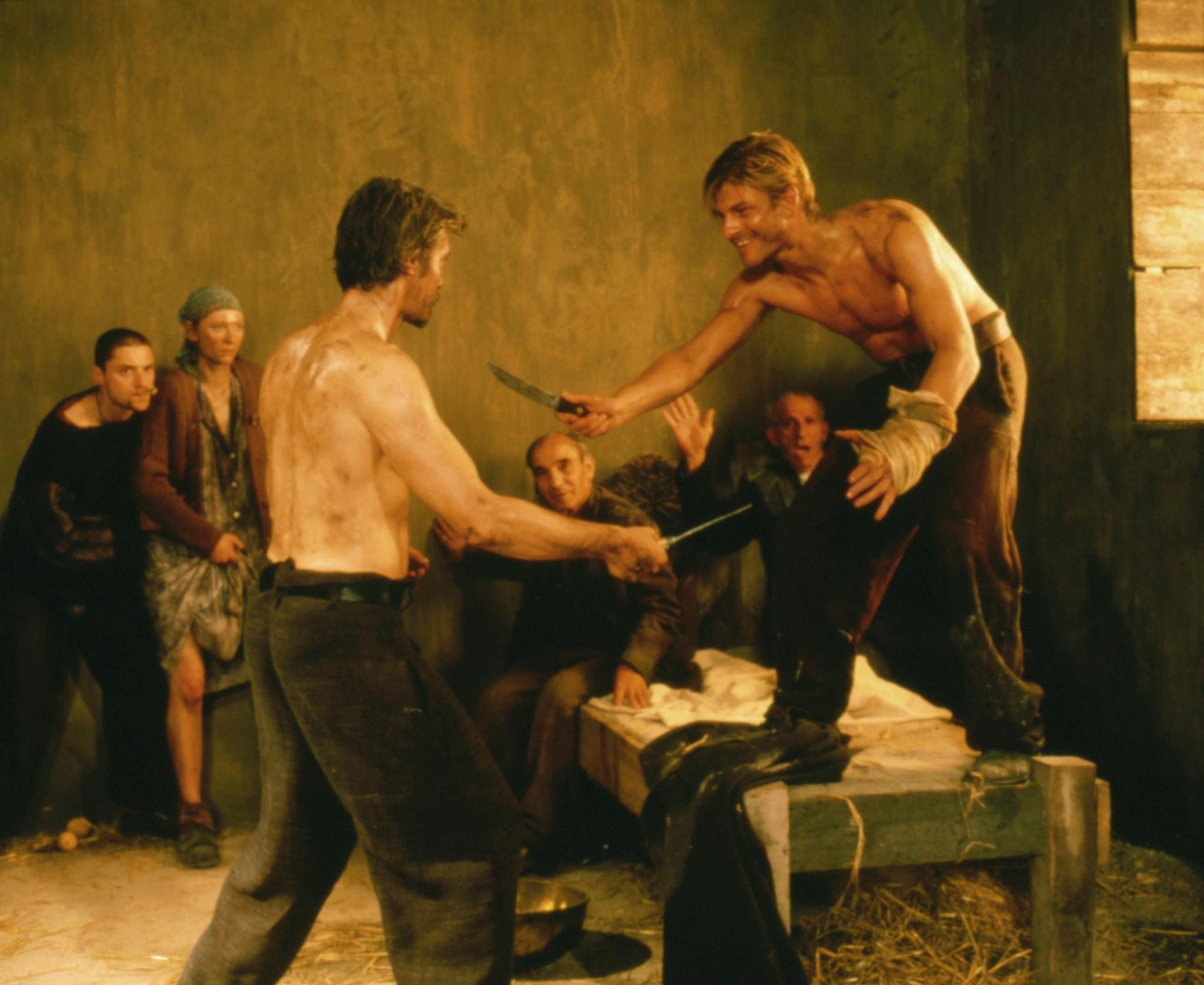
The modern interruptions in the setting; train-tracks in the distance, pocket calculators, tractors - somehow he gets away with it, placing his story in a no-time that, while filmed in a contained space, feels, at least to me, more like something from a kind of ever-world Mediterranean than for instance, the trailers for Nolans new ‘Odessey’.
‘Caravaggio’ is visually brilliant despite, and perhaps because, it was filmed in a warehouse, something it has in common with Greenaways ‘Tempest’ - if you have five or six things on screen, and two people, and really really good costumes, then you can get really really really precise, emotive and effective with light, texture and shadow. I imagine Derek Jarman frantically sanding down and re-painting five feet of wall overnight because he needs precisely this texture under some off-yellow bulb you can only get from Czechoslovakia or something.
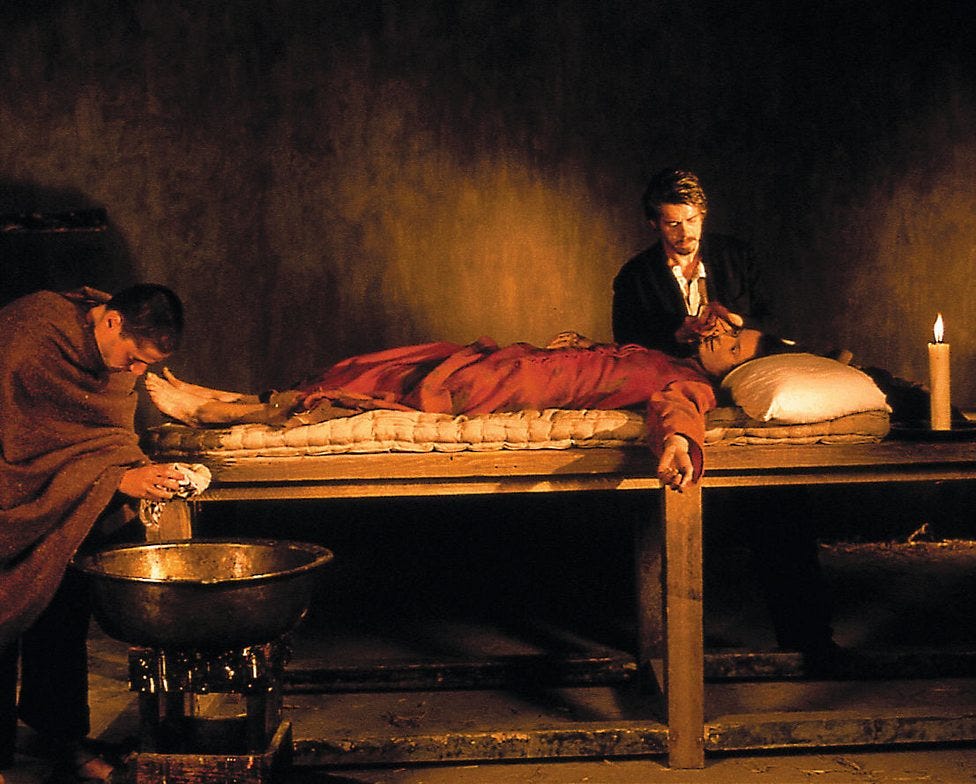
Top movie. Very gay. Caravaggio was right to stab that guy!
Metropolis (1927)
Directed by Fritz Lang
An archaic story about a technologist and plutocrat using A.I. mimicry to subvert a populist agitator in a false flag operation which will allow them to supress the truculent workforce. The technologist betrays the plutocrat and the A.I. betrays them both. This is basically every Sci-Fi movie; (massive budget, gorgeous, pompous, dies at the box-office. Directors love these things.)
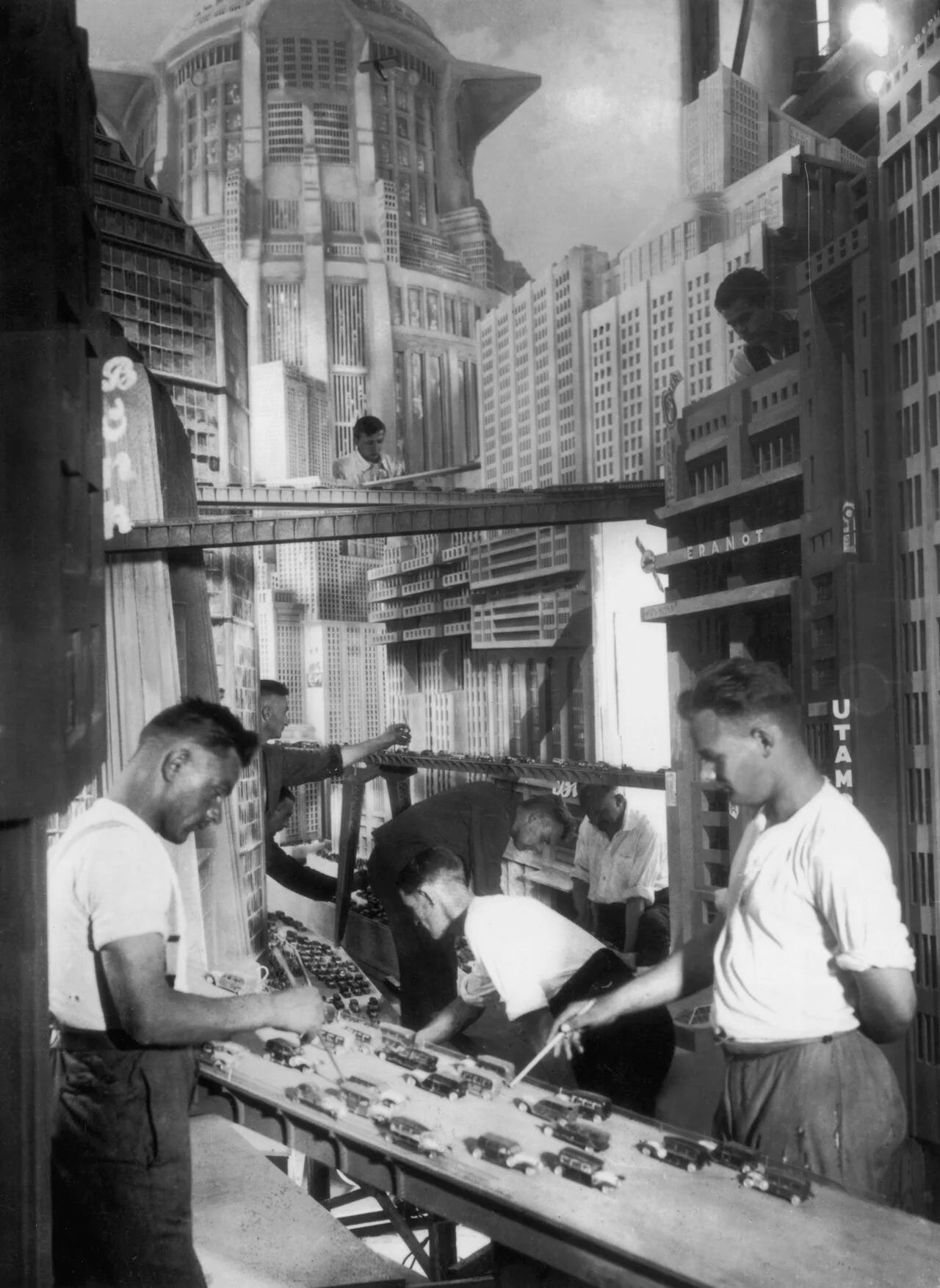
This is great! Better than I remember. I have dim memories of a version of this, maybe from YouTube, long ago, and I did not really like it, but it turns out that they are still releasing new cuts of ‘Metropolis’ - every few years a negative turns up in some random place; New Zeeland, Argentina, with a handful of scenes, and these are re-integrated into the story, as well as a continual effort to make new scores. Appropriately, this is a 100 year old movie that is still being-re-made. The version I watched was the 150 minute cut on the BFI player.
Its curious that adding scenes to a previously boring film could make it seem less long, but finding out more about our slightly boring hero Freder Fredersen, and all the little scenes with his pal Josephat, Georgy and the minor extra characters all make ‘Metropolis’ much more bearable, all the way to enjoyable. True, Freder is kind of somewhat useless some of the time, and perhaps the least interesting person on screen, but at least he has interesting people to spend time with.
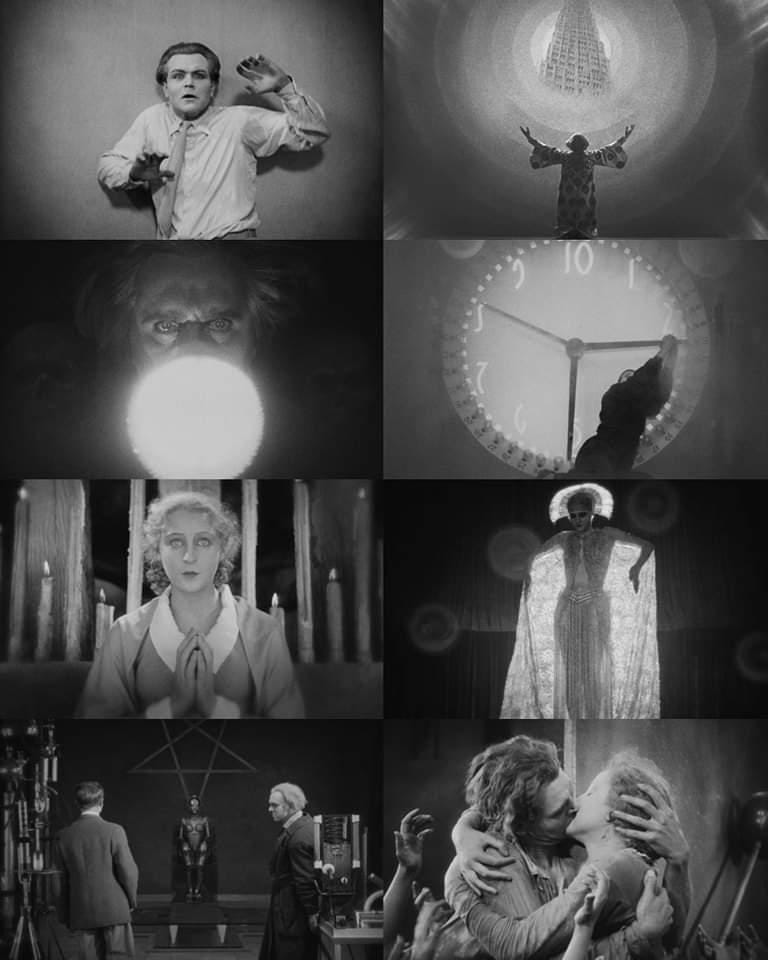
Brigitte Helm is AMAZING in a dual role as the saintly sort-of-Christian Maria and the evil super-robot Maria. Her performance gets better, or at least more fun, the more she is given to do; I haven’t seen someone go quite this loopy since Isabelle Anjani in Possession. She gets even better as A.I. Demon Robot Maria (”Soon, no one will be able to tell the difference between man and machine!”) - a glitchy, spasmic, manic, super-sexy (the film says so), mad abomination who goes cackling to the stake when the workers finally burn her to death, only to reveal the terrible impassive form of her glorious robot body underneath! A silver nightmare emerging from the flames! James Cameron once had a fever-dream like this after being fired from ‘Piranha 2’ and ended up making ‘The Terminator’.
Chrome Machine-Man Maria one of the best designs in cinema history - every future robot lives in her glimmering shadow.
Fritz Rasp as “Der Schmale/The Thin Man” - the unbelievably magnificently creepy enforcer of Johann Fredersen, the ‘Brain’ of Metropolis is another lovely performance that either wasn’t there before or which I simply failed to notice. However did they find such an ostensibly evil looking man in 1920’s Germany?
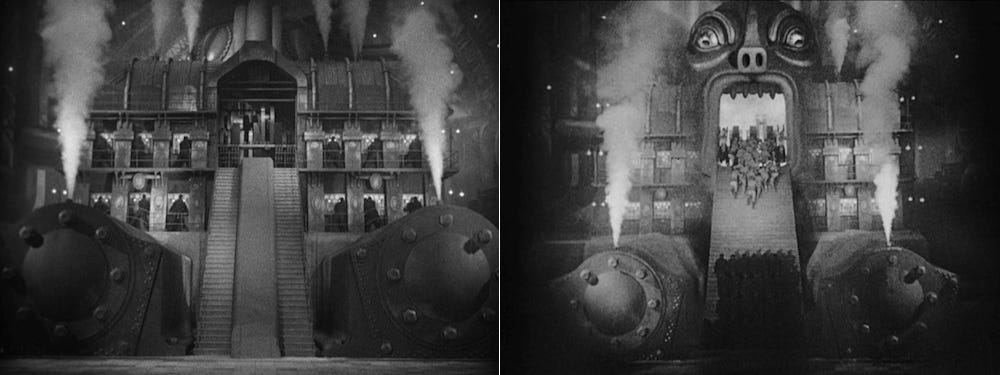
Moloch also shows up! I haven’t seen him since Flaubert’s ‘Salammbo’, but now he returns in the role of a giant prole-devouring mega-machine. Love your work dude, love how you devour those masses.
I am clearly from a post-Metropolis reality as much of its High Visions just seems to mel like… reality? Metropolis is meant to be a kind of dream/nightmare but feels more like a place. Frederson takes on a workers identity and is nearly broken by a ten hour shift in which he has to constantly adjust a massive clock. I have done ten hour shifts, they are pretty bad, but maybe not revolution-bad. Though I was mainly on the shop floor - my factory floor shifts were five to eight hours. Likewise the commie-block underground seems.. sparse but ok? There are worse places to live. The upper world of Metropolis is actually les horrifically commercialised than many real places and has the advantage that it represents a designed aesthetic whole - the Yookay version of Metropolis would be, and is, much more of an insane jumble of future and past, with much more dirt and decay. Re-Elect Joh Frederson! He keeps the city clean! Look, even the workers under-warrens are sparkling, with a complete absence of litter and drug dealers.)
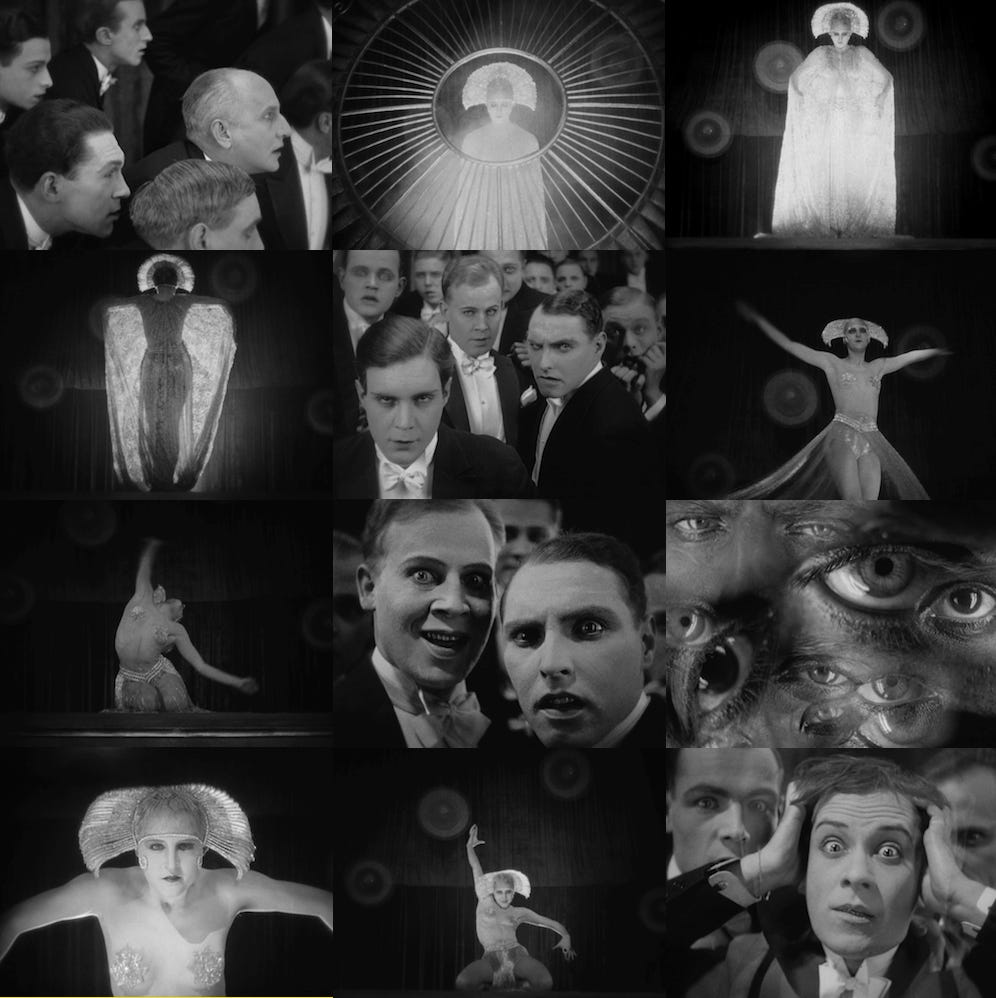
While it spends probably way too long on people going into and out of places, ‘Metropolis’ has moments where it bubbles into froth; the use of composite frames to create a kind of mad hyperreality is glorious at points; the imagined party-world that seduces the mind of Georgy, and especially the crazed scenes of mad desire induced by the flapper-dancing of A.I. Maria which first compress the frame into stacks and rows of emblematic horny faces and then finally melt the image itself into a field of churning EYES - absolute cinema. (Is Rotwangs laboratory the first ‘Mad Scientists’ laboratory of its type in film? Perhaps it has ascendants in theatre. Is he the first villain with an (assumed) mechanical hand?)
The FRAMES are really what aid Metropolis in lumbering its way into the top ten. The film is absolutely riddled with fine images and stark wonders.
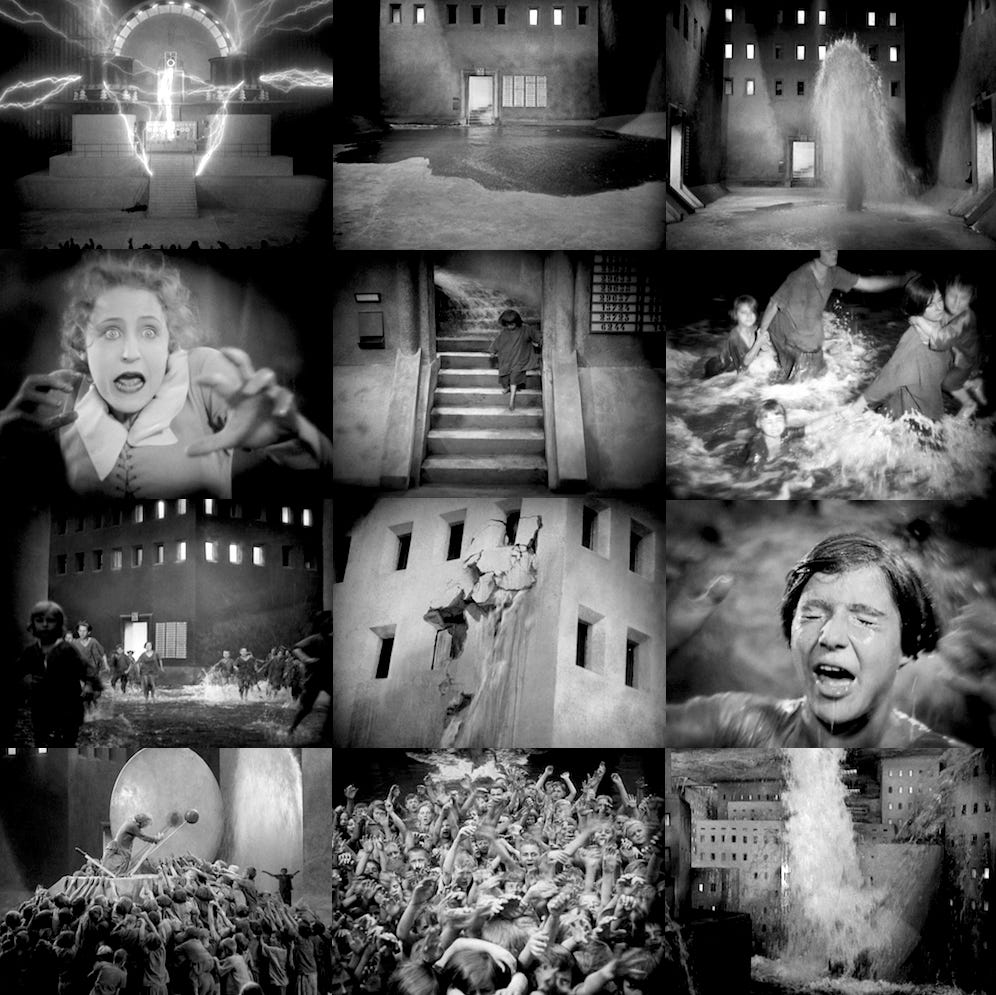
People have complained about this film, saying that the plot doesn’t make sense, the ideas are stupid and mixed up and that its ending is gay and centrist; true but who cares.
Prospero’s Books (1991)
Directed by Peter Greenaway
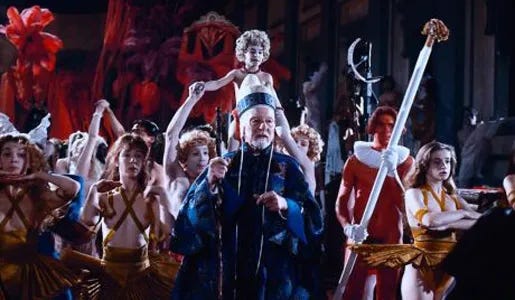
I absolutely loved this batshit, deranged and overflowing film. A dense and overwhelming re-telling of ‘The Tempest’ unified by John Gielgud’s performance/narration as Prospero, with the added conceit of the interspersed descriptions of his library of books.
It also proves me wrong - in my last review of a formalist Shakespeare film - Joel Cohens MacBeth, I talked a lot about how the stripped down expressionist, abstracted sets and scenes left room for the density and complexity of the language. Well, Greenaway goes completely, totally, insanely the other way, and it somehow works out fine?
Prospero narrates the story as Prospero/Shakespeare. The only character to get their own voice is Prospero’s brother, near the end, everyone else has their voice given to them through the narration, but their physical performance is their own. Michael Clark as Caliban, dances and contorts his incredible body through a knotwork nightmare, transmuting his limbs into the strokes of an ink brush, gouging and slithering, leaping, crawling through his story, but all the performances seem like dances, and the huge flow of ‘spirits’ dance. This is the strangest thing imaginable, but since everything is strange, is overflowing with strangeness, so who cares?
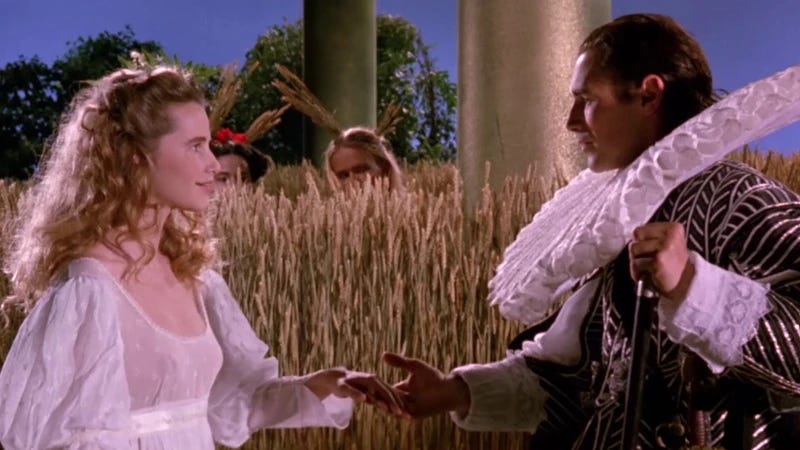
There’s a lot of very naked people. Anyone Greenaway could get naked he did get naked. Swathed in Caravaggio shadows, you will see a lot of dick, a LOT OF DICK. bobs and vagene too. This is not quite the same as Derek Jarman being horny; in this film the plot and drive of each scene is given by Shakespere, but it is notable that this is another extremely arty film with a strong thread of flesh and atavism running through it.
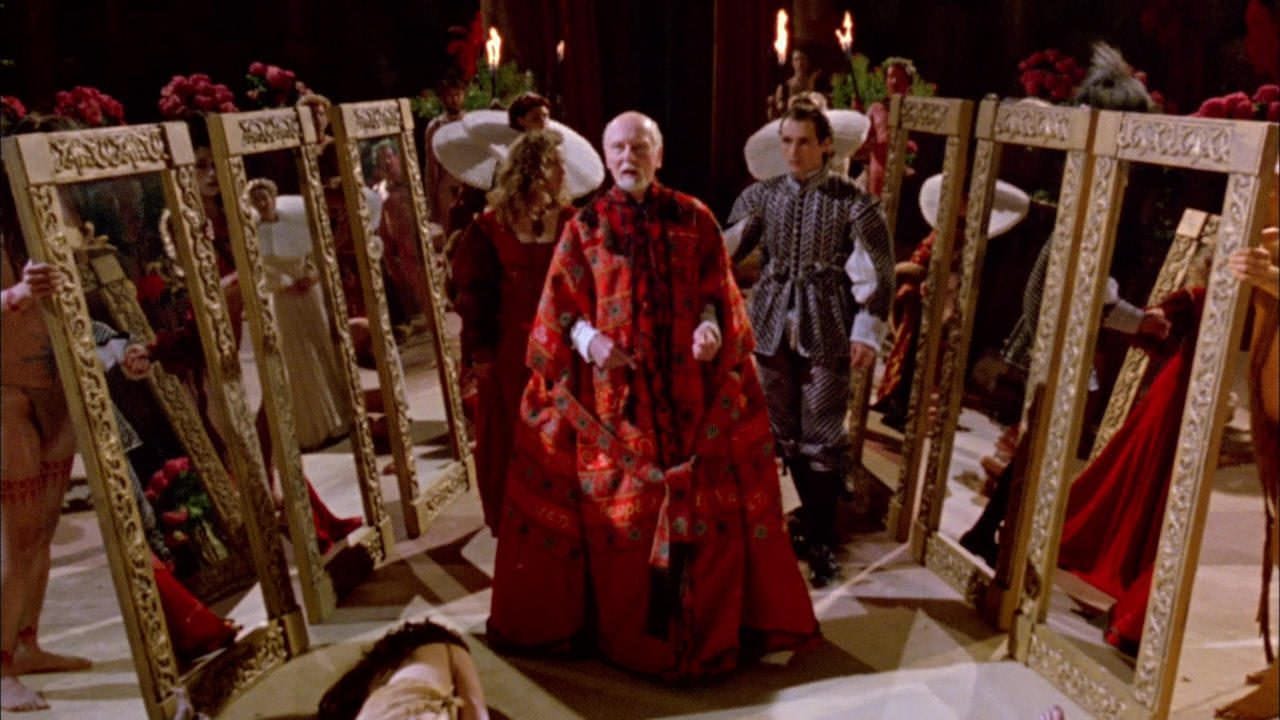
This is also another film made in a warehouse somewhere. Stagecraft; all the worlds a stage and this world is a world of stages. Prospero is drawn and ushered through these crazed layered meta-performances, sent into these little fragments of reality, which make for the rest of the cast, their whole. It’s very meta-magical, very naked Renaissance, anyone who remembers me going on and on about the ‘Fairie Queene’ will remember the renaissance obsession with processions, with layers and layers and layers of precedence, hierarchy and detail, with symbolism and a seemingly unending servant class.
Dance; The naked people are dancing also. I wonder what John Gielgud made of all this.
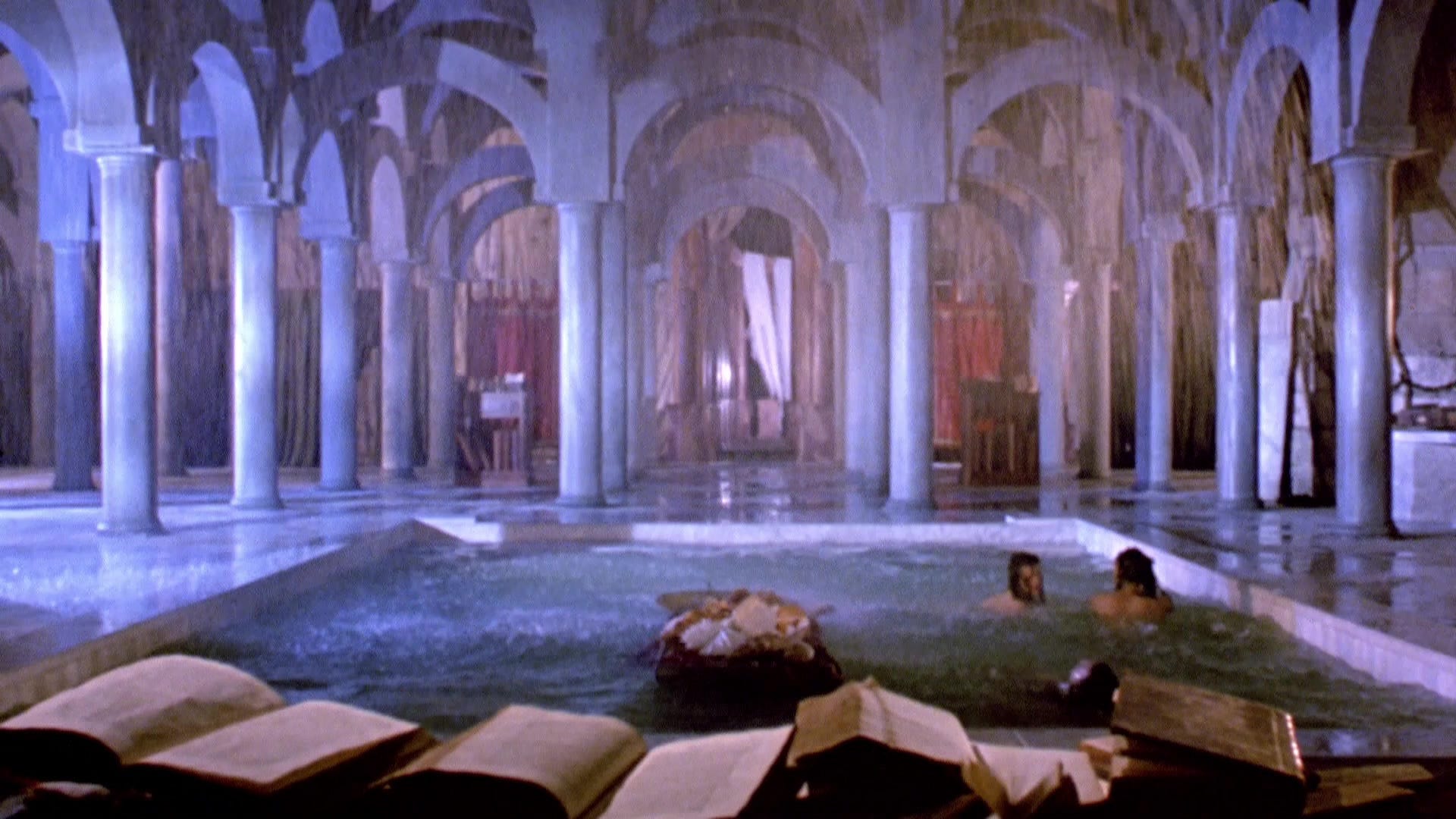
Music; Michael Nyman makes these rolling waves of music. High in feeling, very fine, like ornamented corners on the wall of a sunlit cathedral, waves crashing relentlessly somewhere, a cloud unveiling the sun and the sun running up these layers and layers of ornament and as a wave falls.
Image Molestation; the last time I saw someone fuck the frame this hard was Ang Lee’s ‘Hulk’ where Mondarian-style pseudo-comic book fragments of screen and vision explode and flowed across the screen, shattering the action into a kaleidoscopic glimpse-mosaic. I loved it! Audience hated it and Marvel committed to never doing anything too visually original again. ‘Books’ is nothing like that, except that it creates and contains, stages within stages. Blocks of overlay, mixed or fading into the preceding image, like glass pages, or tracing paper, or starkly set atop, with layers inside, under, over. Squares of images erupt and collapse in service to the drama. Prospero’s condemnation of the conspirators is transmitted through dancing demons, so violent are his words that they carve their own micro-reality on the screen. The film is nearly a comic book. A very arty comic book, perhaps by Dave McKean.
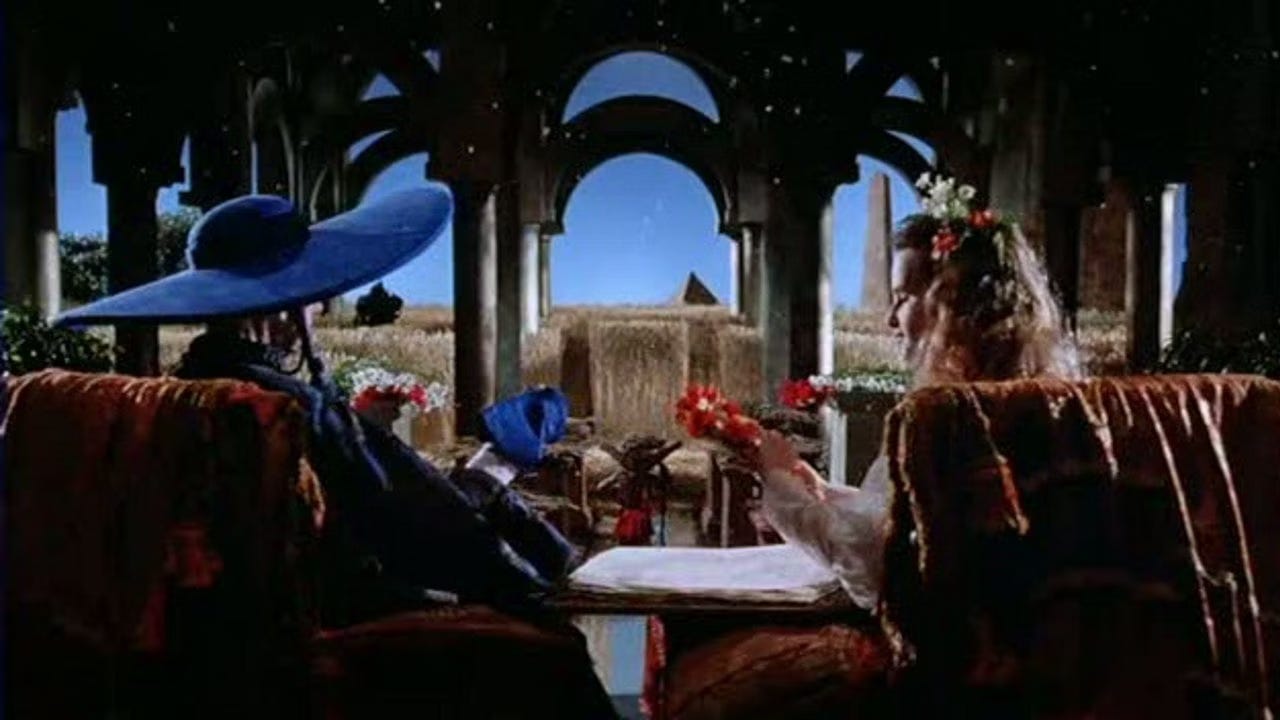
You have to imagine all these things happening, at-once. Any single part of this could be easily too much, and all of it is too much of too much. I can blame no-one for hating it. Without question, this is a lively, poncy, fervid and pretentious film. it goes hard though.
Speed Racer (2008)
Directed by The Wachowskis
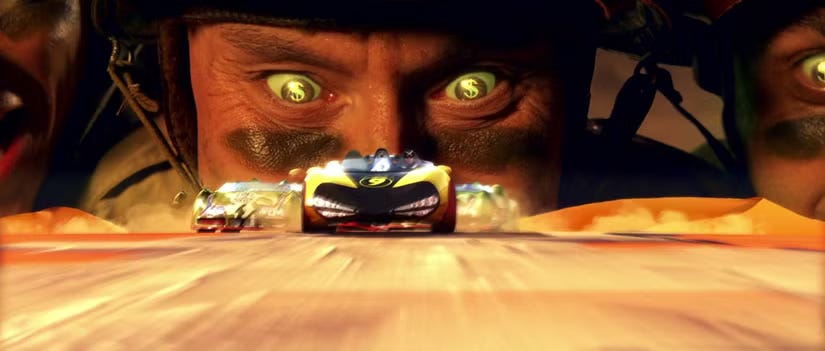
An deranged explosion of candypop colour and force; True Cinema - no other House would take it. In this film a Speed Racer called Speed Racer must race faster than anyone else, even faster than the ghost of his dead brother who died from going too fast, even faster than capitalism, which is the actual engine of the speed racing culture, (or is it? Perhaps the True Meaning of Speed lies in Going Fast?)
Riddled with points of High Madness, (how much of this was stolen from the anime? Fans rise up in the comments pls) the film achieves some things - the ‘profile’ swipes in which a talking head of a character moves across the screen with a new scene unfolding behind it, becomes part of the manic visual language of the film - before the final Big Race the whole screen FILLS with these folate HEADS – it’s like medieval carving or something from a schizophrenics wall, (and not completely unlike the bubbling field of eyes and gawping lads in ‘Metropolis’.)
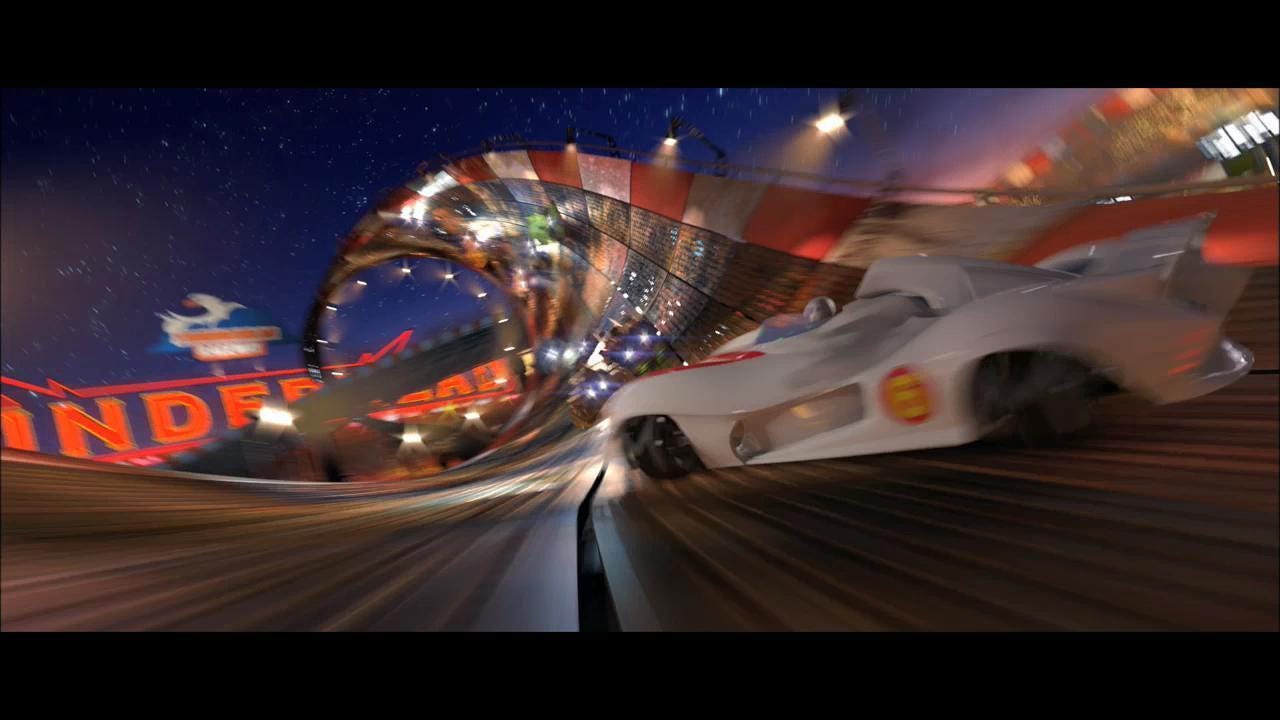
Other notable elements; the rising, flowing and warping landscapes of the races, where mountains bend and flex like the fans of a dancer, while the looping speed-lines of the RACERS form the burning focus - scorching themselves across a reality as liquid as dreams. Likewise the big scene inside a frozen cave where the lights and energy of the race cars become futurist living lines of warping SPEED; the Italian futurists would really like this film - it is almost completely a hymn to speed and force, and to colour and dynamism.
The simile here is ‘a human cartoon’, but if you think about what a ‘human cartoon’ would actually be like, it would be unnerving and grotesque. Full of wild visions and Kind of horrible, like being stuck in a Willy Wonka situation. Somewhat grotesque - faces make me feel sick and dirty.
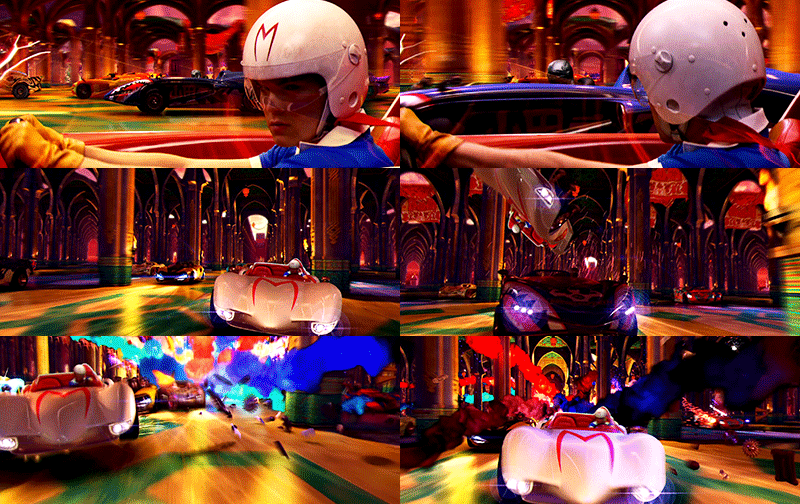
Yes this absolutely does belong alongside films like ‘Prospero’s Books’ and ‘The Eve of Ivan Kupalo’; performances so stark, embossed and strange they seem almost pantomimed. Something else this has in common with much more fancily artistic Formalist Films is; the story isn’t very good - rather than obscure, it is nasty, brutish, but not actually short.
The Eve of Ivan Kupalo (1968)
Directed by Yuri Ilenko
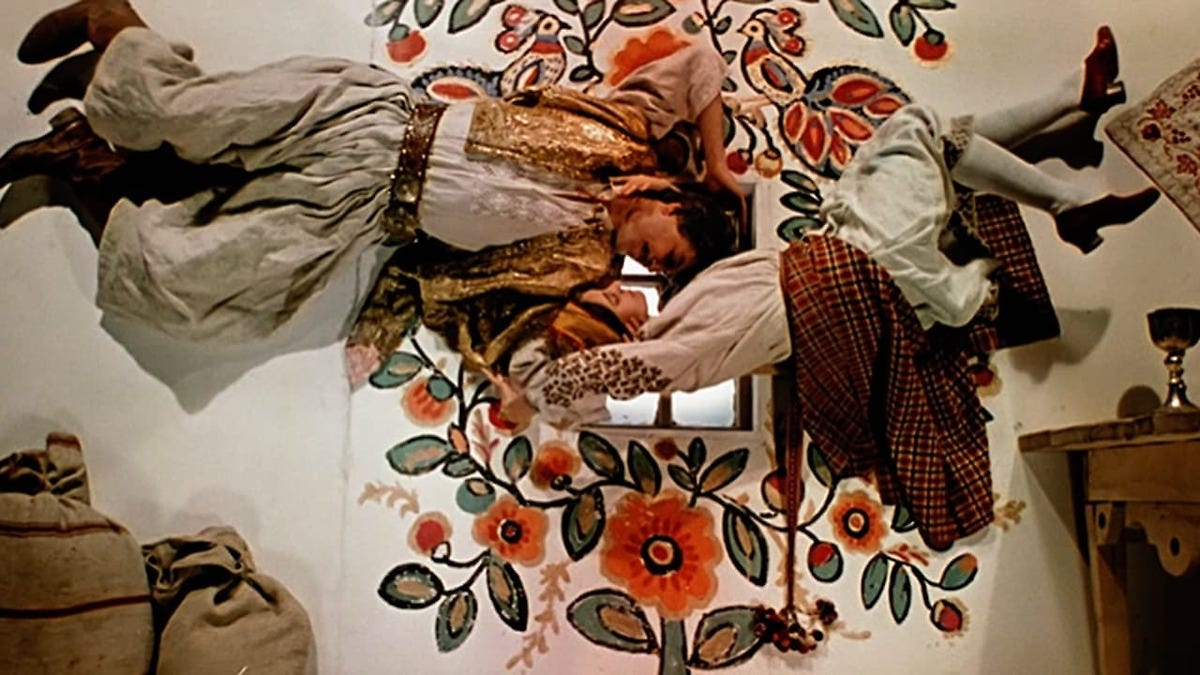
Ambitious peasant Ival Kupalo has an accidental/set up meeting with THE DEVIL, and receives, for crimes committed there, his desire and several bags of gold. Could doing deals directly with THE DEVIL go wrong somehow? (Curiously, Speed Racer faces the same situation but makes the other choice.
There are scenes and sights of brilliance in this film!
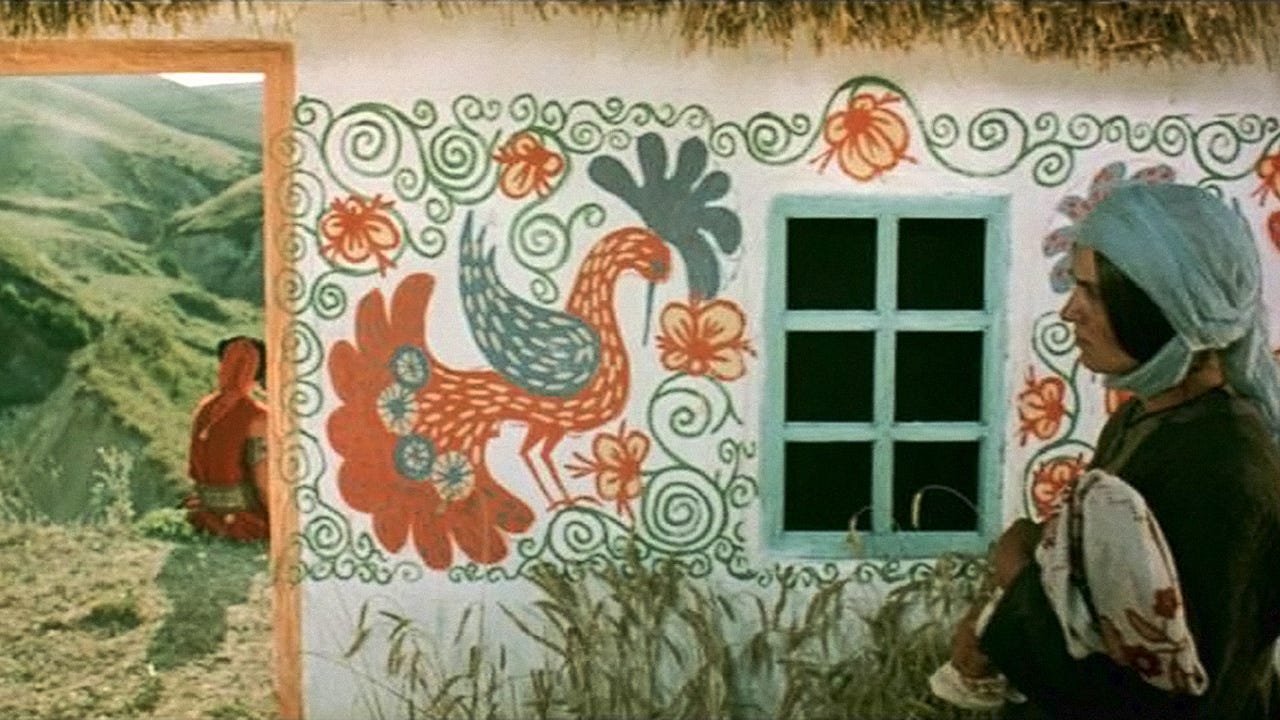
HORSE CAM - seeking to bring her husbands ashes to a sacred saint, so he can be forgiven his terrible sin, a peasant is captured by Cossacks, one of whom is the devil himself! Cameras strapped to the sides of horses, herds and stacks of Cossacks plunging through the glassy surface of a half-drowned field, seizing up a peasant in their arms! It looks great!
Saint Doom 40k scene - in another extremely anguished eastern European scene; worshippers gather in the gloom around the icon of a saint, begging, screaming, demanding a miracle, faces paled to greenish bone they seem more like infoliate gargoyles carved into some cathedrals side than human beings. Looks great! Very depressing!
Rising treeeeeees - poor Ival Kupalo, stumbling through his devil-influenced arty dreamland, comes into a forest of flattened birches, which riiiiiiiise up around him spookily. What a scene!
Cockfight bar - the devil hangs out here and he’s edited like Truffaut, look at the splits and shocks in time, is that guy flying? Look at the fighting cocks! An active cockfight in every frame. Always work with animals!
Leaning ladies/Windows - grieving women leeeeeeean so impossibly they cannot possibly stand, crackers peasants presssssss themselves to windows as if they were cats curling into a saucepan, then CUT a full 180 and the window frame within a frame, full of Gurning Man.

In terms of direction and scene arrangement, it’s gorgeous and incredibly innovative, why didn’t I like it?
Too slavic. Story-slavs are not that bad... really. I don’t like to watch them having fun because the fun is always them drinking, shouting and making crudely obvious jokes, and when they are not having fun, they are depressed, or being magical or fate-bound. There is no hobbit-anglo-zone of intermediate emotion with these story-slavs, its immensely wearying to be around them.
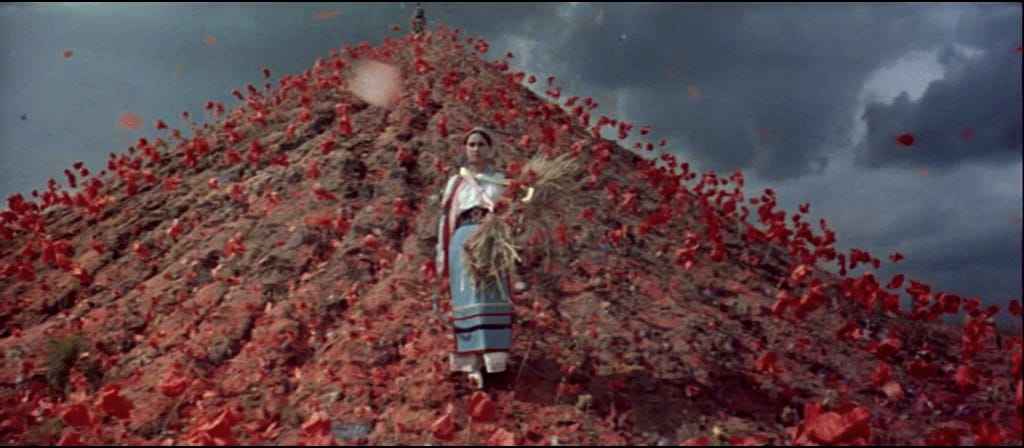
Too many modernist distancing effects. I get it. One of the characters is going mad or has a broken memory for much of the story, the devil and the supernatural are involved, who break reality, its generally very ‘arty’, but do you HAVE to use the sequence-breaking snap-cuts, the long dwells, the overlaid voices, the relentless symbol-as-action?
Didn’t already know the story; in my long sojourn through formalist films, I have found that the ones I enjoyed most were when the story was good, and/or, when I knew already what it was. This is a crappy format for working out what is going on. If someone saw ‘Prospero’s Books’ and didn’t already know about the Tempest, what the hell would they think? I don’t know the Gogol story ‘Ivan Kupalo’ is based on, though I expect the original audience did, for them this is like watching just another Shakespeare - where ‘how-its-done’ is going to be more interesting than what.
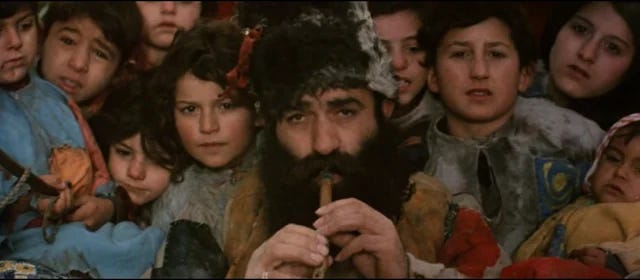
There is lots and lots and lots of wonderful direction and creations but O my god, the slavicness, the modernism, the folktale stuff, it’s just too much for me, immensely, immensely wearying, and not fun at all.
While I would love to say that Rotwang is the prototypical Mad Scientist, I think Frankenstein did it first in 1910 (although with, appearently, less than one percent of the budget):
https://www.youtube.com/watch?v=9LQj68W7O9Q
That creature-effect must have _horrified_ cinemagoers in 1910.
I've always enjoyed Metropolis. I mean, would we have Blade Runner without it? It's also very Weimar Republic. The hypermodern city is made to look like New York on steroids, looking towards the West in awe of sky scrapers, while the night club is called Yoshiwara, looking for fleshly delight towards the East. It was also the first movie made in Germany that had a significant number of non-white extras.
The whole delirious partygoing aesthetic is very golden 20s. The literature of that time (specifically made in Berlin. E.g.: https://en.wikipedia.org/wiki/Grand_Hotel_(novel) ) mirrors that. It was the very Babylon that made the right angry enough to sweep the country in their backlash in the following decade. Totally no parallels to today.
Ever catch Greenaway’s experimental tv series on Channel 4 of Dante’s Inferno? Amazing work that just about broke every element of the frame every second it was on. Covered about the first half of the Cantos if I remember right and absolutely screams McKean throughout