


I promise I will have some actual game stuff to talk about soon. Currently working on a review of MAC ATTACK; we are building the mechs as we speak!
In the second half of July I experienced two different attempts at renewal of the Superhero genre at the cinema, read some wargame lore, re-watched John McTiernans 13th Warrior and finally saw Kubricks 'Barry Lyndon. Todays post is broken up into two sections;
Silver Ages
Superman 2025
Fantastic Four, First Steps
Savage Times
Era of Ruin
Conquest Lore Companion
The 13th Warrior
Barry Lyndon
(There may be a secret message at the end for those who read that far.)
Silver Ages
Superman 2025
(James Gunn)
Dora the Explorer murders Botgamin Notenyahu in this movie, to thunderous applause. I am still not quite over that.
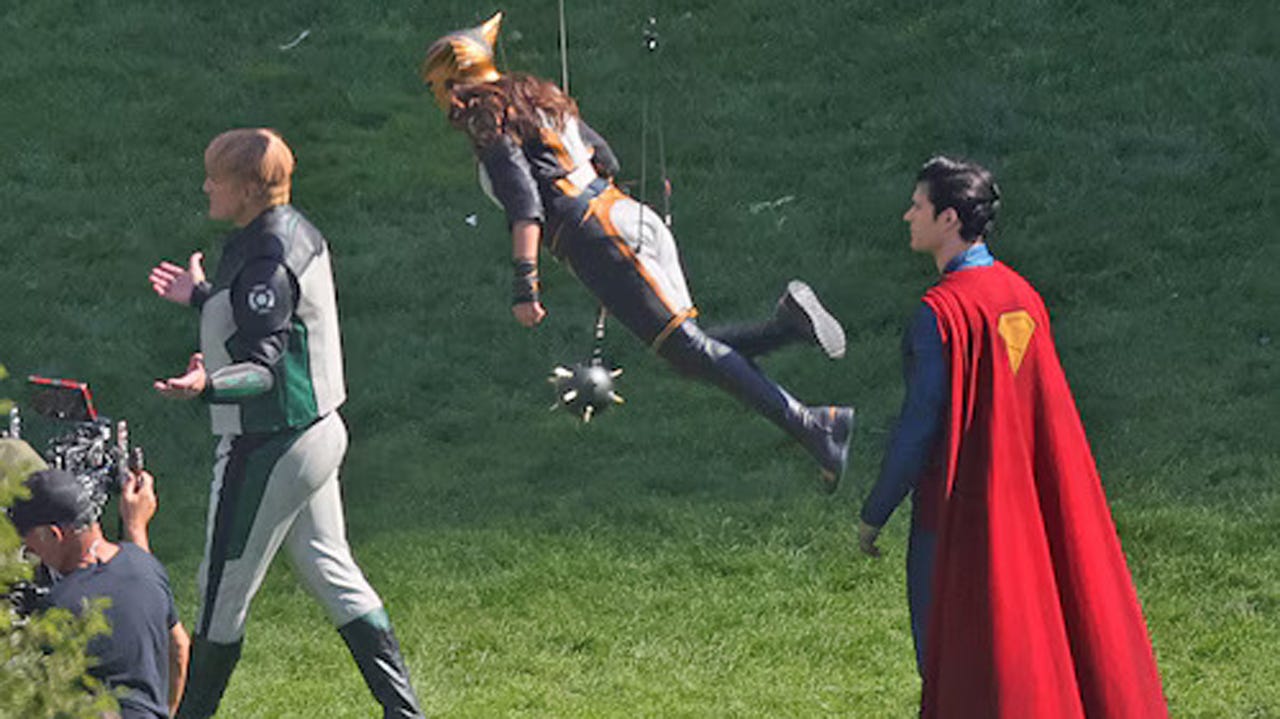
James Gunn is either signalling or retarded (he's probably retarded). Back in the late 90's/early 00's, there were a whole slew of somewhat-adult comics (often by Warren Ellis, whose grimy fingerprints I still find in modern media), blending real world politics and superheroes in various ways. In Ellis' 'Authority', Progressive Metahumans take over the earth, but that was really just an evolution of Moore and Gaimans 'Miracleman', where terrifying Silver Age gods take over the earth. The idea has a long history. Why doesn’t Superman just stop wars? Ok so then he would rule the world.. What happens next?
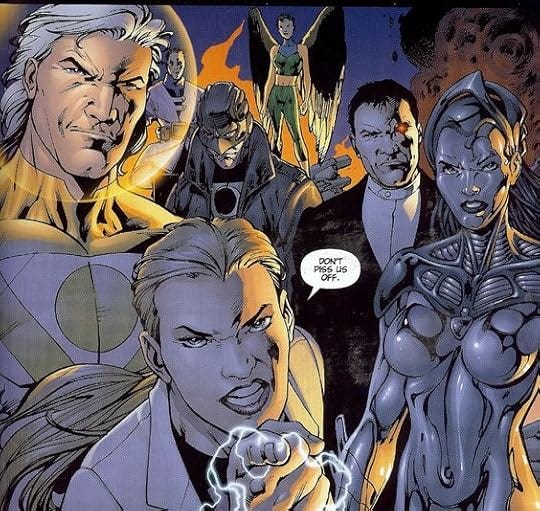
This quite dark and dreamy thinking mixes very strangely with Gunns 'high Silver Age' aesthetic and the moral universe of a hyper-sincere-Superman. Its a movie where an aw-shucks decent-guy Superman, essentially, takes over Earth.
Or at least, he decides which invasions are legitimate or not, threatens national leaders with death and ultimately his 'pals' murder the head of a government.
But this is ok because the governmental head was working for Lex Luthor, as part of an anti-Superman plot.
I'm less complaining about this happening at all, more.. tasting the gumbo. Some of it is candyfloss and some of it is a cringe US libs version of real world politics. Its more about the strange a crushing disconnect between a glowing Silver-Age world, a relatively edgy political takes from the 00's, and the utterly bizarre way this interacts with modern politics and current events.
Gunn claims this isn't about the middle east but for a film not about the middle east it certainly has a lot of entirely-innocent vaguely Arabic people in a desert behind a fence being attacked by slightly paler U.S. armed military types who want to take their land, and who are being funded by an American billionaire. The options are; Gunn was talking about the Middle East, in very cringe terms, OR, Gunn genuinely wasn't intending to talk about the Middle East but ended up creating a situation where it looks like that's exactly what he was doing. I think the second is more likely.
The film picks up its cyber-monkeys and walks head-on into a dark and complex political situation where it has no right being.. and stays there. Brain beats brawn Superman, yes, but BALLS beat BRAIN.
This might be a disaster in the long run, or excellent fuel for a series of films, but it will be interesting either way.
Liberal Regression
We are rewinding to pre-awokening and just pretending all that stuff never happened. I'm not sure if this is a sane response on my part or just the schizophrenia popping off, but both this and 'Andor' feel like very 'now' Progressive fictions, that just totally don't mention or consider anything that happened since 2015. The Transgender thing, the Racial Reckoning, Covid, Cancellations. A bunch of Universities and other deep-liberal orgs are being ragged like dog toys by Trump over stuff that happened over the last ten years, and will be till the end of the Administration, and even if a lib comes in next, things probably won't be the same since those orgs are simply not safe for long term investment - any future conservative administration will (rightly) see them as enemy factions and will defund them. What does this have to do with Superman? Maybe nothing? Maybe I am just crazy. We can just go back guys. Evil Billionaires! Am I right? (We assassinate them in the street these days).
Furren Box Office
Furrners no like Superman. Box office outside the US is low, but in America the take was mid to begin with, but the film has legs legs legs! That’s the kind of word-of-mouth you can't buy with marketing and must sooth James Gunn deeply at night - people genuinely like his movie and are telling friends.
Why the big difference though? Cringe US political takes at exactly the point where that would come across worst? Naked American Dog Worship? Superman being a great icon but not actually that good a character? (Or at least a very hard one to write for?). Who knows. There is a scene in this film where Superman just outright reads his character summation for this film out loud. It was so painful to me that I had to look away from the screen. Still; "Tell them what they are going to see, tell them what they are seeing, tell them what they've seen." These words rebound to me across popular media again and again.
The History of the Balls
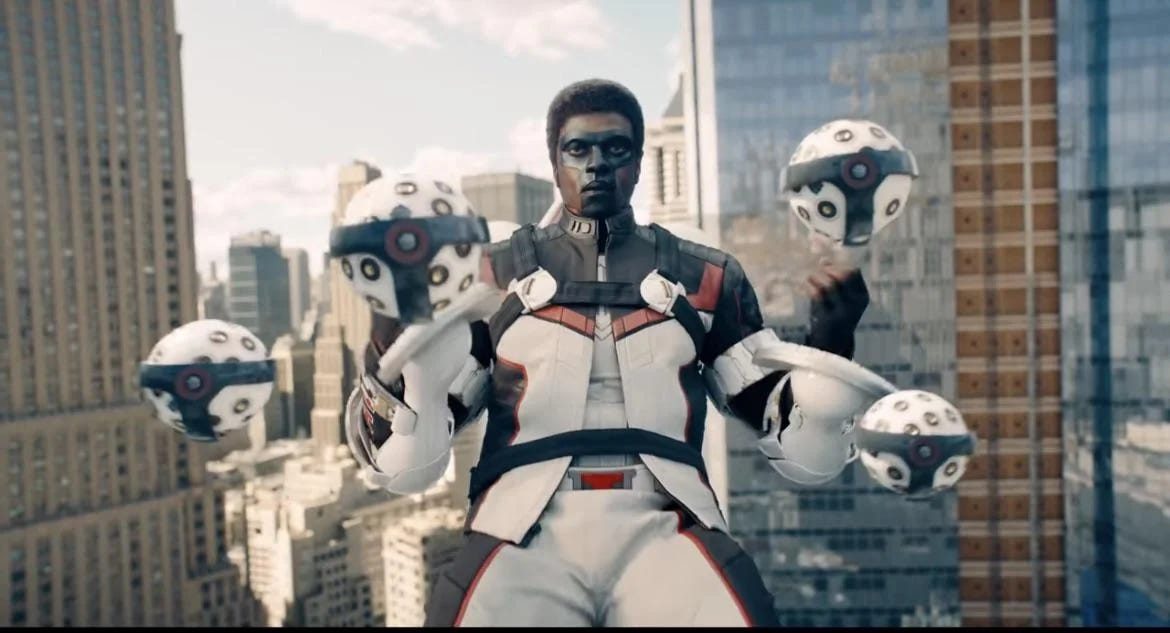
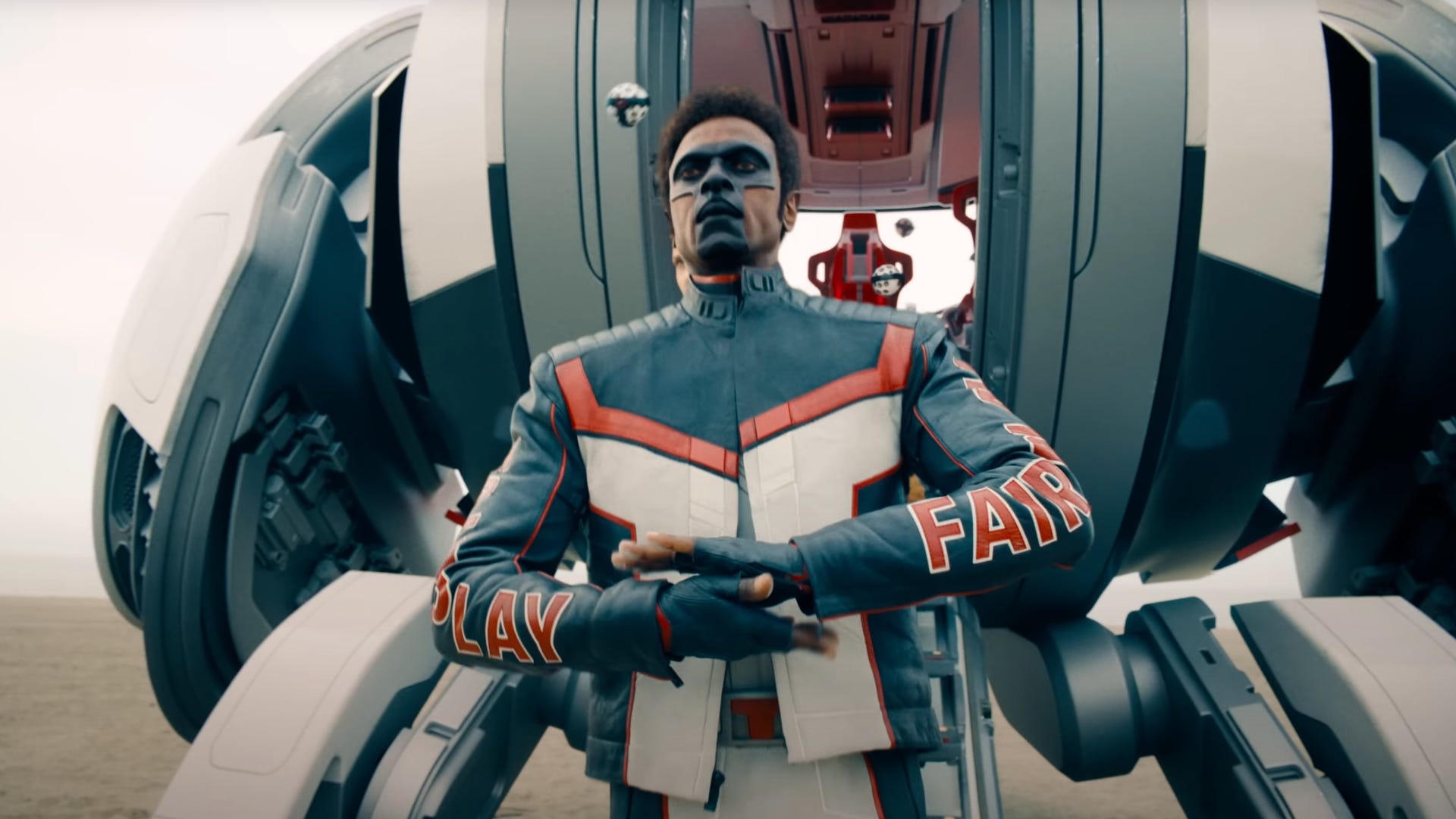
Ok so the 'Engineer' character comes from Ellis' 'Authority' and this is presumably a evil new version in a different reality, but where do Mr Terrific's BALLS come from? Are these the same OMNI BALLS as used by the President-murdering Hero/Villain of Ellis' 'Black Summer'? I want to know the meta-history of the Omni Balls please.
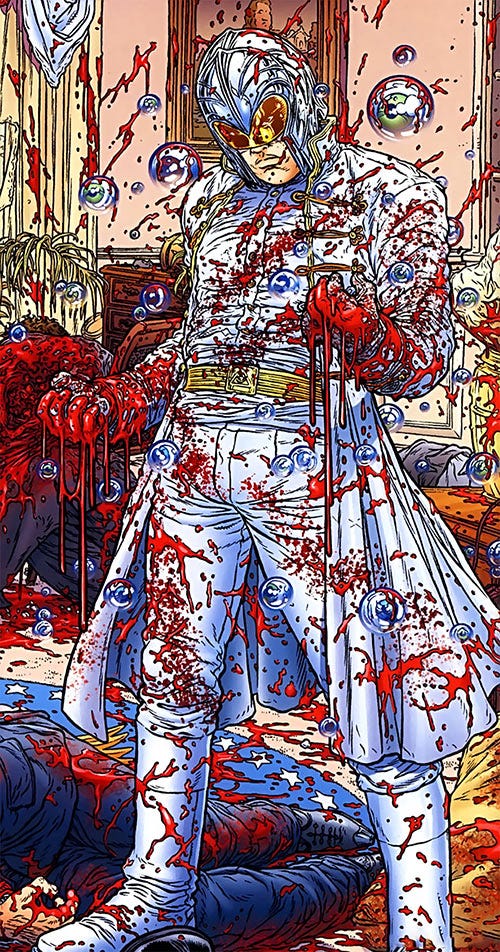
Not That Smart Superman
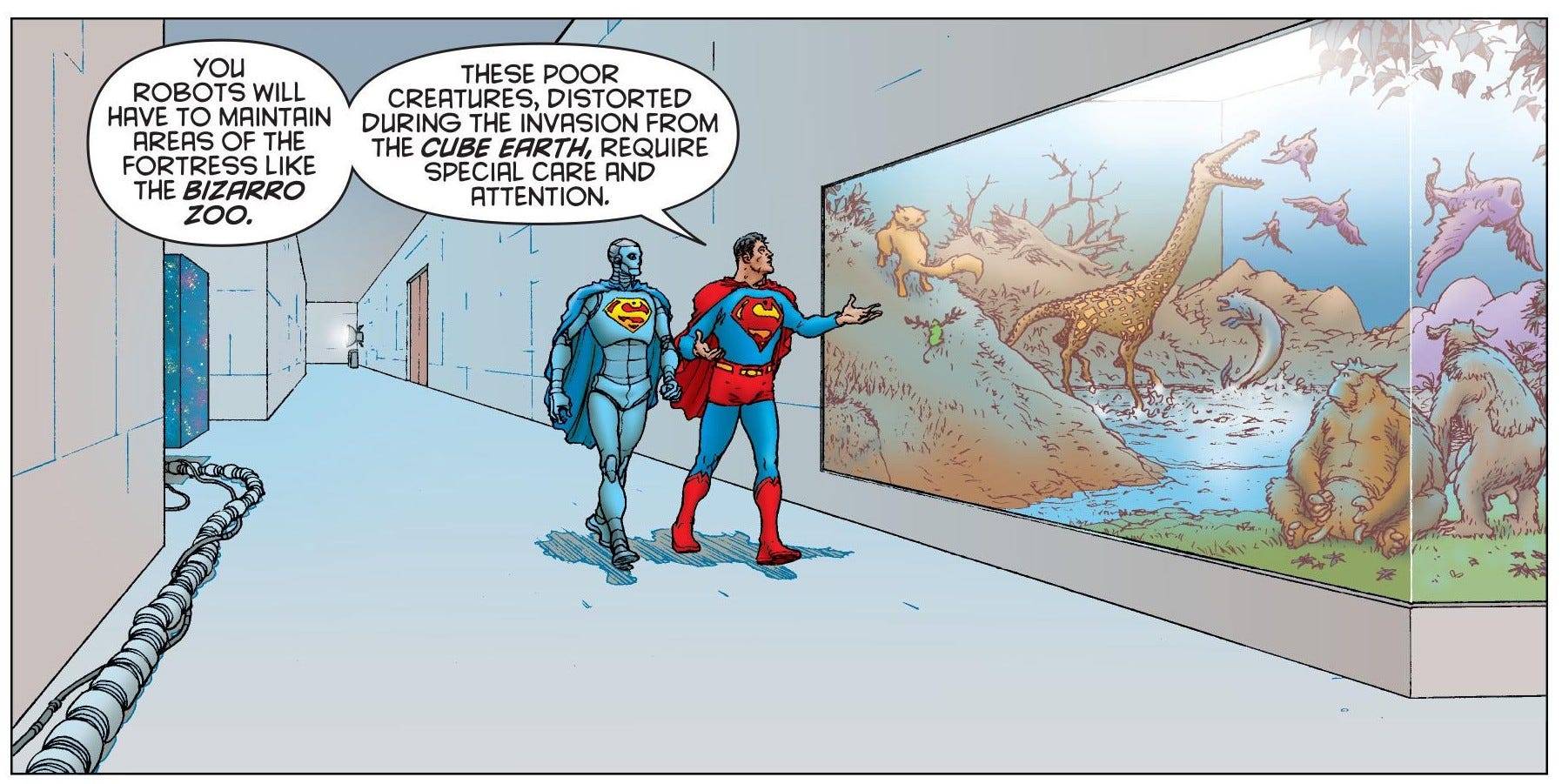
Superman, I mean peak, well-written Superman, is a bit of a clever trickster. Maybe this is a strand he picked up in the 50's in his endless relationship dramas with Lois Lane, or maybe its always been there, but he is a quiet Coyote; he plays the father, but like the father, he tends to be a little bit ahead of everyone else. In All Star Superman, with earth assaulted by Bizzaros from a looming cubic planet, he simply turns the cube in space, using it as a mirror to melt the Bizzaros. He often outwits his enemies instead of just punching them.
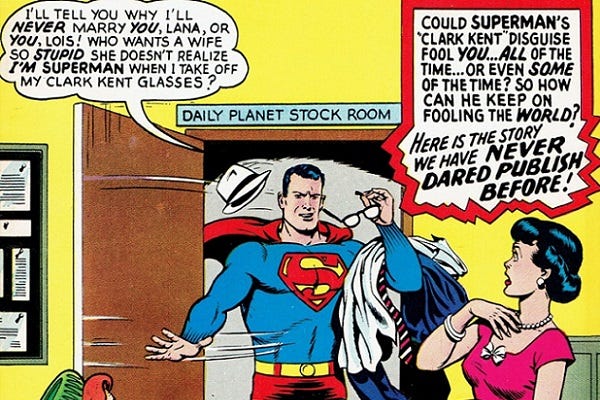
I'm not sure if he does anything very clever in this film. He does escape some villains by flying really really high then crashing down to earth? (Tony Stark). He gets his dog to bite some drones? He never really feels meaningfully ahead of Lex in any way.
He, and the film, are also happy to just straight up murder Ultraman, who we learn, is a mentally limited clone of Clark. So Superman pushes a manipulated lab grown mental child into a black hole. I am fine with this in the abstract, but that is not what this version of Superman would do... The Ultraman Clone receives verbal instructions from Lex telling him exactly what to do and I was waiting for Superman to just lazer the voice speaker and then 'save' or at least try to reform, Ultraman, without the voice of Lex. Neither he nor the film ever seem to think of this, which is slightly odd.
Silver Age!
A bright, optimistic tone, a very-human Superman. The Super-Robots from 'All Star Superman'. Krypto. Casual super-science. Very much a world teetering on the edge of Dream and tonally visually quite different to the Marvel-verse digital super-people against a background that looks like a tourists photograph. Costumes have a little chonk to them and a touch of hyper-reality rather than the slightly anguished please-accept-me vibes of other paracosm.
I would dearly love to see Matt Reeves Batman introduced into this reality as they don't fit at all and it would be hilarious. Especially seeing Robert Pattinsons goth 90's edgy Batman meeting Cornswets Superman. Delightfully devilish Seymour.
This film was goofy as fuck and I respect that. It even manages to extract art at points. The Superman/Lois conversation with the Justice Gang silently flailing at a Cosmic Orb in a background lightshow, is a high point.
Lovely Cast
Everyone seems perfectly cast, well directed and giving their all. Rachel Brosnahan glows as Lois Lane, Hoult is competent as Lex, but outside of the Comics, where he can be a thousand things, Lex is not that great of a character. (This is another comic book movie where the Villain is kind-of-right; Lex fears Superman will dominate the world (instead of him), and in the end Superman basically does end up dominating the world, second hand.)
Edi Gathegi is a standout as Mr Terrific, with the nerds at least, Isabella Merced is very SKREEEE as Hawkgirl. Maria Gabriela looms well as the Engineer. The mini-team from the Daily Planet comes across in microcosm, another well-made scene has the core group sitting around breaking a story even as the rest of the building, and the city, evacuates around them. I do wonder though what all this would mean to one not 'of the cloth'. I already know who everyone is, so for me its a matter of 'oh that's Cat grant, that's Jimmy Olson' etc.
Bradley Cooper is Jor-El, which I didn't even notice but that's the second time Cooper has turned up as bit part in some weird fucking movie where I wasn't expecting him and barely recognised him.
Four (?) stars? Or three stars and a 'like'.
I haven't decided yet. Despite my criticisms I did actually enjoy this movie, though I think I will never watch it again.
Fantastic Four, First Steps
(Matt Shackman)
This will likely always be regarded as a Companion Piece to Superman 2025. Both are strongly silver-age callbacks and attempts to revivify a genre. Superman will be more popular I think but 'First Steps' is the better film.

Explicit Otherworld
Firstly, the placement of FF in an explicitly parallel world, one adjacent both to ours and to the main Marvel Continuity, makes its strangeness and particularity a lot easier to take. The film makes some substantial compromises but these feel more like elements of a single and distant vivid dream than awkward paste-overs that conflict with a pre-supposed.

The Super Sixties
A deeply and lovingly 'post-retro' film, the world of FF has every good aspect of the Sixties, (the wonderous power of science and technology), and none of the bad aspects, (a perfectly racially mixed society and Reed doesn't pimp slap Sue, why would he when women are equal in all ways and maybe slightly better?).
Of course this would be painful if it was about the _actual_ 60's, but since this is explicitly in its own little bubble of reality, we allow it.
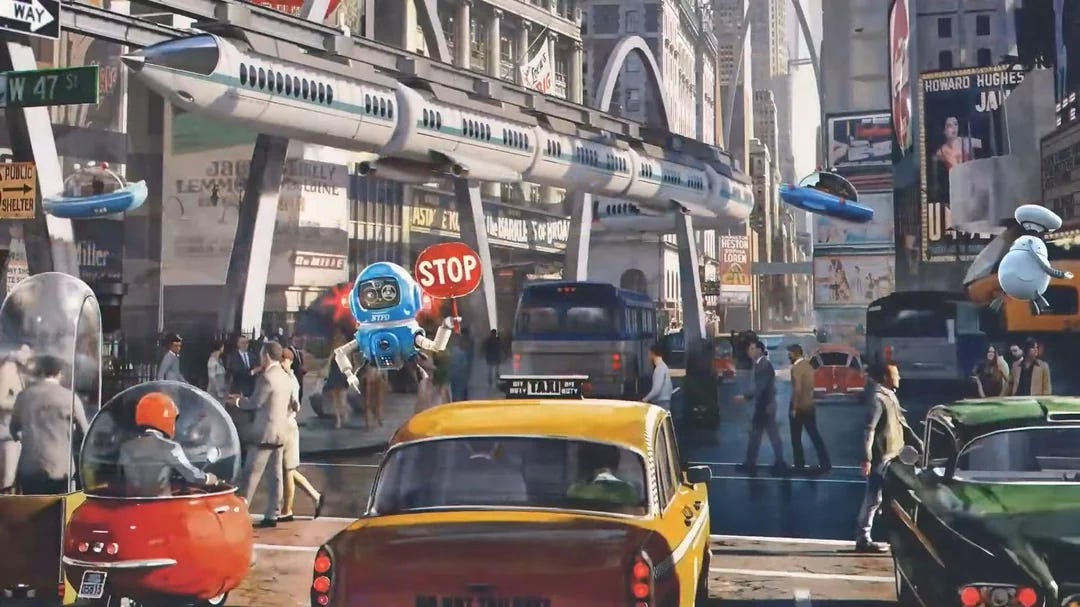
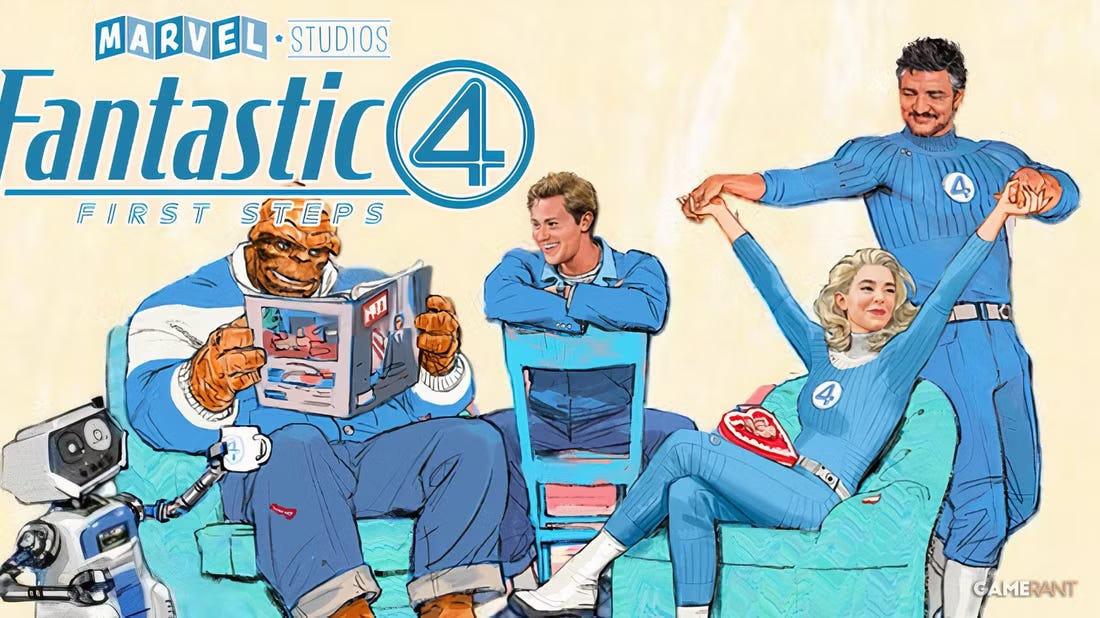
The same is true for its wonderous Silver Age Kennedy-Punk technology. Robots with tape memories, crude LED displays devising super-science, chunky bright costumes that seem to simulate wool, 60's style 'Infographics', mixed media and documentary style elements which weave throughout the story.
The interior design, world design and technology design are all excellent. This might be the most visually beautiful film Marvel have ever made, which considering the sheer number of them, is a depressingly medium bar to clear, (some of Gunns work might be the closest), yet this is largely due to making a very beautiful world and then simply photographing it. It would be hard to take consistent pictures of the lives of this Fantastic Four and have it be ugly.
The Best Reed Richards
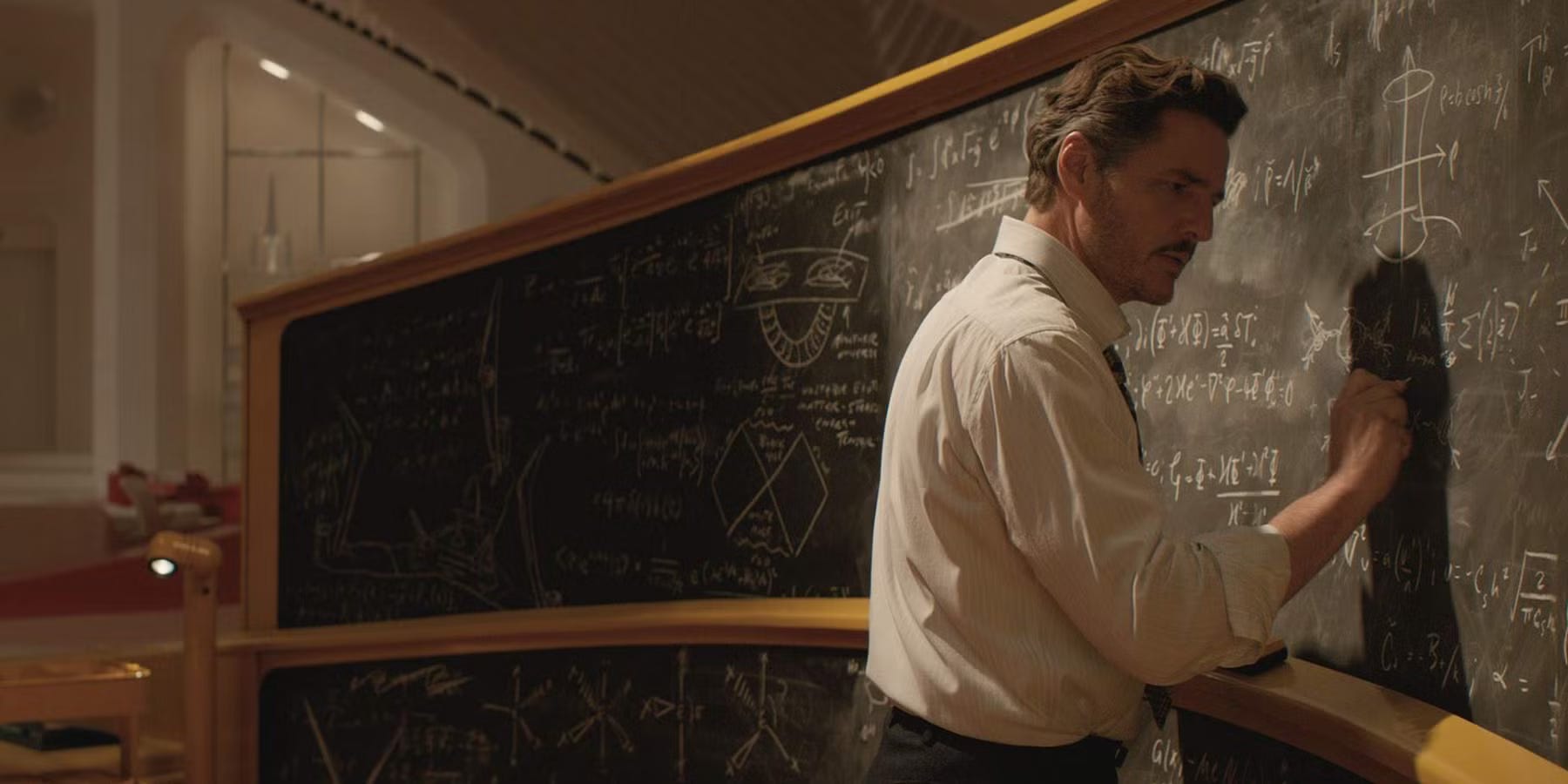
Pascals surprisingly sensitive Reed Richards is the best ever interpretation. Reed is a difficult character to write well, and frankly is a dick in many versions and stories. Pascals wounded father/Oppenheimer Psychopomp-to-the-future will be less popular than the previous Marvel 'main guy' Tony Stark, (just like Gunns Superman, his is extremely sincere), but he does have the depth and interest to possibly sustain a small universe of stories. Reed begins where Stark left off, as a father and the guardian of a family, and the world - where will he go from here?
May be Saying Something?
This film also might be saying something somehow? 'Superman 2025' was also saying something but said a bunch of other random stuff at the same time. 'Fantastic Four' manages to channel some of Jack Kirbys primal cosmic Abrahamic energy. The core of the story is the Binding of Isaac plus one-life-vs-billions. Reed Richards tells the truth, even when it is unwise.
Both of these films are retreats, both from a failing genre and from collapsing post-war liberalism. The places they retreat to are very different. 'Superman' retreats to a world where wars are the fault of evil billionaires and you can solve them by murdering them, (or having your friends do it), while also being super-nice. 'Fantastic Four' retreats to an Abrahamic threat-to-family, opposed by the wonderous power of science and technology, plus Family Values, especially the self-sacrifice of a super-powered Mother.
"FF" is a little bit conservative. Any "FF" movie would need to be a little, as its about a Family fighting the (potentially) evil Unknown. But this version goes full power right into Family = GOOD. Babies = GOOD. Having babies = TERRIFYING BUT VERY GOOD. Mothers = LITERAL LIFE SUSTAINING SUPER-BEINGS. INVEST IN THE FUCKING FUTURE PEOPLE, HAVE A CHILD. You might have to fight Galactus I don't know - the world can be saved.
Sue - "This was meant to be beautiful, but now its just terrifying."
Reed - "It can be made beautiful again. Everything can."
Thus end our silvery dreams, now, into darkness.
Savage Times
Era of Ruin - Black Library, Various Authors
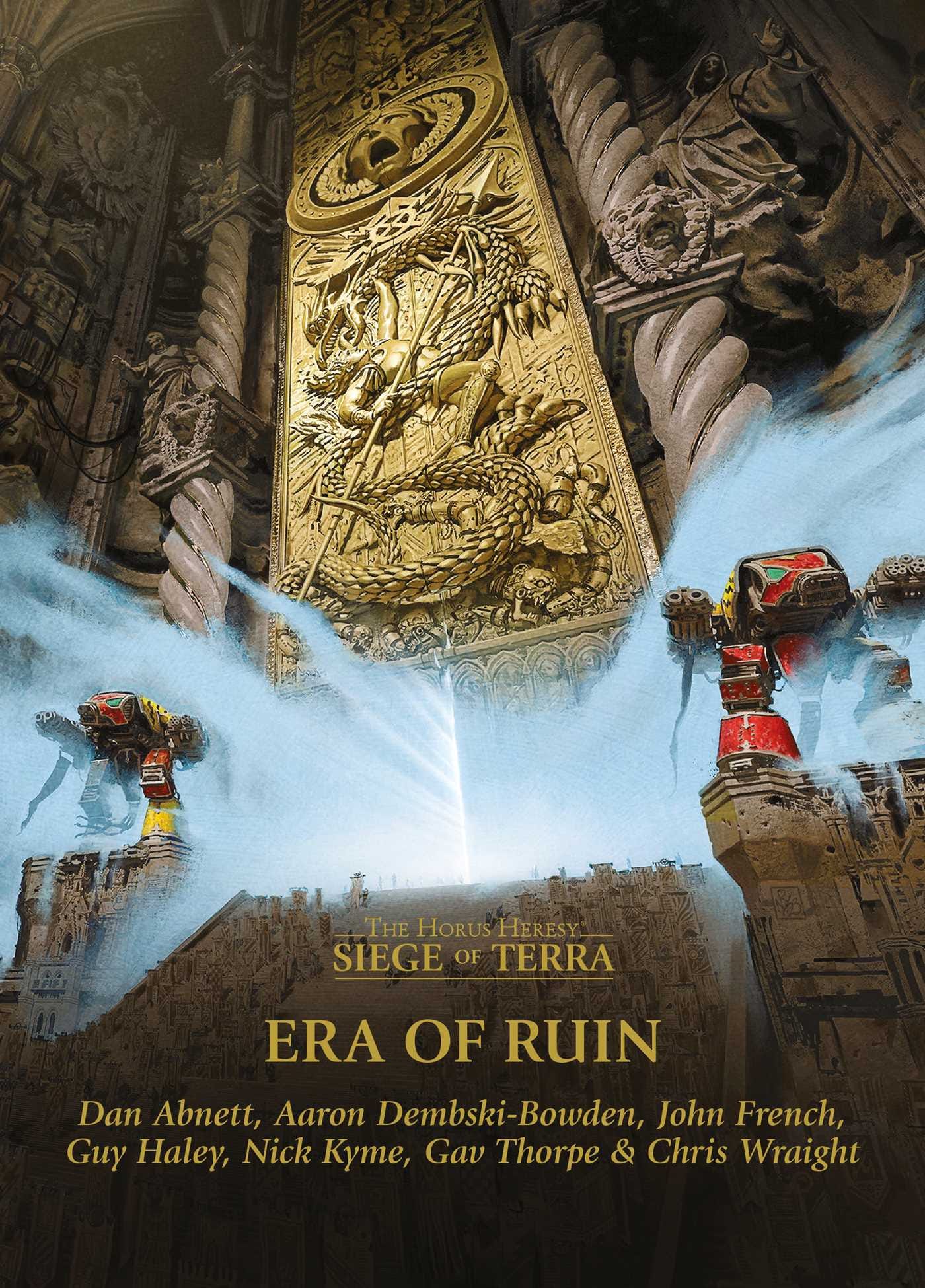
Its over! Again! For good this time? (No, they are already planning a whole new series for ‘The Scouring’. At least Chris Wraight will be the lead on that one.) Just let me die. Can I at least get off this throne? Oh my god WE the AUDIENCE were the Emperor of Mankind all along!
Here is the book after the trilogy which ended the eight-volume miniseries which capped the fifty volume series. Everything changes but nothing really does.
John French in 'Angels of Another Age' and 'Ex Libris' gives us competent relations of stories that didn't need to be told. One has a Blood Angel suffering the Black Rage and one has Ahriman trying to escape the Library he was in during 'tEatD' while Horus explodes like a brain bomb.
Fulgurite by Nick Kyme is simply bad.
System Purge by Gav Thorpe is the grey definition of a 'worth reading' Heresy story about some cog-boys and a White Scar performing clearing operations on the Lions Gate and running into one of the first Obliterator Virus marines.
Fragments by Dan Abnett is a quite-nice story about a Sister of Silence finally being valued by the people around her, something that only happens during the apocalypse.
The three notable stories are 'After the Dawn, the Darkness' by Guy Haley, 'Homebound' by Chris Wraight and 'Carrion Lord of the Imperium' by ADB.
The first two concern some of the actually-likeable and interesting characters who never really took off in the hive mind of the Heresy's writers, largely remaining within the purview of one creator, but which are actually better characters than those that did. In 'After Dawn', Katsuhiro, the true and actual main protagonist of the Siege of Terra finally gets his Dickensian 'kindly gentleman' moment and gets to ride off into the sunset with the baby he saved, the girl and three(!) ration cards!!!! (ALL IS FORGIVEN, BOOK NOW WORTH READING!!) In 'Homebound' Ilyria Ravilon actually manages to retire, then treks across the wasteland Terra has become to get back home, clean it up, plant some vegetables and die in her own bed. Both of these stories involve White Scars being nice, interesting views of the Apocalyptic Terran landscape and fragments of social reality for the many who remain.
In 'Carrion Lord' ADB takes us into the mind of an extremely depressed and traumatised Custodian facing the doom and failure of the man-god to whom they are forever bound, also they really hate Primarchs and Astartes. This is the only story to take us deep into the 'future' of the Heresy, into the ten-thousand year 'age of man', of cults and blind maddening faith, it also shows us a vision of the Imperial Throne much more like its early images, strongly hinting that the Big Throne in other later books might be a fake.
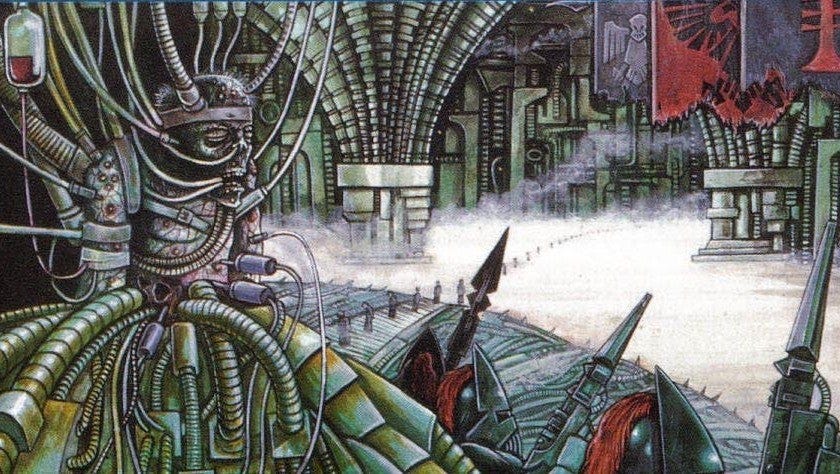
In an unfathomably based move, ADB actually makes the grief-stricken Custodes nearly naked, just as lore always intended! In his customarily heavy-handed manner he goes strongly for a soft re-write of the creation of the Primarchs as taking power from the warp, but not actually doing a deal with the Ruinous Powers (at least that's not what this particular Custodes 'saw' happening.)
Whole book is a two out of five, maybe three.
Conquest: Lore Companion
By Para Bellum Games
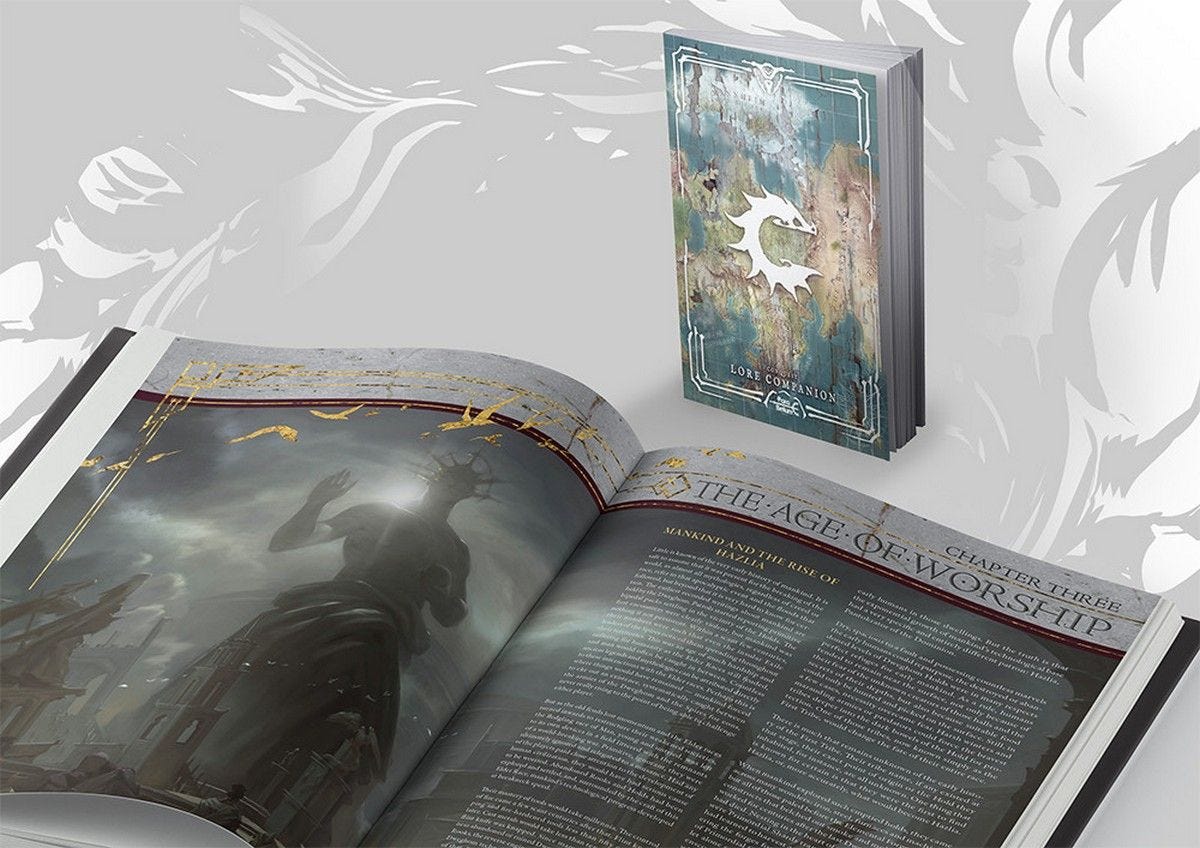
I have equal parts like and dislike for the worldbuilding in 'Conquest'.
Theogony Bad
Mildly tiresome, (if clearly thought out). Everything is born of a very-abstracted Creation vs Destruction process, with 'Balance' being born as an offshoot. Balance is the literal physical substance of the world of Conquest, with sleeping destruction being its tectonic core, and 'Creation' being the stars in the sky.
Four arguably-evil mega-entities were born also from this process; Famine, War, Conquest (the sort of good one), and Death. These are called 'Horsemen', though they are more like bound Chaos Gods. The names and meanings of things never really sings to me.
Cosmic-Entity/Angelic Dragons come to the world of 'Conquest' bind the horsemen in various prisons and start embodying themselves and breeding, creating ever-more-material offspring.
I am just not that interested. Maybe its the way it is told? If you had started with ‘The whole planet is a prison for the primal spirit of destruction which makes its MOLTEN CORE!!!” would I have liked it more?
Spires Good
The most interesting single thing in 'Conquest' is the Spires, a faction of extra-terrestrial, bio-thaumaturgical and biotechnical space elves who evolve on an extra-stellar moon bound to a pair of crazed stars and come to the world of 'Conquest' as a Science/Refugee/Terraforming project. Their giant biotechnical closed-environment 'Spires' still exist and many of the strange races of 'Conquest' are ultimately their responsibility. (Though not humanity it seems, whose presence is unexplained.)
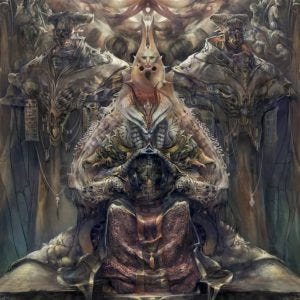
The Spires are also the most visually and conceptually unique element of the game and seeing them in combat with a HRE-style late-medieval Cavalry-and-infantry army is still utterly fascinating.
Hazlia Good
The other good thing about 'Conquest' is Hazlia and the Old Dominion.
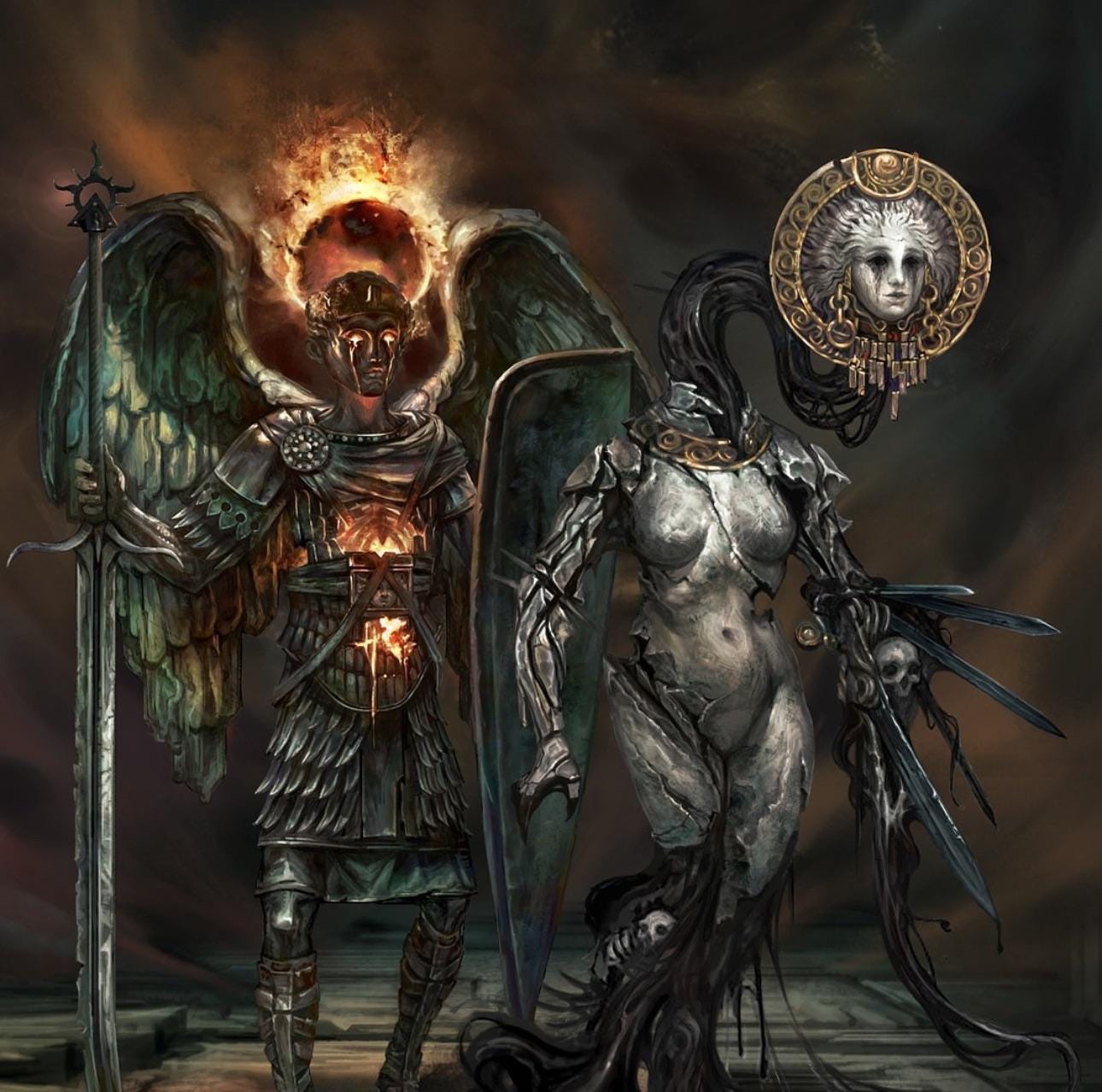
Primitive humans delving into ancient Dwarven, (Dwegholm), holds, discover a fragment of semi-diving meta-technology which provides warmth and start worshipping it. This fragment 'wakes up', gaining power, sentience and complexity from this worship, which it feeds back into doing useful things for the little critters praying to it.
Fast forward a couple of hundred generations and this fragment is Hazlia, the Supreme Meta-God of the unified Human Empire and master of a whole pantheon.
This uplifted, and uplifting, piece of technology then slowly loses its mind, goes mad, and is betrayed and destroyed by its most powerful human servants. God literally crashes to earth like a nuke, turning super-Rome into an undead necropolis and becoming the new death-god of the setting. Most of the human cultures we know about used to be part of this Super-Rome Empire, being respectively, barbarian border tribes, oligarch exclave and super-sorcerer escapees.
The great things about this are the relative originality of the concept, the complex and interesting relationship between Hazlia and Humanity, (who exactly was using who and who drove who crazy?), and the lovely aesthetic of the 'Death' faction - a Byzantine inspired empire of corpses.
The less-good aspect of this is that the 'successor' states to the Old Dominion, which are all meant to have some kind of common origin, really don't feel like they do. They feel simply like the 'Holy Roman Empire' faction, the 'Greece' Faction and the 'Vague Araby/India' faction. Nowhere in the models do we really feel that these are root-related cultures.
Other Races Mid
All of the models are good, or at least decent, but the concepts of nearly every other faction are mid as fuck. We have; Firey Doom Dwarves who 'delved too deep' and who are now fire-berserker types, (Spire creation), desert-dwelling Orc riding dinosaurs firmly occupying the proud-warrior-noble-savage thing, they are practically Na'vi, (also a Spire Creation), Greeks, (actually not that bad as this is a greek-made game), Holy Roman Empire, Arabian/Indian Elementalists, (the least interesting form of magic ever), super-soldier descended super Vikings, (Spire Creation), Yokai for some reason, and now nature-elves, (a Spire offshoot).
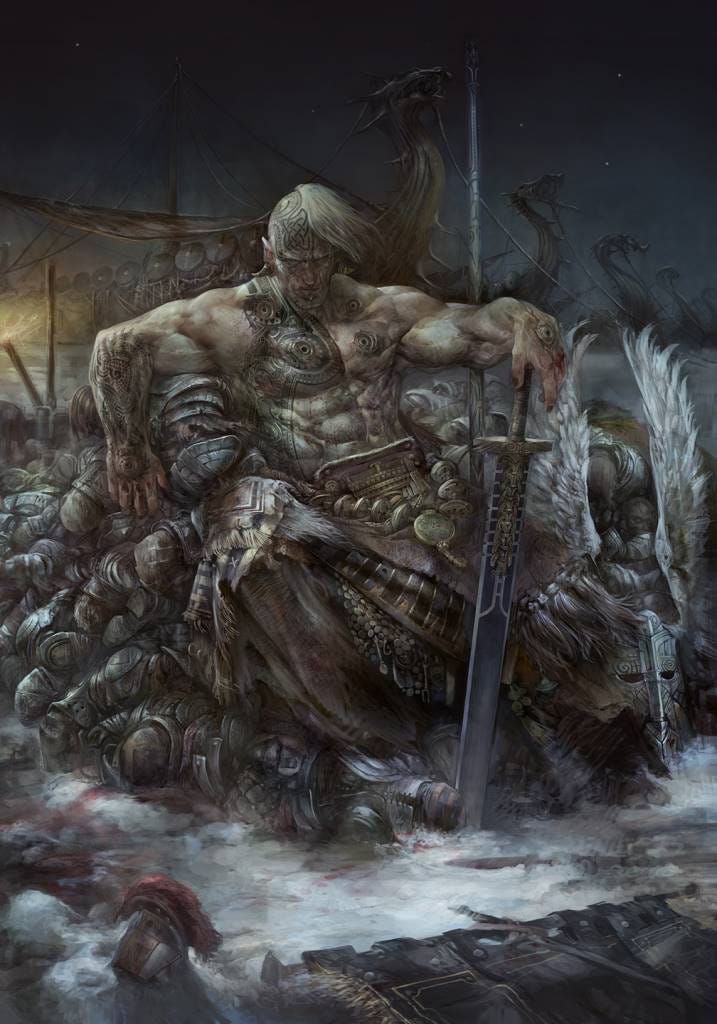
The 'Weaver Courts' (nature Elves), are actually looking to be beautiful models. Most of the factions have beautiful models, but conceptually they are mid. Nothing carries the inspired charge of watching crossbowman fire into alien space elves or knights charging a literal undead Byzantine Roman Legion.
Asia Also Exists
For some reason, there are Asian people now, and specifically Japanese Demons. Their presence was never indicated before and its not clear why they have turned up now, or where 'fake Asia' is in this world, but they sure exist
I have no actual problem with Asian factions or businesses making money, its just that this was a relatively coherent and well-integrated reality and the bits of Asia that have been awkwardly stapled on are the bits that make money, so China and Japan. And the Chinese faction looks a lot like Games Workshops Grand Cathy, and will probably be boring as fuck as the Chinese both have money, and are notoriously extremely fucking touchy, so anything representing them usually has to be very well sanded off.
Multi-Factions
Every faction is broken down into three sub-faction types, so the HRE 'Hundred Kingdoms' has the Aristocracy, the Church and the 'Empty Throne' of the Imperial State. This is reflected really well in army-building, with each choice of general or commander giving access to certain types of troop and certain builds. So you can run a whole army under one sub-faction, or have little sub-units in your build of particular sub-factions. This is better arranged and more clear than GW stuff and these are all 'Types' of sub-faction, meaning you can still impart a particular geographic or socio-political identity to *your* particular army.
The only mild annoyance is that its always three sub factions, no more and no less, for every larger faction. I am being picky.
Magic and Technology - What is ‘Conquest’ About?
At various different points 'Conquest' seems to occupy the principal of 'magic is technology', ‘no wait its ineffable substance of creation’, ‘no wait its also spells and stuff’. This works out... ok? It gives them a lot of conceptual space to play with. It’s also very vague.
The world, composed of beautiful forms and some very original ideas, has no form itself. There is nothing Conquest is "about", in the same way 40k is "about" something and that Age of Sigmar really isn't "about" anything.
The combination of Spires, The Hundred Kingdoms, the (Greek influenced) City States and the Old Dominion gave me the tantalising sense of a wargame reality seen from the shores of the Mediterranean rather than the Atlantic. I was really hoping that the 'Sorcerer Kings' would be highly Ottoman, so then we could seen Greeks and Turks fight each other and Undead Rome. But 'Sorcerer Kings' just turned out to be a (well-done) vague Orientalist faction.
The same is true of nearly every other choice. Vikings, Warrior-Race-Na'vi Orcs, Firey Dwarves, Yokai and the Chinese. The most middle-of-the-range choices made for clear mass-appeal.
I do not object to businesses making money. Good luck to 'Conquest', I hope they do well. The plasticine feel to its world feels like an aesthetic loss to me and its probably not something I will ever get super-invested in.
The 13th Warrior
John McTiernen, from a book by Michael Crichton
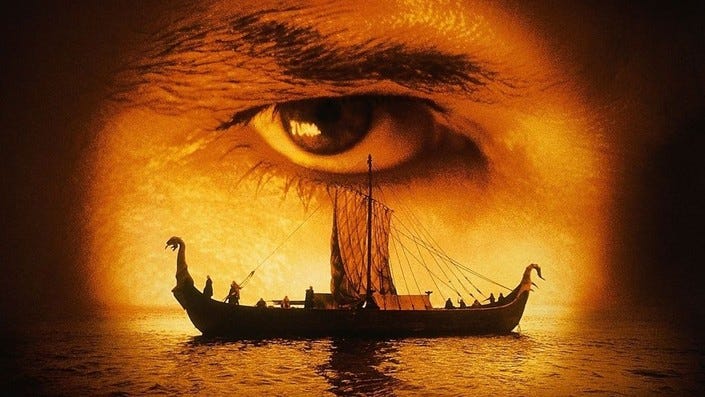
I am not actually going to describe this since I feel like everyone who reads this blog will have already seen it. This film is an old favourite of my childhood, re-watched recently.
Things that stand out;
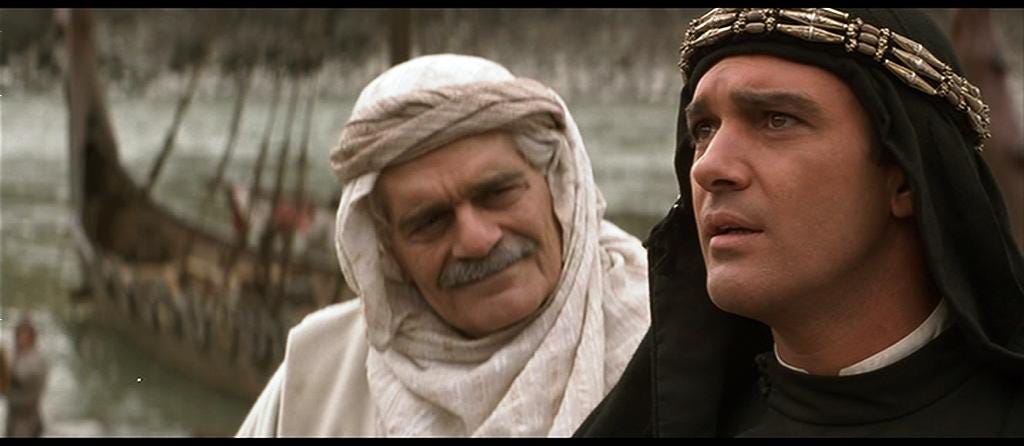
The early flow of multiple translations. Fadlan can't understand anyone, his guide Melchisidek, can understand one Viking, in Greek, so everything that happens, that is described to Fadlan, happens though this chanting flow of languages, from the original Norse speaking to each other, to the Viking interpreter, to the Guide, to Fadlan.
This flow of languages, as well as being interesting in itself, has a kind of distancing or mystery-making effect on the audience, as we, in Fadlans place, as if we are peering at a culture we cannot fully understand
The language-decipherment scene, which I remember so clearly from my youth, is less long than I remember, but still very impactful.

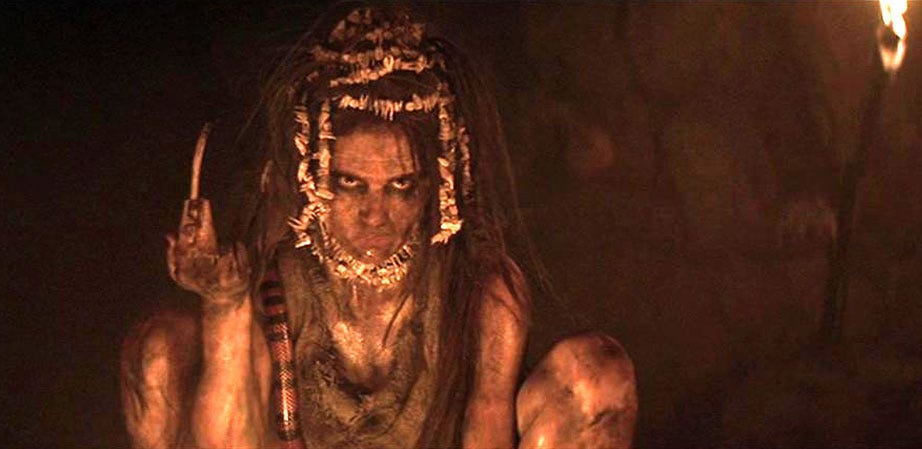
CRONES play a substantial part in this story. If you count the earth-witch at the end, in the scene in the cave of death, where Bulvar fights the poison-wielding witch-queen of the Neanderthals - living like an earth-mother amongst her garden of heads, there are three. Deliberate?
The dramaturgy of the scene where, as they track the 'Wen', Fadlan and his group work to understand the meaning of the prophecy they have been given (basically 'if you want to end this film do thus') - and again, the flow of information and performance between them, is very nice scene construction. “They believe they are bears.”, “How do you hunt a bear?”. “No, how do you hunt a bear in winter?" "In a cave." "Where is a cave." "In the earth."
I have often daydreamed of remaking the 13th Warrior.
I would probably go Egyptian.
Place it further back in time and have a traveller from the court of an early-dynasty Pharaoh travel to the deep north of the steppe, where the wheels and horses come from, and encounter an indo-european culture.
Which tbh wouldn't be altogether that different from the Norse culture shown here.
And there, in a valley, or a forgotten mountain range, they encounter the Neanderthals.
In this fiction we would take advantage of every new genetic and archaeological discovery about the Neanderthals. We know much more now and the group differences between the thick, robust, red-haired blue-eyed Neanderthals and the gracile, dark eyed, dark haired horse-taming homo-sapiens would be quite vivid enough even without, and the story would be much more of a two-hander, about the traveller, the host culture but also about the vanishing Neanderthals and the last gasp of a branch of humanity going extinct - more of a complex multi-layered tragedy.
(I'll add to this that around this period the last mammoths known still existed on an island in the arctic circle and genetic information suggests they had become so inbred their fur had turned translucent - truly Lovecraftian entities)
Barry Lyndon
(Stanley Kubrick)
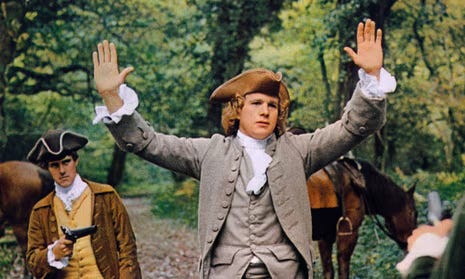
An image of the human soul in torment.
This is a very long very slow extremely pretty film about the slow degradation of the human soul. like Ridly Scotts 'The Duellists' its a lot like being picked up and dropped into a series of paintings. The Duellists, (which probably ripped off the look of Barry Lyndon), commits the cardinal crime of having a strong narrative spine, with two quite-driven characters but 'Barry Lyndon' is very much a slow film about some things happening to a guy. There is not much he can do about most of them and when he can do something he often does the wrong thing.
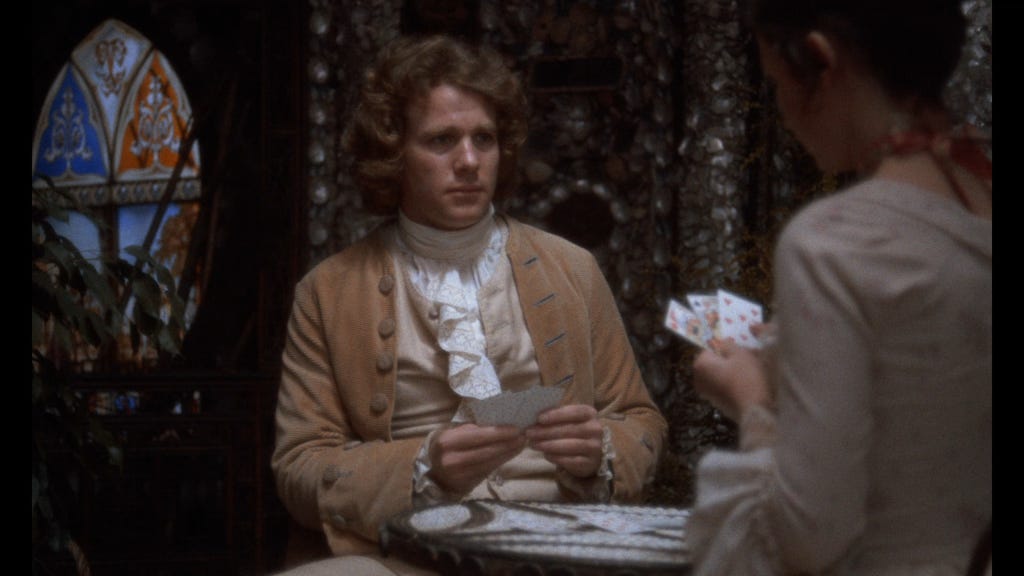
The boy is proud, violent and innocent. His whole life is built around two inciting incidents - his father dies in a duel and Barry falls for (is inexpertly seduced by), his cousin. He fights a duel against a British Officer, I would say, to win her heart, but its not that, but pride, anger and courage which drives him, as often in a duel between men, sparked by a woman, by the point of violence, the woman in question seems to have little to do with it.
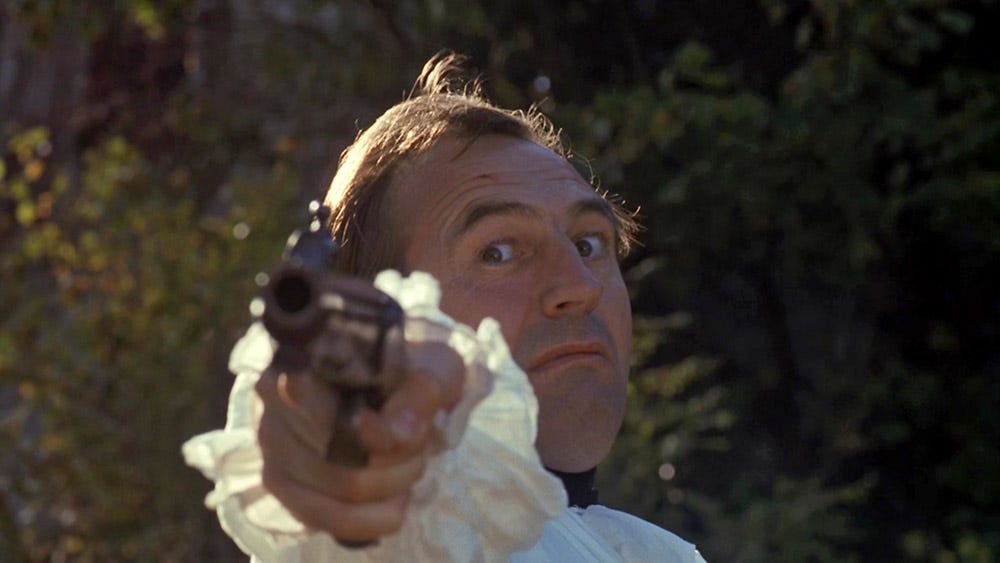
Believing he has killed Leonard Rossiter’s Captain Quinn (in an unbelievably textured Toby-Jug character role), he is sent off to the big city to escape the law. From there things only get worse. On the way he is robbed, left penniless, and joins up with the infantry, becoming part of the great Seven Years War.
These things; first the lack of a father, second, the separation from his family and community, dominate the rest of his life and the rest of his life is lonely, deceptive and violent.
Existential Foreshadowing and Lies Revealed
A narrator sets the scene for Barry's adventures, but more crucially, and sometimes invisibly, 'spoils' causality, telling us not only what has happened, but some of what will happen.
As I have discovered, placing results before the events that caused them, makes a story instantly existential; worry about what disappears, what remains is how - a mild pleasure, best taken slowly, like sipping tea, and more distantly, but importantly, why. Watching Barry Lyndon is a lot like sipping tea and wondering about the axis between character and fate.
Lies revealed - a LOT of characters in this film are lying to or manipulating each other. By the middle Barry himself is doing most of the lying and we might consider the film to be the story of someone who goes from the victim (lied-to), to the manipulator (lying to others). Once Barry has joined the army, he meets up with an old friend and father figure and discovers that he didn't actually kill Captain Quinn - the whole thing was a setup to get him out of the way. He was just too set on violence (something this father figure had congratulated him on previously), so a little bit of mummery was done and off he went. Of course they didn't imagine him getting robbed and ending up in the army, no harm was meant.
While the foreshadowing makes us think about why things happen in one sense, the lies, and the revealing of the lies, works another way, undercutting our, and especially Barrys, set beliefs about why. He is a man without a story of himself.
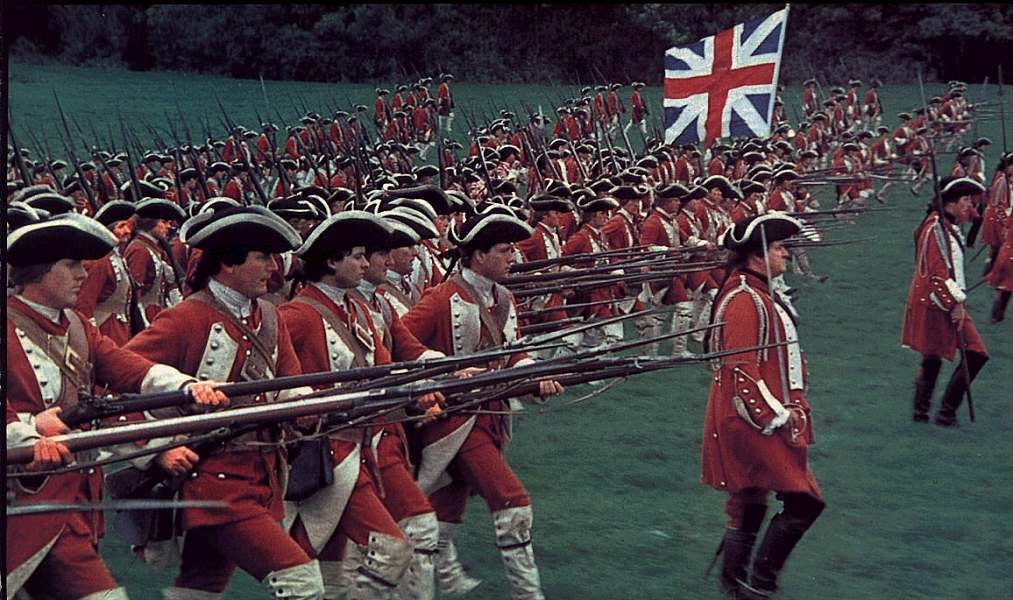
Is it any wonder, being the victim of these manipulations, and terrified by battle (shown here by Kubrick in its most stupid, brutal and pointless aspect), and furthermore having lost his patron, the boy lets slip with honour entirely, and commits his first, big, actual and major crime - stealing an officers uniform, horse and papers and disappearing into the hinterlands of warstruck Europe as a 'British Officer' continually delivering 'vital dispatches', but in fact going wherever he wills, wandering, lost really, in the midst of a great chaos?
People Very Slowly Entering and Leaving Beautiful Scenes - (RIDICULOUS SLOWNESS)
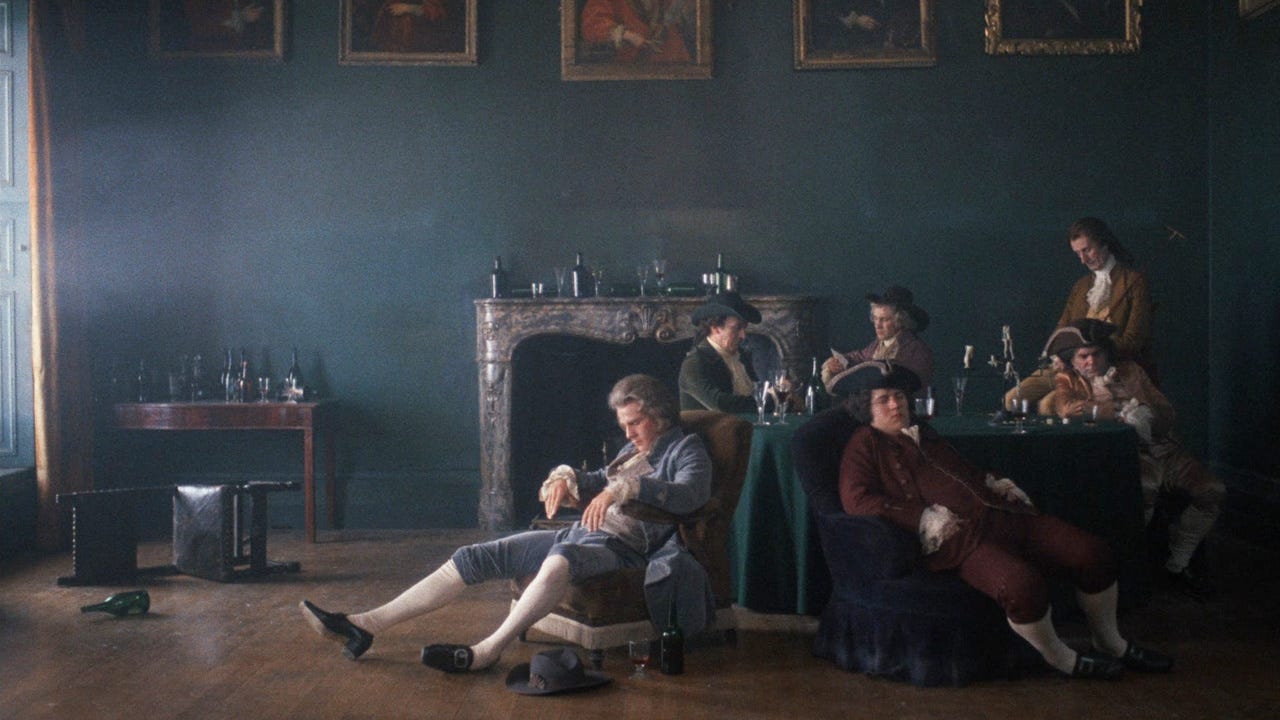
The slowness does a bunch of things.
Firstly it gives you the tenor and rhythm of the times - truth, lies and law all travel by the same horse, information spreads like slow syrup. You can gallop away, but its slowly catching up. All movement between scenes in any film is simulated, effervescent really, a gilding, and we feel this by the slow, long, sometimes easy, sometimes pressured, manner in which characters move in and out of scenes, like stepping in and out of paintings.
Second - powerful, dominating, piled up hierarchies of social reality decide everything in this story and as people slooooowy walk into scenes they are also ritually entering and leaving highly complex social worlds which will decide their fate - society in Barry Lyndon is like a series of Courtrooms or job interviews which you never escape and which never stop, you are always performing something or being performed to. Every step is measured and observed and we absolutely feel every step.
Third - all the scenes are ridiculously beautifully photographed and seem like actual paintings of the era, terrible things might happen to Barry Lyndon, and he might commit terrible deeds, but they always happen in ridiculously beautiful places. So hang around and have a gawp why don't you?
And finally - it gives you time to think, in fact even though things are insanely beautiful, you are going to be very slightly bored with all the things moving slowly here and there, and the very slight boredom, combined with the fact that you know some of how things will end, and that, by the middle of the film, you now expect people to not be who they seem, means you inhabit and examine these scenes, watching the social dynamics of display, wondering about these people and especially thinking about why things turned out this way - like sipping tea, a musing film.
Who on Earth is Ryan O’Neal?
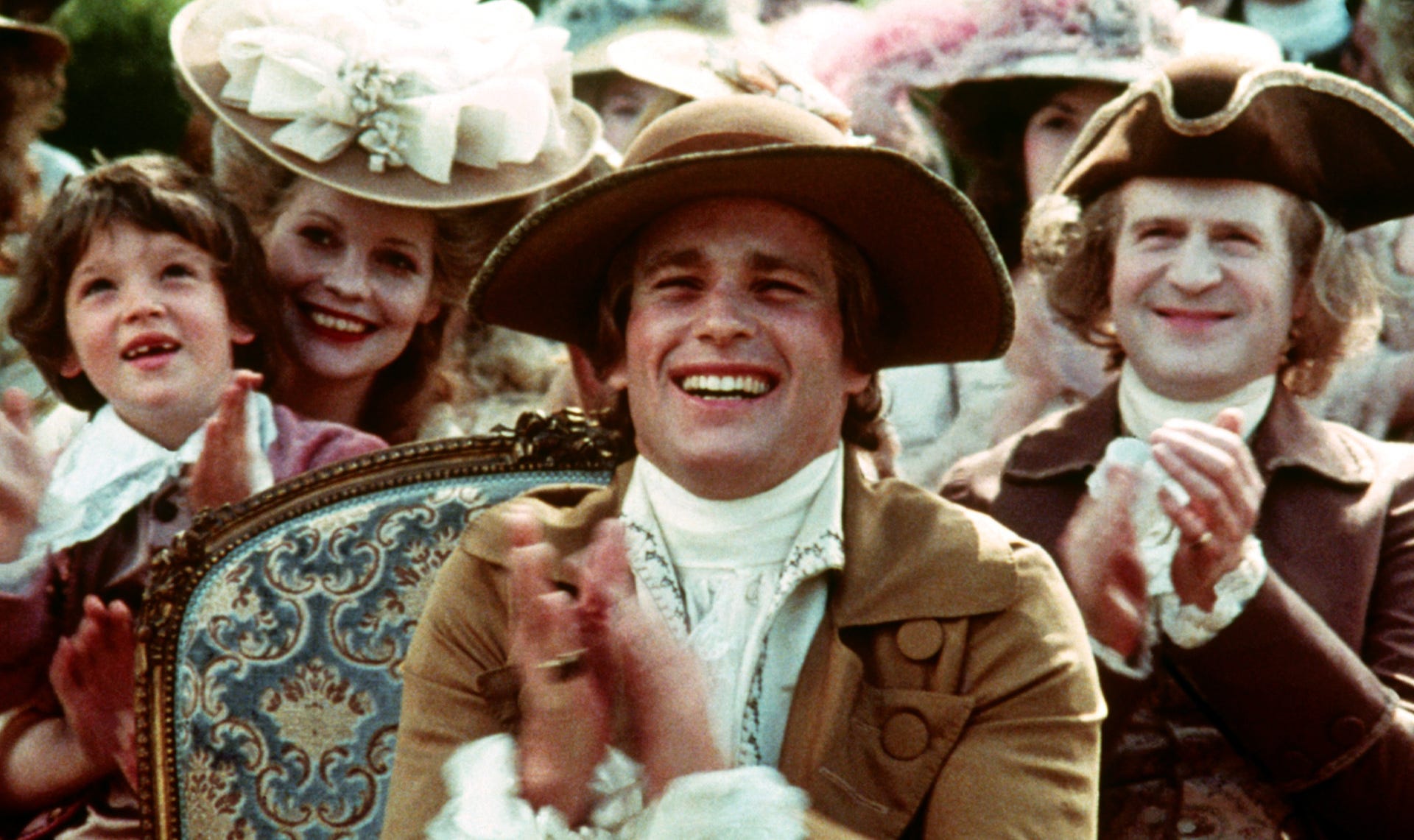
I was so unfamiliar with Ryan O'Neal that I assumed he was a nobody Kubrick found because he had the right look and feel. In fact he was actually a movie star at the time? What? And has been nearly utterly forgotten? What the hell?
He is a suffering cypher in this, occupying the centre of the film because he has been placed there, not because he commands it. Presumably this is what Kubrick wanted - Barry Lyndon in this film is very much a man that things happen to, and maybe they were fated things and his character would have brought him to the same place eventually; if he had made it to the big city and not been robbed, being who he is, would he not have found a way to bankrupt himself anyway? which is what he does whenever he has money? and ended up in one army or another? And done well - he is courageous and competent in violence, but ultimately ended up deserting or breaking out some other way - not being the type who can face down a firing line?
One of the only reasons the film is at all watchable, especially in the second half, where Barry Lyndon is the villain of his own story, is due to these flickers of purity and honesty which still glimmer like embers in the heaped up soul of this ruined man.
At the start he is so pure that he is too ashamed to pull a ribbon from the bodice of his (slutty and quite stupid) cousin, though she provokes him to go further.
It’s his honest, innocent, pure and stupid love for her which curdles into violent pride when she casts him aside for the (somewhat) wealthy, and to others, laughable, Captain Quinn.
Betrayed and broken, he slowly metamorphoses into first, a liar, and then, as his lies get him into more and more trouble, a high-level Alpha-liar bastard, who can worm and manipulate his way to the top of this gilded dung pile of a society.
Still, random fate plays a role, he betrays his new patron, a German colonel, when the man he is sent to spy on is Irish, which reminds him of home so much he breaks down crying - if he had been sent to spy on an Englishman instead, no doubt he would have made a good spy and been promoted.
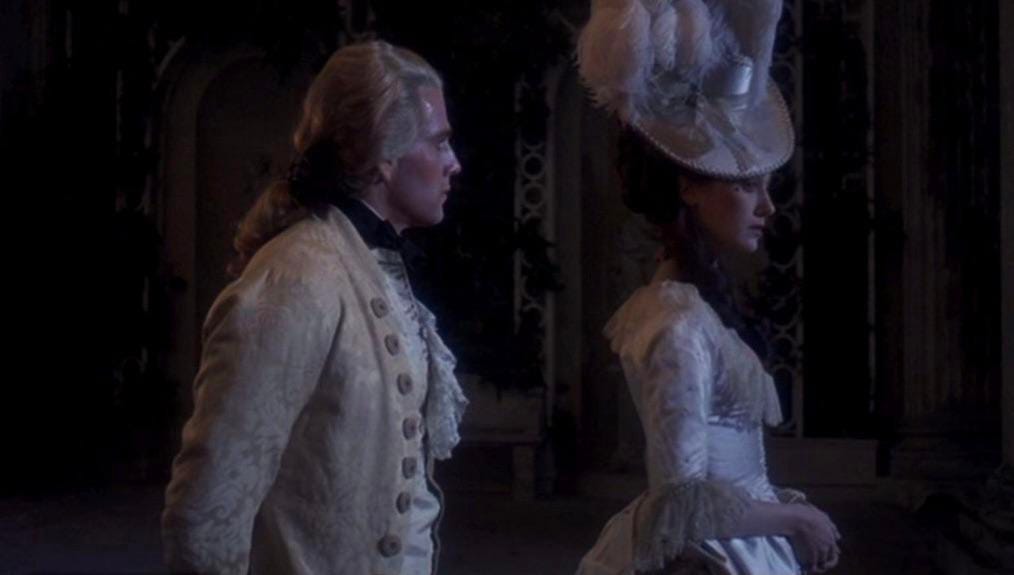
After falling in lust with Lady Lyndon, his super-hot, super-rich, future wife, he has absolutely no chance of getting her until her husband literally straight up dies in front of him, only partially provoked, a literal gift from the gods (or someone).
But perhaps there would have been another Lady Lyndon, or another betrayal, somewhere, somehow.
He is a terrible husband who genuinely loves his mother and his son, (though not his wife). In the films last act, duelling the adopted son who quite rightly and reasonably despises him, instead of simply killing the boy, (which he still could probably have done), he nobly and perhaps sanely, fires into the ground - a last nearly-decent act, but even this is stricken with murk.
So few people are evil in this story and almost everyone is deeply morally compromised, often for good reasons. Muddy people parading through a brightly-lit world. It is a savage time after all.
But I was talking about Ryan O'Neal. The character of the man, as exemplified by Ryan O'Neals face, keeps rebounding onto me.

I can't quite forget the purely innocent but desirous boy who was too ashamed to grope his cousin, (in by the way, one of the ugliest rooms I have ever seen in my life my god it must have been carefully chosen), or the aggrieved, genuinely offended, foolish but still at least 60% heroic, 30% fucking stupid and only 10% villianous boy who was willing to duel an English officer over pride and loss.
Then the conniving bastard of the centre of the film, the bloated carcass with a boys face, a dead son and a fragment of a child’s honour, all the same face as Ryan O'Neill barely ages in the film and is barely made to age.
It sticks with you.
Is There a Best?
Despite being cold, cynical and egregiously slow, it would have to be Barry Lyndon which, if you get a chance to see it in the Cinema, take it.
News!
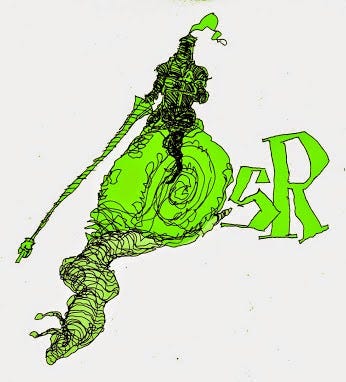
There will be, hopefully, a Snail Knights book.
These are a series of stories which I began back in 2015, then stalled on ten years ago. I completed two of them, which have appeared in various formats, and which you can read for free here.
Encouraged by a friend I have been working on more and have completed Story Thee - The Tale of Sir Babbling, and Story Four - The Tale of Sir Lucent Void. I am currently working on Story Five - The Tale of Sir Whirl.
If I can complete five stories the result will be a novel-length fully illustrated book, hopefully the first book of Four, ultimately containing twenty interconnected Snail Knight stories which tell the Whole Saga.
I have never seen The 13th Warrior! But now, thanks to this, I am going to. Ditto Barry Lyndon (I kept thinking of the Herzog/Kinski film of Woyzeck while reading your review, probably due a rewatch of that too).
I just read the first two stories of the Snail Knights for the first time. Excellent first impression: gripping, strange, heart-felt, absurd, and tragic! I'm sold on the whole 4-book conceit.
The stories revive the style and spirit of Arthurian romances—not as homage, but as original, breathing creative life into a long-neglected form. More than an homage, the language and style read like a continuation of that lineage. The weird-fantastic is as imaginative as I've come to expect from your writing, and it is elevated by the way you add surprising dimension to the at-first mythic/fairy-tale characters, layering psychological interiors and emotional depth.
You make me believe in Knights again, sir.